

For the UK and Europe, the rollout of 6G is creating a geopolitical dilemma.
Articles on 5G
Displaying 1 - 20 of 69 articles

Regional towns such as Dubbo as well as some suburbs on the outskirts of Melbourne have worse reception than more remote areas.

If your phone frequently doesn’t ring, there are a few steps you can take to solve the problem.

It’s not all about broadband access. Key adult education programs help Canadians acquire needed digital literacy skills for further education, apprenticeship training, certification and employment.

As more internet devices run increasingly data-heavy apps, there’s a squeeze on the wireless spectrum. High-frequency terahertz waves could ease the crunch with the help of chips that control the beams.
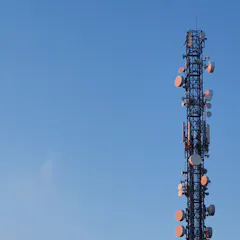
Our 25 years of scientific review shows that communications technology isn’t harmful to our health.

The new conditions that have been heaped onto Rogers as a result of the Rogers-Shaw merger could end up benefiting Canadian consumers and the economy at large.
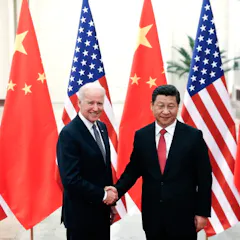
There are fears that escalating US-Chinese tensions could threaten the independence of African and other nonaligned nations.

If a new non-alignment is to be achieved in Africa, the foreign military bases of the US, France, and China - and the Russian military presence - must be dismantled.
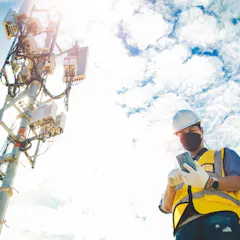
Chinese tech giant Huawei is among companies adopting new strategies to challenge national security reviews.
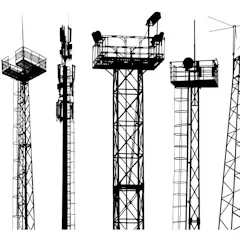
The deployment of 5G networks depends on the compatibility of the instruments and protocols of a handful of industry players.

Hiding in plain sight, they’re subtle reminders that we’re being watched, tracked, studied.
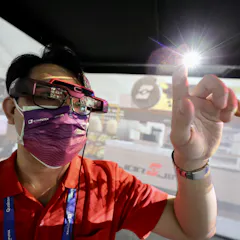
Taiwan dominates the global market for microchips – something that Washington is well aware of.

As the wireless telecommunications companies ramp up their 5G rollouts, they are beginning to pull the plug on their 3G networks. 2022 is the end of the line for the venerable cellphone service.
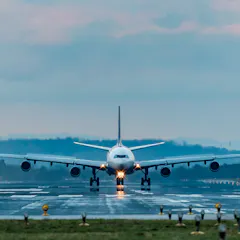
The radio frequency at which 5G operates in the US is close to that of an important piece of aircraft equipment, called radio altimeters.

Airplanes use radio waves to determine how far off the ground they are. New 5G cellphone services come close to the same frequencies the airplanes use. Here’s how that can be a problem.
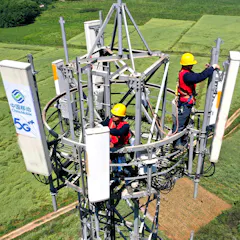
5G is 10 times faster than 4G, promising better wireless internet access. It’s also expected to put the Internet of Things revolution in high gear.

While it may be difficult to enact a global set of regulations on surveillance technologies, individual countries can take the lead with enhanced monitoring and stronger laws.

‘Teleoperated’ HGVs combine the efficiency of automation with the safety of human oversight.

The murky blobs visible with today’s wall-penetrating radar could soon give way to detailed images of people and things on the other side of a wall – and even measure people’s breathing and heart rate.
Top contributors
-

Research Fellow, La Trobe University
-
Professor of Information Sciences and Technology, Penn State
-
Lecturer Asian Studies (2004 - 2020), University of Tasmania
-
Tony Walker AM is a Friend of The Conversation.
Director, La Trobe University
-
Professor of Wireless Communications, King's College London
-
Associate Professor, School of Engineering, RMIT University
-
Associate Professor in Telecommunications Engineering, Swinburne University of Technology
-
Pro Vice-Chancellor (Academic Innovation) & Professor of Law, Deakin University
-
Professor of Electrical Engineering and Computer Science, University of California, Berkeley
-
Lecturer in RF Antennas and Propagation, University of Surrey
-
Laureate Emeritus Professor, The University of Melbourne
-
Associate professor, IoT and Software Engineering, Deakin University
-
China researcher, Macquarie University
-
Emeritus Professor Strategy and International Business, HEC Paris Business School
-
Academic Fellow, University of Sydney