
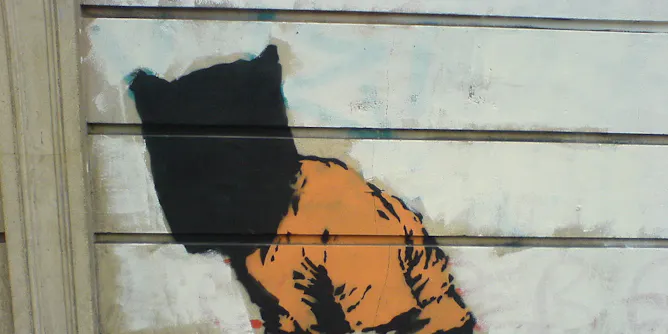
Michael Haneke’s allegorical 2009 film showed how a peaceful society can be shattered within a single generation. It’s a lesson for us now in a world drifting toward populism and violence.
Articles on Radicalisation
Displaying 41 - 60 of 150 articles
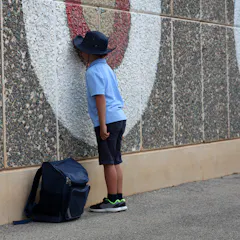
We don’t know the exact path towards radicalisation, so giving teachers signs to look for is dangerous.
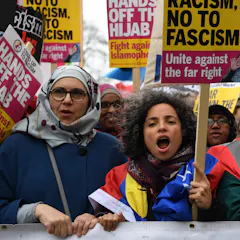
Globally, Muslims have been by far the most victimised group by terrorism in the post-9/11 era.

With more cases of women such as Shamima Begum expected, the UK is under legal obligations to protect the rights of any children involved.
Despite the publication of promising new statistics on referrals to the Prevent counter-terrorism programme, the strategy remains a blunt instrument.
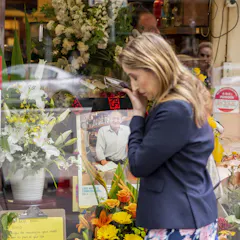
Not all terrorist incidents have mental illness as a causal factor, and most violent acts are committed by people without a mental illness.
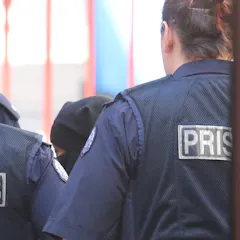
An analysis of budget documents suggests that federal funding for community-based, counter-terrorism programs has dried up.

Lecturers remain concerned about limits the Prevent duty places on freedom of expression.

Companies, such as Google, Facebook and Microsoft are working together to take down terrorist propaganda.
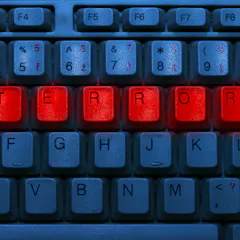
The internet may provide the forum, but radicalisation remains a social process.
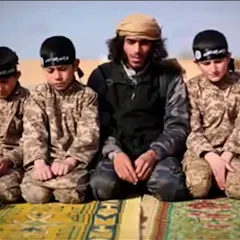
Islamic State systematically militarised the education systems of captured Iraqi and Syrian territory to turn the region’s children into ideological timebombs.
The word only appears 14 times in the UK’s parliamentary record between 1803 and 2005. Now it is everywhere.

A number of women who once wore and defended the full Islamic veil known as the niqab later chose to renounce it. Here two of them tell their stories.
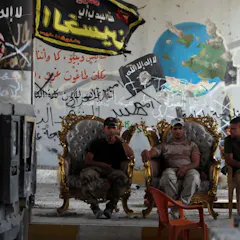
Was the early conception of IS a branching-out of the old Baath party? Or was it, as some argue, completely separate with no connection at all? Reality is probably a bit of a mix of both.
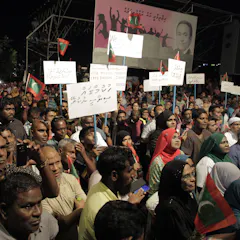
The Maldives’ increasingly polarised religious politics are coming apart.
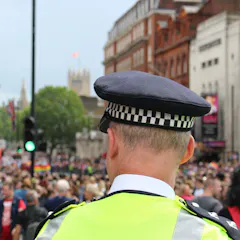
Counter-terrorism policies have social and political impacts on citizenship, identity and our perception of self and the Other. Through the British case, Lee Jarvis discusses his latest research with Sylvain Antichan.
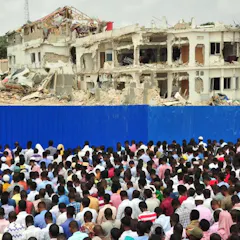
Contemporary terrorism is rooted in a form of political violence dating from the French Revolution. It is rooted in social facts and is now evolving on a global scale.
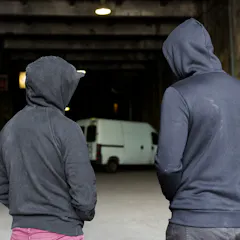
Young people from poor backgrounds are being radicalised by criminal gangs.
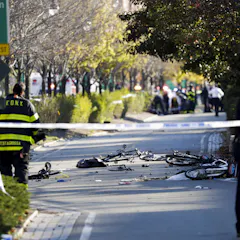
With several terror attacks committed by Uzbeks abroad in 2017, one of the world’s harshest regimes is coming under scrutiny.
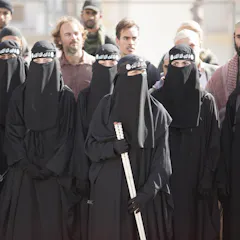
Criticisms that Peter Kosminsky’s drama about Islamic State is propaganda are wide of the mark.
Top contributors
-

Visiting Fellow, Department of Political and Social Change, The Philippines Institute, Australian National University
-
Professor, Coventry University
-
Professorial Fellow, School of Arts and Humanities, Edith Cowan University
-
Associate Professor, Griffith Criminology Institute, Griffith University
-
Associate Professor, School of Criminology, University of Leicester
-
Lecturer in Politics, Philosophy and Religion, Lancaster University
-
PhD, PhD - researcher and analyst, Edith Cowan University
-
Associate Professor, School of Social Science, The University of Queensland
-
Professor of Contemporary European History, University of Oxford
-
PhD Researcher, International and Political Studies, School of Humanities and Social Sciences, UNSW
-
PhD Candidate in Politics and International Relations, Monash University
-
Honorary Senior Research Fellow, School of Law and Social Justice, University of Liverpool
-
Professor of Religious and Secular Studies, Lancaster University
-
Senior Lecturer, Department of Sociology and Criminology, City St George's, University of London
-
Professorial Fellow, University of Canberra