
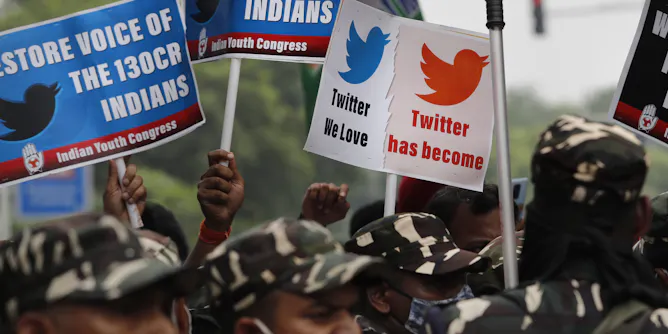
The internet has been heralded as liberation technology and accused of undermining democracy. The available research shows it is a bit of both.
Articles on Radicalisation
Displaying 21 - 40 of 150 articles

The increase in terror attacks has complicated the Kenyan government’s relationship with the country’s Muslim community.
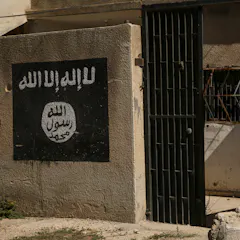
The caliphate has no territory, but plenty of hearts and minds.

It can be easy to despair about the problem of misinformation. But the problem is smaller than you might think.

All terrorism in the region has domestic origins but is linked to regional and international events.
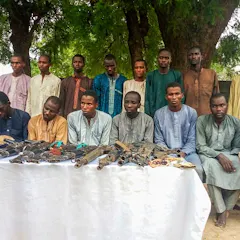
Exploring many contemporary cases of radical behaviour showed they had one thing in common: how the risk of radicalisation may be linked to fractured relationships.

The term “separatist” has a long history in France. Now it’s being used to target Muslims in a new law.

Grossly oversimplified coverage risks serious damage to some of the most vulnerable in society.

Extremists are playing on people’s health fears to normalise their views.

Scientists are arguing over how YouTube might help turn people into extremists.
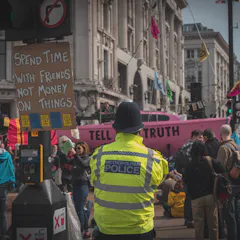
You can’t demand rebellion for long without inviting the suspicion of the state.
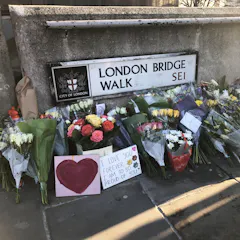
A terrorism expert explains the legislation that led to the attacker’s release.

Families of those at risk of extremism need to be supported, not judged.

We analysed eight years of Reddit posts from conspiracy theorists. Our findings have helped debunk some common myths about this somewhat alienated group of people.

For the past year, Hollyoaks has portrayed the far right radicalisation of a gay character, highlighting the embrace of a different kind of recruit

Algorithms can amplify toxic content, but the problems start in human communities.

This selection of films shows the problem of extremism in its complexity, examining how real people can become radicalised.

We should celebrate the ‘deplatforming’ of the 8chan message board, linked to the El Paso shootings, as a win for the fight against online hate speech. But its removal does not mean the fight is over.

The process of radicalisation is a complex system that cannot be reduced to the brain, behaviour, or environment. It exists at the intersection of all these elements.

After a civil conflict, within five years the majority of modern peace agreements fail. What is causing these negotiated settlements to fall apart?
Top contributors
-

Visiting Fellow, Department of Political and Social Change, The Philippines Institute, Australian National University
-
Professor, Coventry University
-
Professorial Fellow, School of Arts and Humanities, Edith Cowan University
-
Associate Professor, Griffith Criminology Institute, Griffith University
-
Associate Professor, School of Criminology, University of Leicester
-
Lecturer in Politics, Philosophy and Religion, Lancaster University
-
PhD, PhD - researcher and analyst, Edith Cowan University
-
Associate Professor, School of Social Science, The University of Queensland
-
Professor of Contemporary European History, University of Oxford
-
PhD Researcher, International and Political Studies, School of Humanities and Social Sciences, UNSW
-
PhD Candidate in Politics and International Relations, Monash University
-
Honorary Senior Research Fellow, School of Law and Social Justice, University of Liverpool
-
Professor of Religious and Secular Studies, Lancaster University
-
Senior Lecturer, Department of Sociology and Criminology, City St George's, University of London
-
Professorial Fellow, University of Canberra