
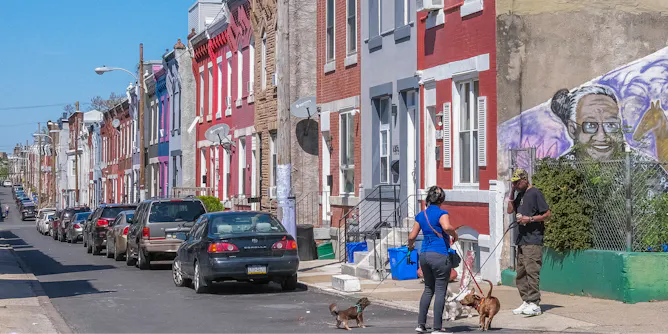
An unbiased appraisal is key to ensuring that homebuyers and those seeking to refinance a mortgage can do so under fair and equal conditions.
Articles on Racial wealth gap
Displaying all articles
Housing market appreciation has been the primary driver of growing white-Black wealth disparities since the mid-1980s.
The wealthiest areas in the US are almost 7 times richer than the poorest regions, a disparity that has nearly doubled since 1960.
The Tax Cuts and Jobs Act from Trump’s first administration harmed many middle-class and low-income taxpayers. But Black people got it the worst, says an expert on race and taxation.
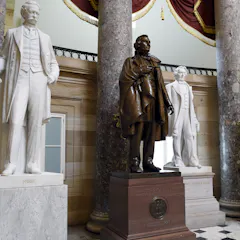
Researchers measured lawmakers’ wealth and found that those whose Southern ancestors owned slaves before abolition have a higher net worth today.

By harnessing the power of markets, digital movements like My Black Receipt aim to combat systemic disparities and promote economic empowerment by supporting Black-owned businesses.

A sociologist interviewed dozens of middle-class Black singles about their friendships, freedom and dating lives.
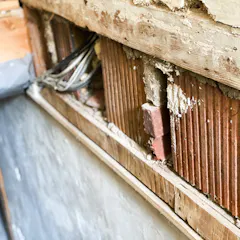
Routine maintenance is necessary for every homeowner. But for Black women, that burden is complicated by decades of redlining and the impacts of climate change.
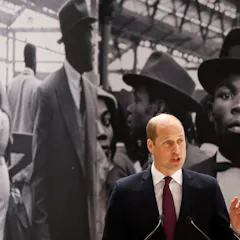
The legacy of racism in both the United States and the United Kingdom has impacted the ability of Blacks and other ethnic groups to accumulate wealth.
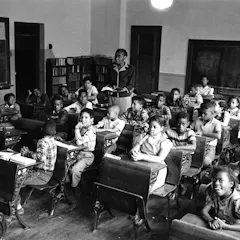
A school finance expert and an education law scholar make the case for why reparations should be paid to African Americans by changing the way schools are funded.
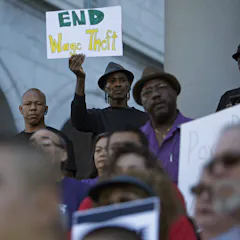
Rebalancing labor relations so that workers are empowered would be an effective way to address racial wealth disparities and atone for the legacy of slavery, a scholar argues.
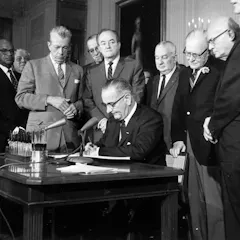
A scholar of race and racism explains what critical race theory is – and how many people get it wrong.
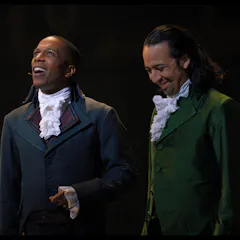
Even Colonial-era abolitionists like Alexander Hamilton enjoyed centuries of generational wealth built from slavery.
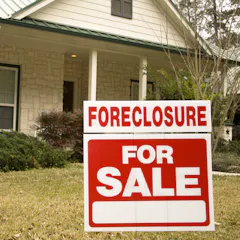
Few middle-class Americans undergoing Chapter 13 bankruptcy blame the government. They portray themselves as hardworking victims and resent others for taking more than their fair share.

New research shows homes in white areas have appreciated $200,000 more since 1980 than similar homes in nonwhite areas – a result of both old racist housing policies and modern real estate practices.
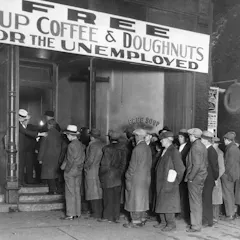
While the Great Depression reduced inequality and closed the racial wealth gap, the Great Recession of 2009 did the opposite.
Several presidential hopefuls have offered proposals to close the racial wealth gap, from baby bonds to reparations. A simulation suggests policies short of direct aid to blacks won’t do the trick.

Thanks to demographic and political changes, Democratic contenders are addressing this issue for the first time.
Top contributors
-

Professor of Theology, Vanderbilt University
-
Associate Professor of Sociology, The University of Texas at Austin
-
Associate Professor of Marketing, Suffolk University
-
John and Maria Neag Professor of Urban Education, University of Connecticut
-
Professor of Education, Rutgers University
-
Postdoctoral Researcher, Stanford University
-
Assistant Professor of Philosophy, Affiliate, Institute for Intelligent Systems, University of Memphis
-
Senior Lecturer, Essex Business School, University of Essex
-
Professor of Public Policy and Public Affairs, UMass Boston
-
Visiting Assistant Professor, Department of Political Science, Amherst College
-
Assistant Professor of Sociology, University of Pittsburgh
-
Assistant Professor, Telfer School of Management, L’Université d’Ottawa/University of Ottawa
-
Distinguished Professor of Sociology, Texas A&M University
-
Associate Professor - Department of African and African American Studies, Dartmouth College
-
Assistant Professor of Sociology, Tulane University