
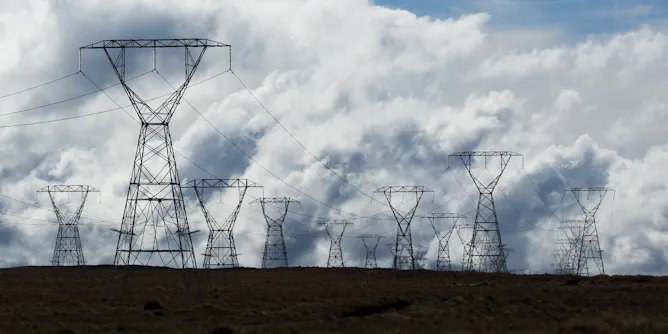
Two new fast-track energy projects offer very different paths: one tied to volatile fossil fuels, the other to a more sustainable, renewable future.
Articles on Pumped hydro
Displaying 1 - 20 of 22 articles

Snowy 2.0 will bring something genuinely new to Australia’s electricity system: large and long lasting energy storage
As the cost of Snowy 2.0 rises yet again, defenders claim the scheme can store energy cheaper than batteries. But this doesn’t stack up.
Research reveals most of the sites the Coalition has earmarked for nuclear power plants would be suitable for pumped hydropower plants.
Everyone knows the sun doesn’t shine at night. That’s where firming technologies help, by stabilising the grid and storing cheap power for later
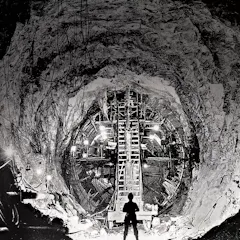
Workers tunnelling through mountains and redirecting rivers, powering and irrigating the nation. We think of the Snowy scheme as a successful nationbuilding project – but it wasn’t always that way
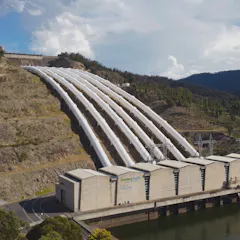
Storing energy in large pumped hydro schemes sounds simple. But engineering and terrain challenges have put Snowy 2.0 well off track – while grid-scale batteries get better and better
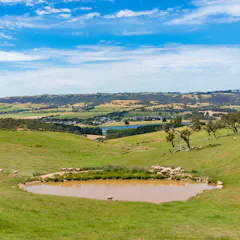
Our research has found 30,000 farm dams which could be used as energy storage. Solar by day, hydro by night.
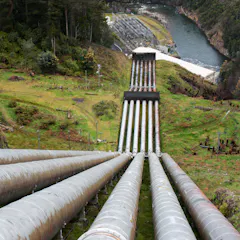
If the proposed pumped hydro scheme at Onslow goes ahead and is managed well, it could be a major asset to diversify a low-carbon, self-resilient economy in Aotearoa New Zealand.
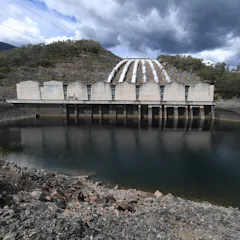
To get to 82% renewables by decade’s end means storage - and that’s where we hope our new atlas of sites for pumped hydro storage can help
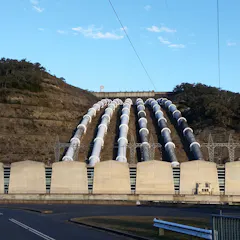
Pumped hydro offers us large scale energy storage. If we do it carefully, we can make sure these dams don’t cause the damage of the past.
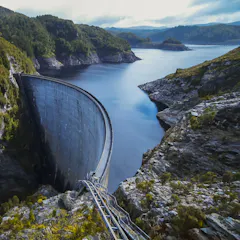
The world hydropower industry has public relations work to do, if its global expansion is to be realised. But stringent oversight is urgently needed.
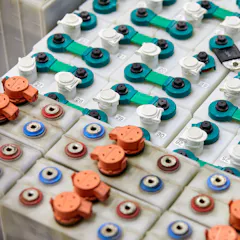
Britain’s electricity sector continues to decarbonise, but its capacity to store energy lags far behind.

Chief Scientist Alan Finkel on climate, energy and emissions
Michelle Grattan discusses Australia's current climate policy and its 2050 targets, with Australian Chief Scientist Alan Finkel.
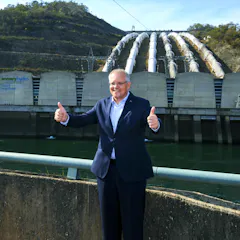
It’s a big-engineering solution that costs twice as much the equivalent amount of batteries.
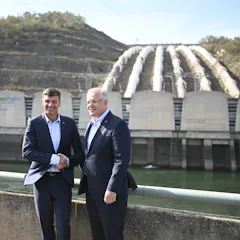
Snowy 2.0 has been a lightning rod for controversy. From cost-blowouts to climate impacts and threats to native fish, experts say there are many reasons why it should be put on hold.
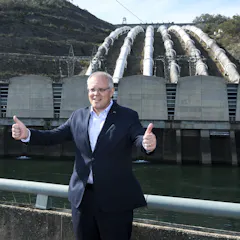
New analysis revealed less than half the extra pumped hydro capacity promised by Snowy 2.0 can be delivered. There is now overwhelming evidence the project should be put on hold.
Twelve power projects are in the running for federal government dollars: six pumped hydro, five gas and one coal. It’s clear which one shouldn’t be on the list, for economic and environmental reasons.
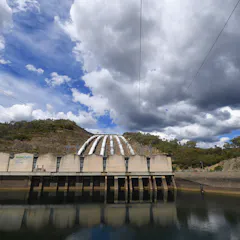
Everything you need to know about pumped hydro.

Compressed air energy storage on an industrial scale could help boost renewables.
Top contributors
-

Professor and Director, Victoria Energy Policy Centre, Victoria University
-
Professor of Engineering, Australian National University
-
Research Officer, School of Engineering, Australian National University
-
Assoc Prof. Renewable Energy, Monash University
-
Professor, Fenner School of Environment & Society, Australian National University
-
Professor and Chair in Sustainable Energy Systems, Te Herenga Waka — Victoria University of Wellington; Stellenbosch University
-
Lecturer in Engineering Design, UNSW
-
Professor of Film and Screen Studies, Monash University
-
Honorary Associate Professor, UNSW
-
Associate researcher in Fluid Mechanics Energetics Process and Civil Engineering (PhD-Ing), Université Grenoble Alpes (UGA)
-
Research Officer, 100% Renewable Energy Group, Australian National University
-
Adjunct associate in freshwater fisheries ecology and management, University of Canberra
-
Senior Lecturer, Communications and Media, Monash University
-
Senior Lecturer, UNSW
-
Reader in Energy Systems and Innovation, University of Birmingham