
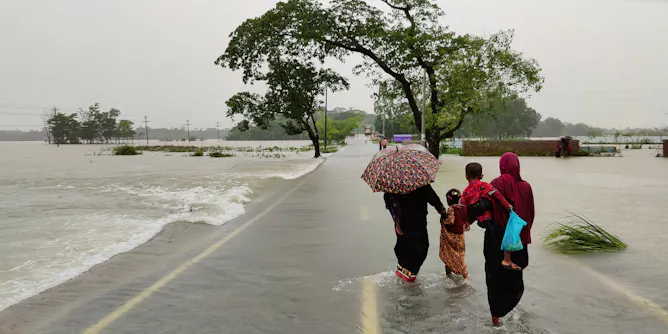
Polling reveals changing attitudes to the threat of climate change around the world.
Articles on Public attitudes
Displaying all articles
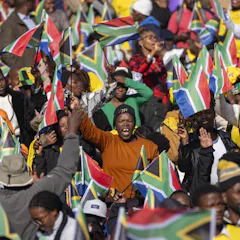
Pre- and post-election surveys in South Africa show a surge in optimism and pro-democratic sentiment.
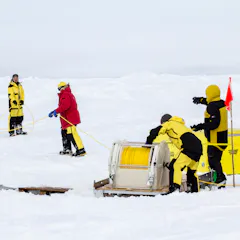
New research shows climate scientists are less trusted than other types of scientists. But there are big differences between countries and specific groups of people.

Two social scientists analyzed periodicals from US religious leaders in 1935 to determine what factors influenced groups’ sympathy, ambivalence or outrage about Hitler and Nazi Germany.
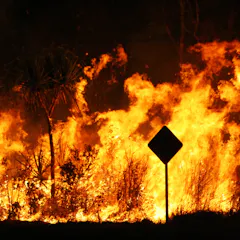
Public interest in climate change and global warming peaks after bushfires and lasts for months, research reveals. But Australians do not respond to storms and floods in the same way.

Reneging on climate commitments indicates the UK government’s misreading of public attitudes.
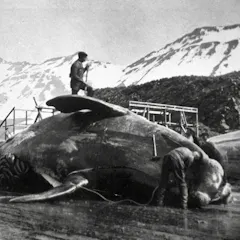
For 200 years, a small number of countries have exploited the marine wildlife of Antarctica, often with devastating impact on their populations.

The way in which Australians think about leadership in the education sector has changed throughout the pandemic. It’s seen as a public good, with ethics and accountability gaining in importance.
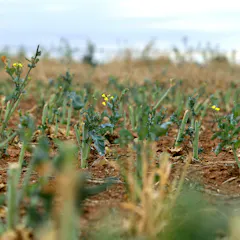
South Australia has lifted its moratorium on GM crops, while Tasmania has extended its ban. But the question should no longer be a simple binary of being “for” or “against” GM technology.
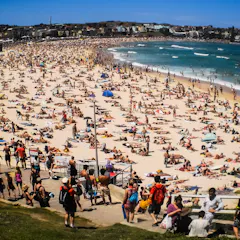
Some Australians feel they are missing out on the benefits of scientific and technological progress.
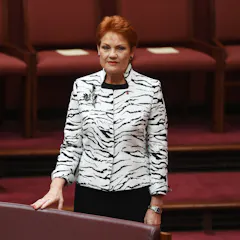
Survey findings are typically considered in isolation in the media, with no understanding of context, of what is within and what is beyond the expected.

While 60-77% of migrants of African origin and 59% of Indigenous Australians report experience of discrimination in the Scanlon Foundation survey of Australian attitudes, optimism endures.

Every time there’s a scandal involving political finance, politicians from unaffected parties talk about the public’s outrage. But how much do people actually care?
Top contributors
-

Emeritus professor, Monash University
-
Senior Lecturer, School of Politics and International Relations, Australian National University
-
Senior Lecturer in Politics and Policy, Deakin University
-
Senior Lecturer, Graduate School of Business and Law, RMIT University
-
Professor and Chair of Sociology, University of Pennsylvania
-
PhD Student / FNRS Aspirant, Université catholique de Louvain (UCLouvain)
-
Professor of Environmental Psychology, University of Bath
-
Assistant Professor of History, Texas Tech University
-
Associate Professor in Environmental History, University of Tasmania
-
Lecturer of Marketing, Swinburne University of Technology
-
Associate Professor in Management, Swinburne University of Technology
-
Research Associate, Centre for Climate Change and Social Transformations, Cardiff University
-
Lecturer, Environmental Psychology, University of Bath
-
Associate Professor of Leadership, Swinburne University of Technology
-
Senior Lecturer of Marketing, Swinburne University of Technology