
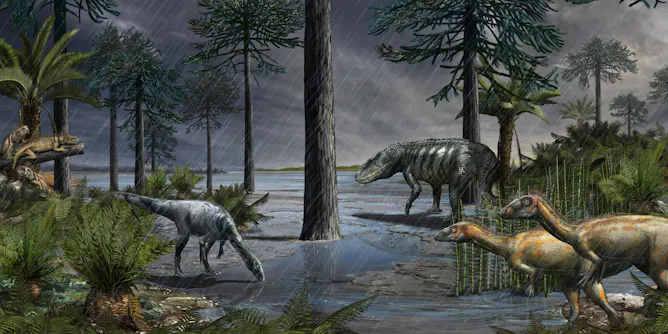
Our new research has discovered how a series of volcanic eruptions 233 million years ago fundamentally changed life on Earth.
Articles on Pterosaurs
Displaying 21 - 35 of 35 articles
When the dinosaurs went extinct, some species took over the world. Adaptability, not survivability, explains why.
We found footprints that measure around 24 centimetres long. We suspect they came from animals with legs the same height as humans.
A ‘game-changing’ fossil pterosaur suggests these species could easily fly between continents, helping to explain why similar specimens have been found all over the world.
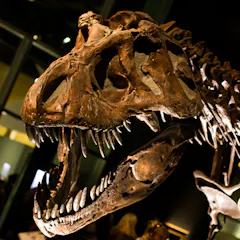
Dinosaurs ruled the Earth for about 180 million years. But around 66 million years ago, a huge rock from outer space (called an asteroid) smashed into the Earth. Then things got worse for dinosaurs.
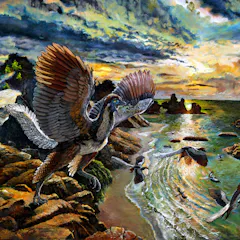
A new type of Archaeopteryx fossil helps build the case for this creature being called ‘the first bird’.
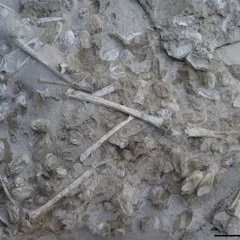
Researchers use CT scanners to take first look inside pterosaur eggs.
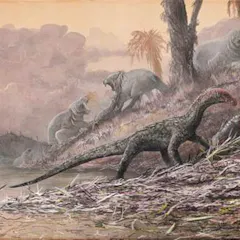
Researchers pieced together evidence from fossils that had been sitting in museums for years.
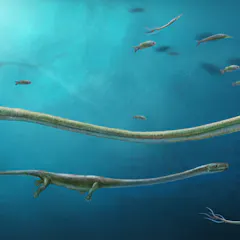
A 245m year old fossil is the first evidence that of live births in one of the major groups of animals.
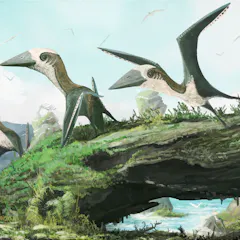
An exciting discovery suggests small pterosaurs weren’t forced out by the rise of birds.
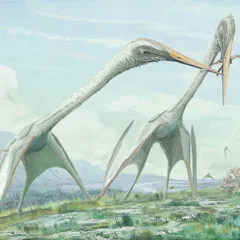
Recent research is helping us to solve the mysteries of these bizarre prehistoric creatures.
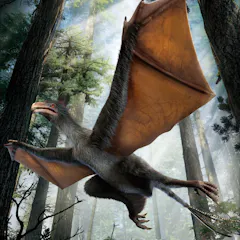
The discovery of a new winged dinosaur from more than 160 million years ago shows how they experimented with different forms of flight.
Chinese researchers have announced the rare discovery of fossilised pterosaur eggs. Xiaolin Wang from the Chinese Academy…
A review of toothed pterosaurs from the Cretaceous period in England has revealed much greater diversity than previously…
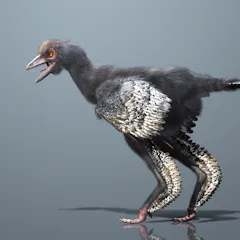
A new feathered fossil, Aurornis – introduced in today’s Nature – has the potential to resolve a debate about bird evolution that’s had evolutionary biologists in a bit of a flap in recent years. The origin…
Top contributors
-

Technical Specialist in Earth Sciences, University of Bristol
-
PhD candidate, Curtin University
-
Professor, Palaeobiology, University College Cork
-
Lecturer in the School of Applied Sciences, Edinburgh Napier University
-
Professor of Vertebrate Palaeontology, University of Bristol
-
Postdoctoral researcher, University College Cork
-
Professor of Palaeobiology, University of Portsmouth
-
Senior Lecturer in Paleontology and Evolutionary Biology, Life Sciences at the University of Bath, University of Bath
-
Individual Merit Researcher, Natural History Museum
-
PhD, Independent Researcher, The University of Queensland
-
Senior Research Scientist, South Australian Museum; Flinders University
-
PhD candidate, School of the Environment, Geography and Geosciences, University of Portsmouth
-
Research Associate, School of Earth and Planetary Sciences, Curtin University
-
Project Officer – Office of the Queensland Chief Scientist
-
Professor of Evolutionary Palaeobiology at the Milner Centre for Evolution, University of Bath