

The reclusive country’s media is tightly controlled and choreographed. But a close look at the tone and focus of the coverage can shed light on the regime’s priorities and resolve.
Articles on Propaganda
Displaying 121 - 140 of 197 articles
By 2022, people in developed countries may see more fake news than accurate information. Artificial intelligence may be to blame – but could also help people sort out the truth from lies.
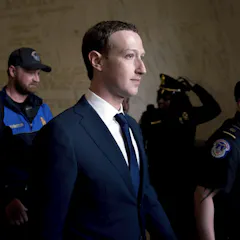
Knowledge of our selves, quantified in big data and transformed into affective algorithms, is exploited by corporations and political parties to give us our 15 minutes of fame.

My expert evidence to parliament shows how Cambridge Analytica and SCL secretly pushed their supposed notoriety in the dark arts in brazen ways.

The Europeans have something to teach the US about protecting citizens subject to Russian internet propaganda. Their effort isn’t just a different form of propaganda. It’s more like fact-checking.
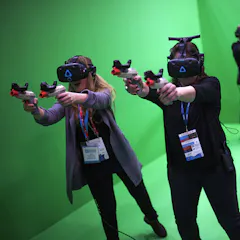
As the internet-connected world reels from revelations about personalized manipulation based on Facebook data, a scholar of virtual reality warns there’s an even bigger crisis of trust on the horizon.

It will take a concerted effort of stakeholders working together to combat disinformation says new EU report.
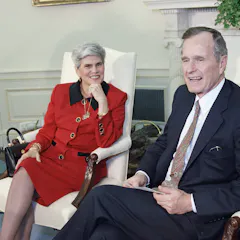
Decades ago, the CIA created a secret department dedicated to spreading anti-communist propaganda around the globe. A scholar explains how it is comparable to Russian meddling through social media.
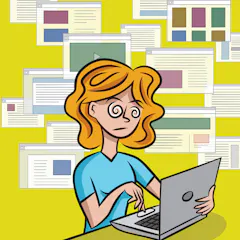
Researchers have developed a game to ‘vaccinate’ people against fake news – by showing them how to become a fake news mogul.
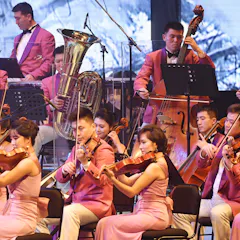
Kim Jong-un’s favourite act won hearts and minds when they performed on day one of the Winter Olympics.

Multichoice’s dominant power over South Africa’s public sphere suggests that dropping ANN7 may send a bad signal for media freedom and democratic debate.

The only reason journalists will mourn the demise of TV news station ANN7 will be the loss of jobs.

The state-produced stories, which include tales about apartment lotteries, theme parks and the Clintons, might seem absurd. But they offer a window into the regime’s priorities and anxieties.
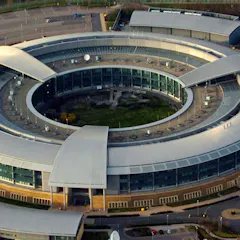
A new national security communications unit has echoes of the past, when the government tried to weaponise information, with mixed results.

Divided by military force for decades, many Cypriots have lost their zeal for unification – but more than a few are still hopeful.
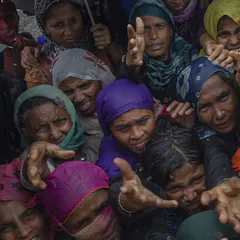
Facebook is unwittingly helping fuel a genocide against the Rohingya people in Myanmar. Does Cuba’s internet model provide lessons to manage social media amid political chaos?
Social media companies arose from libertarian, free-market origins but must embrace social benefits and democracy to survive.

ISIS may have lost most of their territory, but it’s important to be aware that ISIS can still utilise the Internet and social media to recruit people and to spread their fantastical propaganda.

More than just a romance, Casablanca was an overt call to arms for the US public.

Will the arrival and popularity of Oculus Go and other VR systems make us think differently about alternative realities and so-called alternative facts?
Top contributors
-

Director of Undergraduate Studies, School of Journalism, Media and Cultural Studies, Cardiff University
-
Associate Professor in Digital Media, Queensland University of Technology
-
Senior Lecturer in Political Communications, Nottingham Trent University
-
Global Scholar at Woodrow Wilson International Center for Scholars, Washington, DC and Hopkins P Breazeale Professor, Manship School of Mass Communications, Louisiana State University
-
Professor of Informatics and Computer Science, Indiana University
-
Senior Lecturer in Journalism, University of Essex
-
Professor and Chair, Department of Journalism, Stellenbosch University
-
Associate Professor of Communications (Social Media), Syracuse University
-
University Fellow in Law, Charles Darwin University
-
Adjunct Instructor in Cybersecurity, Johns Hopkins University
-
Lecturer European Politics, Leiden University
-
Ph.D. in Political Science and International Relations, USC Dornsife College of Letters, Arts and Sciences
-
Professor of Human Centered Design & Engineering, University of Washington
-
Professorial Lecturer, American University School of International Service
-
Faculty member & Research Group Leader, Max Planck Institute for Software Systems