

In tough economic times, employees may accrue annual leave because they can’t afford to travel or simply to give themselves a financial buffer.
Articles on Presenteeism
Displaying all articles

Having a law that allows the right to disconnect is one thing, commitment to that right is another.

New laws will soon give employees a legal right to ignore work-related communication outside their standard working hours.

Dancing boosts wellbeing and reduces absenteeism and presenteeism.

The pandemic changed a lot for many workplaces but some issues remain.

Sick pay is not available to everyone.

Post-pandemic, the world of work will probably never be the same again. And that’s probably a good thing. We now have an opportunity to make it better.

Workers shouldn’t have to choose between working while sick and supporting themselves and their families. Post-pandemic, we must learn from our mistakes and take permanent action on paid sick days.
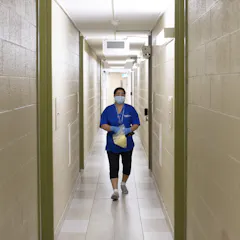
One of the factors that has made COVID-19 so catastrophic in long-term care homes was lack of paid sick leave for low-wage workers.
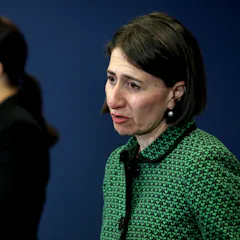
As NSW Premier Gladys Berejiklian discovered after continuing to work while awaiting the result of a COVID test, you don’t necessarily get any extra credit for ‘sickness presenteeism’. And rightly so.

If you can work from home you’re less likely to take a sick day, and that could be a problem.

Presenteeism — when employees show up for work when they’re sick — at a time of a global pandemic is especially dangerous for co-workers, managers and employers.

Stress, and more chronic exhaustion such as burnout, is commonplace within the modern workplace.

Why hit the beach on holiday when you can use your annual leave to be ill at home instead?

Period pain is common, and the evidence shows it can hinder a woman’s performance at school, university and work. To tackle this problem, we need to start talking about it.

British workers put in the longest hours in the EU.
Top contributors
-

Professor of Organisational Psychology and Health, University of Manchester
-
Project Support, National Health & Wellbeing Forum, University of Manchester
-
Associate Professor, Human Resource Management and Business Consulting, University of Guelph
-
Senior Lecturer in Leadership and Organisational Development, Liverpool John Moores University
-
Assistant Professor, The Pennsylvania State University, Penn State
-
Professor, Translational Health Research Institute, Western Sydney University
-
Senior Lecturer in Human Resource Management, Liverpool John Moores University
-
Professor, La Trobe University
-
Director, Centre for Work + Wellbeing - an ECU Strategic Research Centre, Edith Cowan University
-
Associate Professor, University of Aberdeen
-
Reader in Leadership and Management, Manchester Metropolitan University
-
Senior Lecturer in Human Resource Management, Liverpool John Moores University
-
Associate Professor at NICM Health Research Institute, Western Sydney University
-
Lecturer in Management, Edith Cowan University
-
Professor of Finance, City St George's, University of London