

Habit helps take the mental load off figuring out how to get somewhere. But relying on the familiar can make it harder to adapt to changes to your route and to find better ones.
Articles on Prefrontal cortex
Displaying 1 - 20 of 25 articles

The same principles that help athletes on the court, field or track can help you regulate stress and adapt to changes in everyday life.
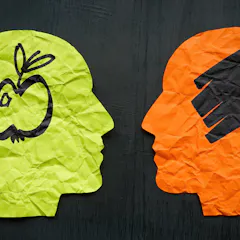
Here’s how your brain visualizes scenarios that you’re not actually looking at with your eyes.
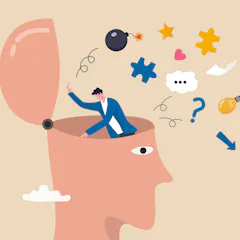
Navigating life with ADHD or as a parent of a child with ADHD can be stressful. But as researchers learn more about the uniqueness of brains with ADHD, they are also gleaning insight into treatments.

Online advertising featuring bright colors, cartoon figures and promotions by social media influencers entice adolescents to try tobacco.

Oral contraceptives modify the menstrual cycle. What’s less well known is that they also reach the brain, particularly the regions important for regulating emotions.
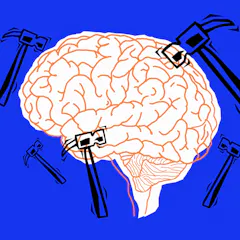
Pain has long been subjectively measured, leading to frustrations for patients and doctors alike. Identifying neural biomarkers of pain could improve diagnosis and lead to better treatments of chronic pain conditions.
Learning new rules requires the suppression of old ones. A better understanding of the brain circuits involved in behavioral adaptation could lead to new ways to treat schizophrenia and bipolar disorder.
There’s so much to process in our daily lives, we need habits to get us through and give the brain a break.

When we are tired, bored or something is bothering us, children and adults behave worse. All because the brain’s control tower, the prefrontal cortex, is not working at full capacity.
By learning what parts of the brain are crucial for imagination to work, neuroscientists can look back over hundreds of millions of years of evolution to figure out when it first emerged.

In a systematic review of existing studies, researchers found that air pollution such as fine particulate matter can interfere with regions of the brain responsible for emotional regulation.

The effects of COVID and a new treatment for it are leaving a bad taste in the mouth for many. How do we detect what’s salty, sweet, bitter, sour or umami?

Have you ever noticed tiredness and illness can make us feel close to the verge of tears? Here’s what’s happening in the brain.

Sleep and mental health have a well established relationship.
This brain region also shows how effective certain treatments will be.

Excessively eating junk foods during adolescence could alter brain development, leading to lasting poor diet habits. But, like a muscle, the brain can be exercised to improve willpower.

Our neural hardware responds differently when we perceive people to be on “our team.” This hard-wiring allows for both positive and negative biases.

A neuropsychologist explains the underlying brain mechanisms which stop people managing their emotions.

How does being thankful about things in your own life relate to any selfless concern you may have about the well-being of others? A neuroscientist explores the gratitude/altruism connection.
Top contributors
-

Lecturer, Bangor University
-
Senior Lecturer (Adjunct), Nutritional neuroscientist, Adelaide University
-
Researcher, Spinal Cord Injury Centre, University of Zurich
-
Associate Professor of Medicine, University of Florida
-
Research Associate in Psychology and the Center for Brain Injury Research and Training; Director of Emotions and Neuroplasticity Project, University of Oregon
-
Lecturer in Psychology, University of East Anglia
-
Postdoctoral fellow, Penn State
-
Professor of Psychiatry, University of California, San Francisco
-
Academic Foundation Doctor, University of Cambridge
-
Senior Research Fellow, The Perron Institute for Neurological and Translational Science, and Faculty of Health Sciences, Curtin University
-
Associate Professor of Anesthesia, University of California, San Francisco
-
Professor of Neuroscience, Boston University
-
Assistant Professor of Habit Change, Bond University
-
Professor, Department of Psychology, Université du Québec à Montréal (UQAM)
-
Associate Professor of Social and Behavioral Sciences, Rutgers University