

The BBC’s Sherlock – along with most contemporary adaptations – seems to indicate that the values of the intellect are not those of society.
Articles on Post-truth
Displaying 61 - 72 of 72 articles
Unrestricted access to information is vital to a vibrant democracy.But if this information is inaccurate, biased or falsified, the fundamental freedom of informed choice is denied.

Bald-faced lies are fairly rare in Australian politics but, in 2016, weasel-words and cherry-picking were common. Politicians and public figures are experts at disguising opinion and ideology as fact.
How can educators face the new challenges brought by the Alt-Right and post-truth environment?
Are we all doomed to never agree on what is or isn’t true?
People who read false news items come to believe them – even if they know better. It doesn’t help to know the source is unreliable or the report has been debunked.

Every one of us is vulnerable to thinking that the ideas we hold dear are reasoned or principled positions. But how many of our ideas are adopted and defended as part of our tribal identity?
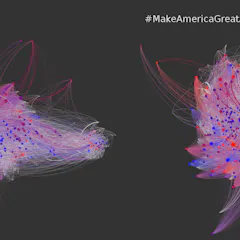
If people can be conned into jeopardizing our children’s lives, as they do when they opt out of immunizations, could they also be conned out of democracy?
In a ‘post-truth’ world, presenting both points of view can often be misleading.

Leadership is an odd thing in a world where people only want their echo chamber defended. The power, and the responsibility, starts to lie elsewhere.
Brexit and Trump aren’t to blame. The rise of ‘post-truth’ is rooted in the middle-classes, not the masses.
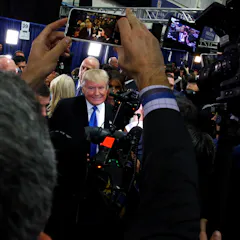
We now find ourselves in a ‘post-truth’ environment, trying to find meaning in dumbed-down democracy. How did we get here?
Top contributors
-

Research Fellow, Center for Philosophy and History of Science, Boston University
-
Open Evidence Research, UOC - Universitat Oberta de Catalunya
-
Principal Lecturer in Journalism, Humanities and Creative Industries, University of East London
-
Professor and Head of Department of Political and Conflict Studies, Nelson Mandela University
-
Full professor, GEM
-
Senior Lecturer in Psychology, Nottingham Trent University
-
Senior Research Fellow in Integrated Sustainability Analysis, School of Physics, Faculty of Science, University of Sydney
-
Senior Research Fellow, Centre for Advancing Journalism, The University of Melbourne
-
Professor of Rhetoric & Communications, University of Winnipeg
-
Chair in Science Communication & Future Media, University of Salford
-
Chercheuse en développement durable, sciences sociales et technologie, GEM
-
Senior Lecturer in English Literature, University of Portsmouth
-
Professor and Chair, Department of Journalism, Stellenbosch University
-
Director Sydney Environment Institute and Professor of Environmental Politics, University of Sydney
-
Canada Research Professor, School of Journalism and Communication, Carleton University