
Despite the claims of populist politicians, academics and experts can drive positive social change.
Articles on Post-truth
Displaying 41 - 60 of 72 articles
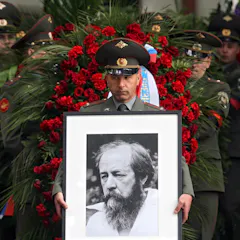
As Solzhenitsyn saw it, simple truths are always a threat to totalitarianism.
It needn’t end this way.

If you want to know how to spin alternative facts, just ask the PR gurus who kept the world smoking.
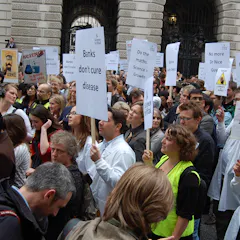
From mistrust in experts to fake news, it has never been more important for scientists to talk directly to the public.
Whether the ubiquity of fiction has devalued truth or enhanced morality has been in doubt for over 2,000 years.
How to define the public role of universities in the age of post-truth populism.

Alternate realities don’t just exist in politics – and not all falsehoods are lies. Distortions of the truth can range from a normal part of human nature to pathological.
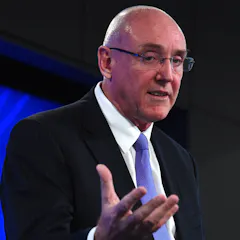
Our need for unbiased, well-researched information has never been greater.
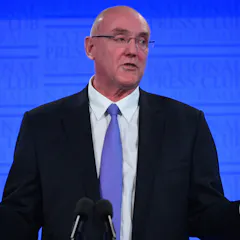
Barney Glover says the post-truth era is a challenge for universities.
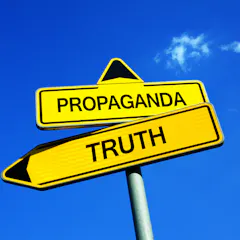
In Africa, the idea of a post-truth era - which by implication fundamentally presupposes the existence of an era in which ‘truth’ was self-evident - is folly.
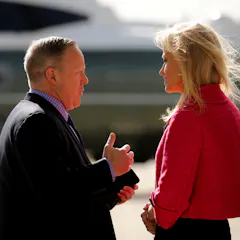
How do we determine what is fact? An archaeologist explains how the answer has changed over time and why it matters so much now.
There’s never been greater need for the study of what we don’t know, and why we’re not supposed to know it.
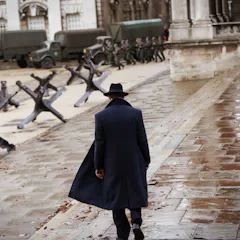
Why do alternative histories of a Nazified world again have such commercial and cultural traction?
We build in extra checks and balances, including blind peer review by a second academic expert, additional scrutiny and editorial oversight.
The reporting of crackpot theories as news by mainstream news outlets only damages the credibility of the media and science, and undermines public trust in both.
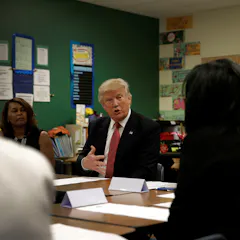
Scientists must bear some responsibility for the post-truth era and the current crisis in democracy.
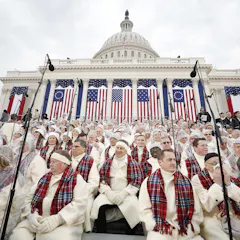
Musicians have largely greeted Trump with the sound of silence – and in doing so, they check the normalisation of the current administration.
Only by privileging an English-speaking, Western position can we say that ‘post-truth’ emerged in 2016.
There’s never been greater need for the study of what we don’t know, and why we’re not supposed to know it.
Top contributors
-

Research Fellow, Center for Philosophy and History of Science, Boston University
-
Open Evidence Research, UOC - Universitat Oberta de Catalunya
-
Principal Lecturer in Journalism, Humanities and Creative Industries, University of East London
-
Professor and Head of Department of Political and Conflict Studies, Nelson Mandela University
-
Full professor, GEM
-
Senior Lecturer in Psychology, Nottingham Trent University
-
Senior Research Fellow in Integrated Sustainability Analysis, School of Physics, Faculty of Science, University of Sydney
-
Senior Research Fellow, Centre for Advancing Journalism, The University of Melbourne
-
Professor of Rhetoric & Communications, University of Winnipeg
-
Chair in Science Communication & Future Media, University of Salford
-
Chercheuse en développement durable, sciences sociales et technologie, GEM
-
Senior Lecturer in English Literature, University of Portsmouth
-
Professor and Chair, Department of Journalism, Stellenbosch University
-
Director Sydney Environment Institute and Professor of Environmental Politics, University of Sydney
-
Canada Research Professor, School of Journalism and Communication, Carleton University