
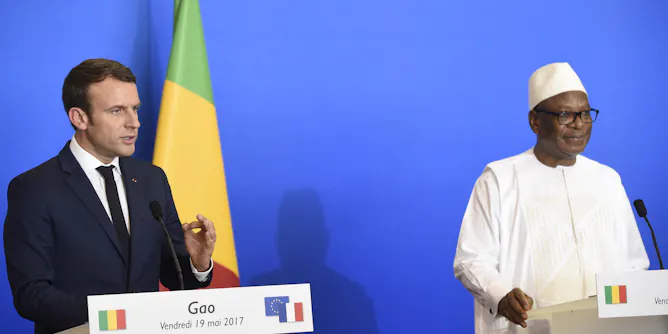
Despite being led by different presidents over the past six decades, the French government’s policy on Africa has been faithful to its neo-colonial roots. Will Macron’s government be any different?
Articles on Post-colonialism
Displaying 61 - 80 of 86 articles

Populist movements are on the rise. Their supporters distrust the establishment, elites, authority and official sources. The post-truth world is a post-expert world.
It’s important to shift educational discourse in and around Africa in a more equitable, representative direction.
A global approach to African history complements the radical post-colonial histories, while also asserting the role of the continent in the world’s global pasts and present.

Most other African countries have a less fractious or problematic relationship to Shakespeare than South Africa does.
The empire’s formal structures may have been gutted, but its influence lives on.

Zuckerberg is just the latest in a long line of West Coast capitalists to purchase a slice of Hawaii.

It’s important to create spaces where the global South’s problems can be presented, debated and solutions developed - including some that can be applied in similar economies.

Outsiders might not understand how someone who led his country’s downfall from breadbasket to basket case has remained in the presidency for so many years

Tax systems in post-colonial Africa need to be reformed. For instance, there ought to be rebates for advancing moral good or educating future taxpayers.
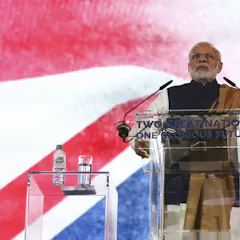
Britain and India may be linked by colonial ties, but India is intent on forging a new relationship based on in its own interests.
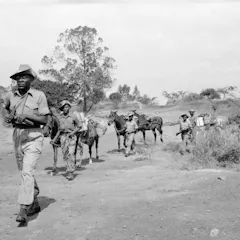
A myth is doing serious injustice to the way historians have approached decolonisation.

Muslim women are often criticised for their lack of political involvement, but Algerian women have embraced both anti-colonial and feminist movements.
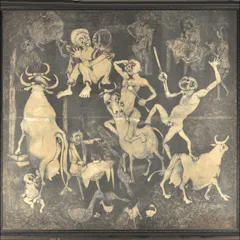
‘African Guernica’ is an incredibly powerful work of art in many ways, importantly filling that space between the visible and the visible.

Schools and universities in post-colonial contexts still operate within the logic of coloniality. This is starkly illustrated by their language policies.

Decolonising the curriculum is far more nuanced than replacing theorists and authors. Universities first need to define how they approach the development and dissemination of curricula.
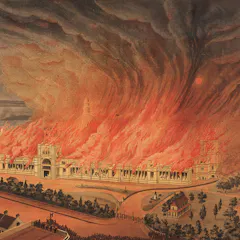
Sydney’s Garden Palace, which burned to the ground in 1882, was a monument to empire’s glory. Indigenous artist Jonathan Jones is now working on an epic exhibition that will explore this historical epoch from an Aboriginal perspective.
In South Africa there’s a value judgment attached to students who take part in universities’ English for Academic Purposes programmes. This shouldn’t be the case.

The lessons Paulo Freire learnt nearly 90 years ago and the theories he developed from painful personal experience still resonate across Africa’s schooling systems today.
Decolonisation of the curriculum doesn’t have to mean the destruction of Western knowledge, but it’s decentring. Such knowledge should become one way of knowing rather than the only way.
Top contributors
-

Emeritus Professor of African Linguistics, University of Leipzig
-
Professor of English Language Teaching and Literacy Development, Rhodes University
-
Senior Lecturer, Literary and Cultural Studies, Monash University
-
Associate Professor Sport History, Stellenbosch University
-
South African visual artist and senior lecturer of Art History and Visual Culture at Rhodes University, Rhodes University
-
Professor of Indian and Colonial History, University of Liverpool; Independent Social Research Foundation
-
Senior Lecturer in American History & Director of Liberal Arts, University of Exeter
-
Distinguished Professor, Department of Curriculum, Teaching and Learning, Ontario Institute for Studies in Education, University of Toronto
-
Digital Research Infrastructure Consultant, University of Cape Town
-
Formerly Reader, Birmingham Law School
-
Assistant Lecturer, Geography Department, The University of the West Indies: St. Augustine Campus
-
Lecturer: History; Humanities, University of Pretoria
-
Director of History & Policy at the Institute of Historical Research and Professor of British and Commonwealth History, School of Advanced Study, University of London
-
Professor of Philosophy of Science, Durham University
-
Professor of the Politics of Development, University of Oxford