

An article published in Science in 1960 predicted that, thanks to ever-increasing growth, in the year 2026 the human population would approach infinity.
Articles on Population growth
Displaying 1 - 20 of 122 articles
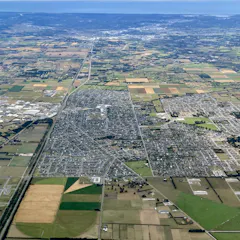
Rolleston near Christchurch is rapidly expanding, with more fast-tracked development coming. It’s a far cry from the ‘town of the future’ planned in the 1970s.

NZ First’s Kiwi Kids Grant is tied up with the party’s broader immigration policies. But a ‘baby bonus’ for citizens won’t necessarily achieve the intended outcome.

Florida’s population boom has fizzled to just 0.9% growth as domestic migration slows to a trickle.

South Africa shouldn’t settle for a future in which millions who are willing and able to work go hungry while the country waits for the formal sector to grow.

Property tax reform in Detroit could boost homeownership and attract new residents and businesses.
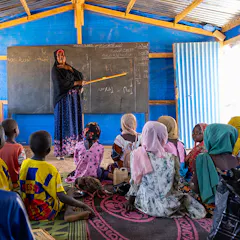
Eroding the gains made in education has severe consequences, especially for girls.
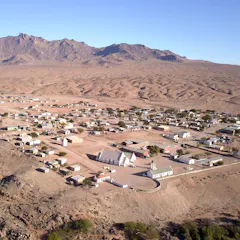
By 2100, rural African dwellers will be exposed to dangerous levels of heat nearly twice as high as those in urban areas.
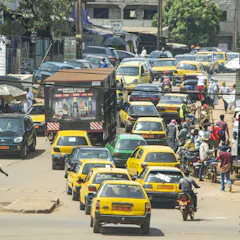
Every city is different but they can learn from each other.

New statistics show a major reversal in immigration numbers and population growth, with parts of New Zealand now seeing population declines.

Even though there are 8 billion people on Earth today, a catastrophe could send that number much lower within a few decades.

A combination of population explosion, failure of governance and endemic poverty creates a perfect breeding ground for a jihadist state in west Africa.

For decades it seemed as if nothing could change the trajectory of population growth. But a huge change is looming.

As the world’s population grows, contact between humans and wildlife will increase in more than half of Earth’s land areas. A new study shows where the largest changes will occur.
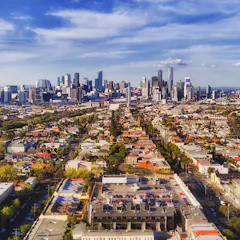
Victoria’s government wants local governments to speed up development and get more homes built. But there are many questions around this goal.
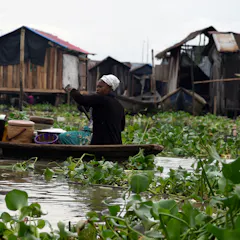
Social inclusion gives slum dwellers a voice to advocate for their rights and interests, leading to more inclusive and equitable policies and practices.

Conditions deteriorated in 2023 but were stlil relatively good for ecosystems and agriculture. Unfortunately, the alarming decline of threatened species continued.

Most of the problems confronting the world come down to population growth. But where women are given the choice, they limit the number of children they have.

The world’s coastal deltas are home to hundreds of thousands of people – but they’re now under threat.
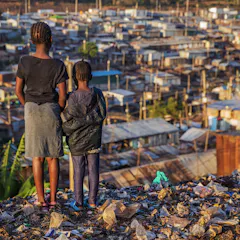
The impact of housing quality extends beyond health to education and subsequent economic outcomes, particularly for children.
Top contributors
-

Honorary Professor of Demography, Macquarie University
-
Professor of Demography and Social Statistics., Obafemi Awolowo University
-
Demographer, POLIS Centre for Social Policy Research, Australian National University
-
Honorary Associate Professor in Planning, University of Queensland, University of Sydney
-
Professor of population and development studies, University of Kinshasa
-
Distinguished Professor, College of Humanities and Social Sciences, Te Kunenga ki Pūrehuroa – Massey University
-
Head of Urbanisation and Wellbeing, African Population and Health Research Center, African Population and Health Research Center
-
Dornsife Endowed Professor of Global Health, Drexel University
-
Professor of Economics and Public Policy, ANU College of Arts and Social Sciences, Australian National University
-
Emeritus professor, Monash University
-
Professor of International Planning, Centre for Urban Research, RMIT University
-
Deputy Director, Australian Urban Design Research Centre, The University of Western Australia
-
Professor in Demography, Northern Institute, Charles Darwin University
-
Principal Research Fellow, Charles Darwin University
-
Post-Doctoral Associate, University of Minnesota