

With immigration soaring, warnings about its impact on population distribution, housing and business innovation have gone largely undiscussed during the election campaign.
Articles on Population growth
Displaying 21 - 40 of 122 articles

From semitropical playgrounds to life-endangering climate risks: Going back over a century, California’s and Florida’s growth has been predicated on climate – and promises of the good life.

Australia’s past reports have been largely ignored big issues like housing and climate change. Ahead of the latest report’s release, here’s what we’re still missing – including giving you a say.

The Intergenerational Report puts a long lens on the nation’s future, looking at the implications of demographic changes and covering a broad range of economic and social areas

Without policies that take account of a growing population with few working-age people, DRC risks seeing an increase in poverty and hunger.

With the right investment in health and education, Nigeria’s high population can spur economic development.
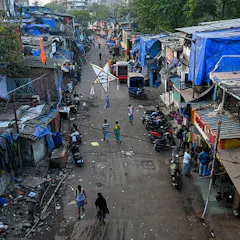
Cities are where solutions are found – but also where perils are amplified when we fail to act.

The latest revised data challenge the popular narrative about a population renaissance for regional Australia and for states and territories that were losing residents to other parts of the country.

China’s population decline and intensive ageing will offer opportunities and risks to African countries.

Better food supply, a reduction in population growth rate, and greater integration into global markets are three key steps Niger must take.

For many environmentalists, overpopulation is a real concern. But the planet will benefit more from tackling overconsumption by rich countries.

Eight countries are projected to be behind 50% of the growth in population over the next three decades. Five are in Africa.
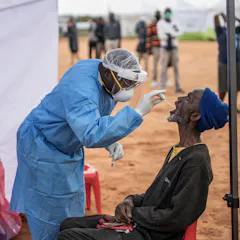
The human population has doubled in 48 years, and worsening climate change has left the world facing serious health risks, from infectious diseases to hunger and heat stress.

The UN estimates the global population will pass 8 billion people on Nov. 15, 2022. From the Stone Age to today, here’s how things spiraled out of control.

India’s international climate pledge could set the tone for other emerging economies for a decade.

Nigeria must prioritise investment in education, health and infrastructure to harness the opportunities of its huge population.

Twenty-six fast-growing African cities may battle health challenges if air pollution is not addressed.

Our survey found strong opposition to Australian megacities, with most people preferring population growth to be in satellite cities and rail hubs outside the capitals.

One third of the economists surveyed say Australia’s migration target should be lifted to 190,000 per year. Another third say 190,000 is not enough.

Attributing Australia’s economic success to closed borders runs the risk of leaving us with the wrong lesson the next time the things turn down.
Top contributors
-

Honorary Professor of Demography, Macquarie University
-
Professor of Demography and Social Statistics., Obafemi Awolowo University
-
Demographer, POLIS Centre for Social Policy Research, Australian National University
-
Honorary Associate Professor in Planning, University of Queensland, University of Sydney
-
Professor of population and development studies, University of Kinshasa
-
Distinguished Professor, College of Humanities and Social Sciences, Te Kunenga ki Pūrehuroa – Massey University
-
Head of Urbanisation and Wellbeing, African Population and Health Research Center, African Population and Health Research Center
-
Dornsife Endowed Professor of Global Health, Drexel University
-
Professor of Economics and Public Policy, ANU College of Arts and Social Sciences, Australian National University
-
Emeritus professor, Monash University
-
Professor of International Planning, Centre for Urban Research, RMIT University
-
Deputy Director, Australian Urban Design Research Centre, The University of Western Australia
-
Professor in Demography, Northern Institute, Charles Darwin University
-
Principal Research Fellow, Charles Darwin University
-
Post-Doctoral Associate, University of Minnesota