
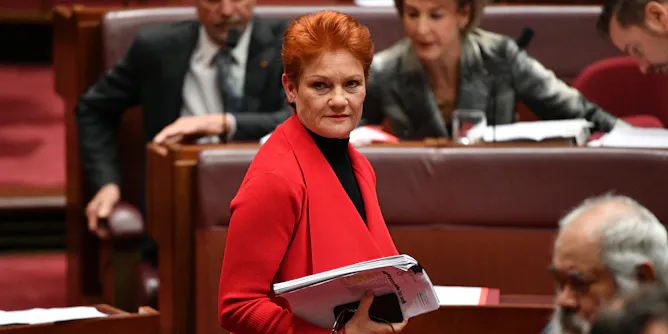
One Nation leader Pauline Hanson said Australia is “the highest-growing country in the world”, with population growth “double than a lot of other countries”. Is that right?
Articles on Population growth
Displaying 81 - 100 of 122 articles
Fifty years ago biologist Paul Ehrlich published ‘The Population Bomb,’ an apocalyptic warning that overcrowding would lead to wars and famine. Here’s what the book got right and wrong.
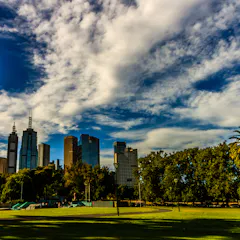
Australian cities are experiencing the third big wave of growth in their history. The response in the past was planning and investment in green infrastructure, and it’s time to do the same again.
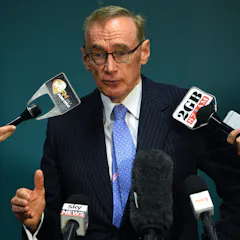
Most surveys are consistent in finding there is a substantial minority of the view that immigration is too high, but not a large majority.

Australian government environmental funding has decreased by a third since 2013. At the same time, Australia is experiencing massive species loss as funding for the sector dries up.

Some African countries present a facade of democracy. The absence of substantive democracy is contributing to instability on the continent.

Fire is part of the ecology in much of California, but recent wildfires have caused much more damage than past burns of similar size. A fire ecologist points to two key factors: winds and population growth.
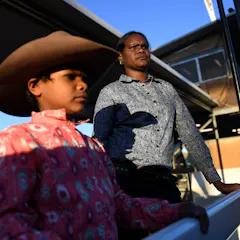
Looking past the headline Census figures, we see divergences between rural and urban Indigenous populations, and the young and old.
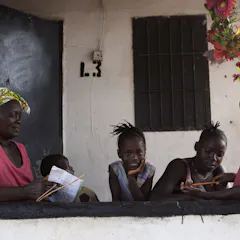
There’s no reason why small families shouldn’t become the norm in Africa. But this will depend on improving education opportunities for women and improving birth control policies.
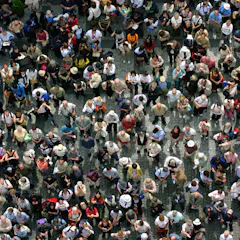
Reasoned debates on sustainable migration intake levels are important. But transport and health infrastructure shortfalls in Western Sydney won’t be solved by reactive anti-immigration attitudes.

Australia’s GPI, a broad measure of national wellbeing, has stalled since 1974. So what has been the point of huge population and GDP growth since then if we and our environment are no better off?
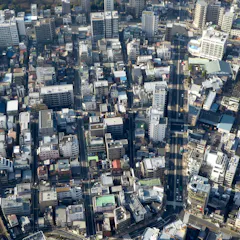
Tokyo has experienced extraordinary population growth but is among the world’s most liveable cities. Just how has it managed the pressures of growth?
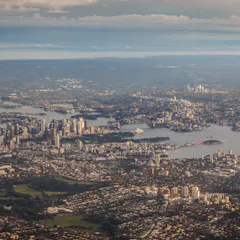
Financial benefits are behind the development industry’s push for a continuous rapid population growth. But our poorly planned cities are ill-prepared and already struggling.

The housing market is too volatile to look at prices alone. If you want to understand the housing market you need to look at the wider economy.

The latest statistics show Australia’s population growth in the last decade has been significantly higher than in other developed countries.

Considering all the aspects of life in Australia that are affected by population, it’s remarkable that the nation doesn’t have a national policy on it.
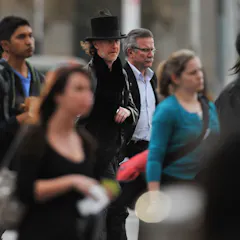
Melbourne is Australia’s most rapidly growing city, a title it wrested from Perth around 2013-14. Several of Australia’s big cities are growing well above the national average population growth rate.

According to widely-cited estimates, world food production must double by 2050 to keep up with population growth. New research challenges this target and calls for balancing growth with conservation.
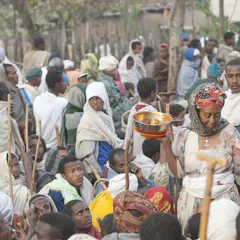
There is no one-size-fits-all answer to global food insecurity except that the West needs to learn to consume, and waste, less.
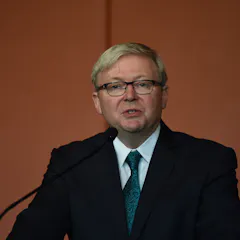
Former prime minister Kevin Rudd writes of Australia having lost its national bearings and being powerless to act to find its way in the world.
Top contributors
-

Honorary Professor of Demography, Macquarie University
-
Professor of Demography and Social Statistics., Obafemi Awolowo University
-
Demographer, POLIS Centre for Social Policy Research, Australian National University
-
Honorary Associate Professor in Planning, University of Queensland, University of Sydney
-
Professor of population and development studies, University of Kinshasa
-
Distinguished Professor, College of Humanities and Social Sciences, Te Kunenga ki Pūrehuroa – Massey University
-
Head of Urbanisation and Wellbeing, African Population and Health Research Center, African Population and Health Research Center
-
Dornsife Endowed Professor of Global Health, Drexel University
-
Professor of Economics and Public Policy, ANU College of Arts and Social Sciences, Australian National University
-
Emeritus professor, Monash University
-
Professor of International Planning, Centre for Urban Research, RMIT University
-
Deputy Director, Australian Urban Design Research Centre, The University of Western Australia
-
Professor in Demography, Northern Institute, Charles Darwin University
-
Principal Research Fellow, Charles Darwin University
-
Post-Doctoral Associate, University of Minnesota