

There are no guarantees that pollsters’ troubles in recent elections and popular skepticism about their dependability will be alleviated anytime soon.
Articles on Pollsters
Displaying all articles

Pollsters’ credibility is constantly at stake. If the industry collectively misses the mark, public trust erodes, and confidence in the system itself is called into question.
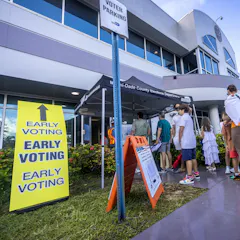
The vagaries of polling – and, most of all, the vagaries of the US electoral system – mean there is little point attempting to read the tea leaves beyond the broad public sentiment polling captures.
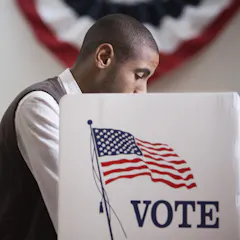
Compared with past midterms, voter turnout among young people jumped in 2022 – but it was still below 30%.
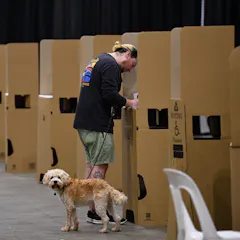
Labor needs substantially more than 50% of the two-party preferred vote – 51.8% according to the pendulum – to win the majority of seats, 76. This equates to a swing of 3.3 percentage points.

People know a lot about their friends and neighbors – and pollsters can learn from that information, if they ask.

With the next federal election possible as soon as August 2021, the need for reform of polling standards in Australia is urgent.
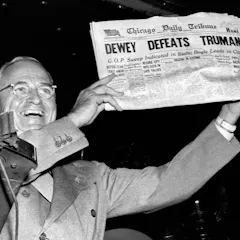
Presidential pollsters in the US have had some embarrassing failures. Here’s a catalog of those miscalls, from the scholar who literally wrote the book on them.
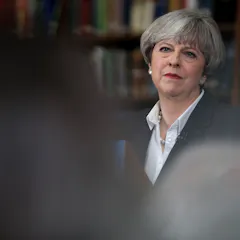
The exit poll published at 10pm suggests the Conservatives could fall short of a parliamentary majority. Is it to be believed?
Pollsters must be as accurate as possible. How will they address the challenges revealed in the 2016 election, and other changes in the coming years?
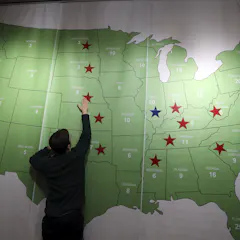
People around the world were shocked when Hillary Clinton, ahead in many polls, didn’t end up the U.S.‘ president-elect. But that doesn’t mean the polls themselves were wrong.
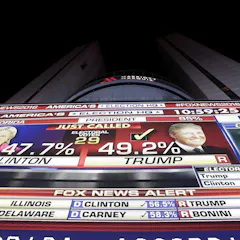
Many pollsters are now eating humble pie.

Internet polls are offering up quite different results to phone polls. Here are a few suggestions as to why.

Sorry Boris, those with a bet at stake think we’re staying put.
Top contributors
-

Professor Emeritus of Communication, American University School of Communication
-
Assistant Professor of Mathematics -- Statistics, Knox College
-
Adjunct Research Fellow; Journalist, University of Notre Dame Australia
-
Professor of Economics, University of Stirling
-
Senior Lecturer in Quantitative Social Science and Director of the Sheffield Q-Step Centre (The University of Sheffield); Statistical Ambassador (Royal Statistical Society), University of Sheffield
-
Director of the Elon University Poll, Elon University
-
Professor of Research Methodology, Director of National Centre for Research Methods, University of Southampton
-
Professor of Political Science and Public Policy, University of Southampton
-
Professor of Human Social Dynamics, Santa Fe Institute; External Faculty, Complexity Science Hub Vienna; Associate Researcher, Harding Center for Risk Literacy, University of Potsdam
-
Director of Behavioral Science & Policy Initiative, Schaeffer Institute of Public Policy & Government Service, USC Price School of Public Policy, USC Dornsife College of Letters, Arts and Sciences
-
Emeritus Professor of Politics and International Relations, Macquarie University
-
Professor of Government, American University School of Public Affairs
-
Senior Research Associate, United States Studies Centre, University of Sydney
-
Adjust Professor and Pollster, Johns Hopkins University
-
Campus Visitor, ANU Centre for Social Research and Methods, Australian National University