
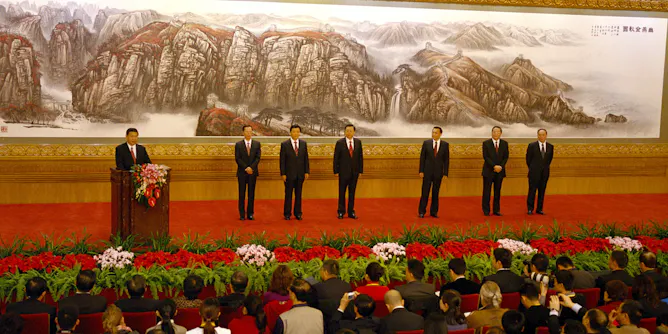
The China Model features political meritocracy at the top, democracy at the bottom and experimentation in between. The West can learn from the best of Chinese leadership, even if it is authoritarian.
Articles on Political theory
Displaying 61 - 80 of 109 articles
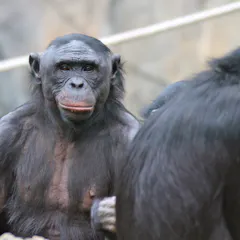
We can draw inspiration from the successes of non-humans, learn from their group decision-making and gain insights from analogies. And with every extinction of a species we lose such possibilities.
Democracy must evolve in response to the threats we pose to the environment and to ourselves. We can learn from how other species make collective decisions, solve problems and survive.
Despite the popularity in other disciplines of inter-species thinking, it’s ignored in democracy research. Why is that? Why can we not conceive of democracy as anything other than uniquely human?

Democracy’s problem is not the crisis but the triumph of capitalism. Democracy has become market-conforming, resulting in whole sections of society lacking meaningful representation.

TPP negotiations have been covered in secrecy, and now as details have been released it only shows a wider democratic deficiency.
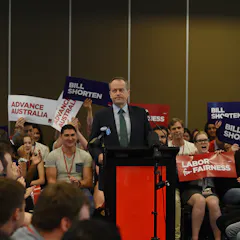
There is a growing canyon now separating politics as understood and practiced by political authorities from the political practices of everyday people.
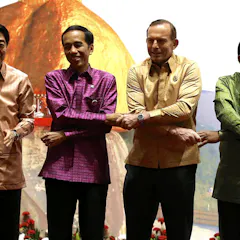
For the past two centuries, Australia got many of the big calls on global engagement right. In our third century, there are worrying signs that we have not fully grasped what the rise of Asia means.

Online petitions send a certain signal to politicians and other leaders: we care, but maybe not enough to get off our seats.
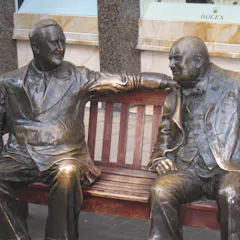
Every culture needs heroes. So when our political system becomes incapable of giving us any, where does that leave us?
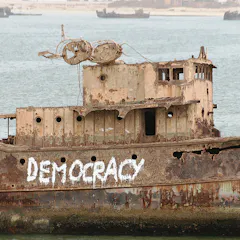
Campaigns are now more focused on how to manipulate the electorate so you can govern as you see fit once you get power.

The global food production system is inherently undemocratic. Based on shared experiences of the adverse effects, the world’s citizens need to intervene as democratic publics to transform a broken system.
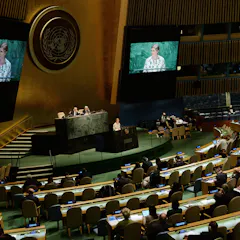
Surveying the current world order, one might be forgiven for thinking that it is essentially ungovernable. Chaos, conflict and crises seem to be the order of the day. The phrase “international order” seems…
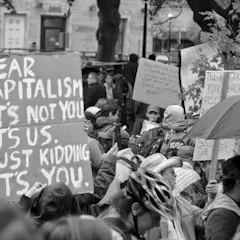
While some find it hard to imagine life after capitalism, the digitally connected people of the world have begun embracing a new set of ethical concerns requiring new types of economies.
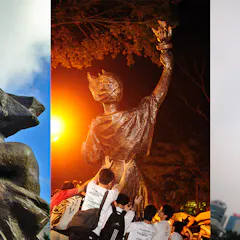
Democracy – despite being considered by many as the only legitimate form of government – has no laureates to call its own.

The out-of-the-blue move to a living wage in the UK exemplifies the ditching of methodical public policy processes for manipulative hype and spin, the ‘hyper-democracy’ that brings politics into disrepute.

Should animals be treated like other forms of property such as land, machinery and “stocks”? What role do animals that are owned by humans play in the concept of global wealth?

David Leyonhjelm is a conviction politician whose positions are governed by principle, not populism. But he is exposing the disturbing moral thinness of the libertarian principles he espouses.

Candidates from Spain’s ‘15M’ movement – born of mass protests in 2011 – have responded in various ways to the dilemma that being elected creates for those wishing to overturn the ‘old politics’.
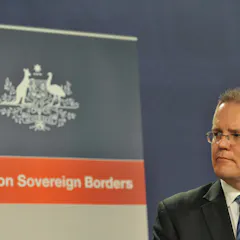
The withholding of information about government actions in asylum seeker policy undermines its democratic accountability to the Australian people.
Top contributors
-

Assistant researcher, University of Sydney
-
Lecturer and Teacher, Department of Politics and International Relations, Cardiff University
-
Senior Lecturer in Democracy Studies, University of Canberra
-
Adjunct Professor, Australia-China Relations Institute, University of Technology Sydney
-
Professor of Politics, University of Bristol
-
Professor of Politics, University of Sydney
-
Associate Professor of Public Policy, Australian National University
-
Lecturer, Public Policy and Political Communications, The University of Melbourne
-
Senior Lecturer, Department of Languages and Linguistics, La Trobe University
-
Lecturer in Public Sector Management, University of Canberra
-
Senior Lecturer in Politics and International Relations, University of the Sunshine Coast
-
Professor of Media, Communications and Social Theory, London School of Economics and Political Science
-
Professor of Comparative Political Science and Democracy Research at the Humboldt University Berlin; Associate of the Sydney Democracy Network, University of Sydney; Director of Research Unit Democracy: Structures, Performance, Challenges, WZB Berlin Social Science Center.
-
Lecturer in Politics, University of Sheffield
-
Emeritus Packey J. Dee Professor in Philosophy and Political Science, University of Notre Dame