

Capitalism has become focused on expanding the proportion of social life that is open to data collection and processing – as if the social itself has become the new target of capitalism’s expansion.
Articles on Political theory
Displaying 41 - 60 of 109 articles
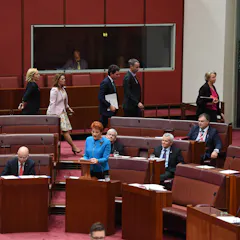
The normal rules of political engagement – coherence, consistency, fact, logic, proportion – do not apply to members of the paranoid right like Pauline Hanson.
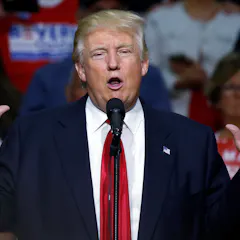
How does Donald Trump get away with the type of campaign he’s running? Why, if he’s a narcissistic demagogue, has he found an audience who respond to his politics?
One thing became dramatically apparent in the economic sphere following the Cold War: capitalism was ubiquitous, but it looked very different in Japan, Germany, the US and China.
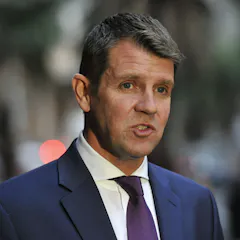
In office, to what extent has New South Wales Premier Mike Baird acted according to liberal principles?
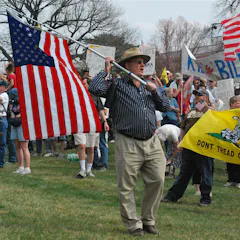
We are witnessing the global rise of populism. Once seen as a fringe phenomenon from another era or only certain parts of the world, populism is a mainstay of politics today across the globe.

Unlike most occupations, MPs are not obliged to take part in any education and training programs to prepare them for their role.
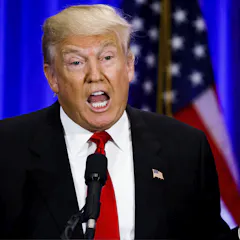
The value of democracy needs to be restated and defended, rather than presumed. In doing so, there is value in adopting a more tempered stance, one that understands its worth but also its flaws.
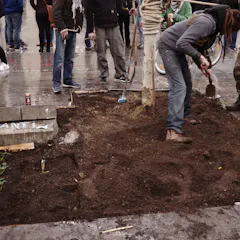
Today’s anarchists should give up the fantasy of ‘abolishing the state’. That simply plays into the agenda of the rich and privileged.

Between institutional collapse and false promises of utopia, people seek to define their own lives and their relations with others by thinking and acting as though power no longer existed.
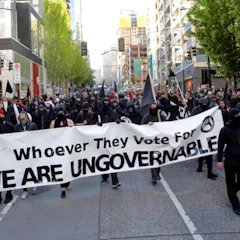
Liberty is a political matter bound up with institutionalised struggles for equality among individuals, groups, networks and organisations. This is where the cult of the free individual falls down.
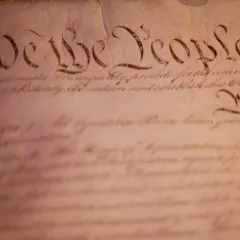
If anarchists reject private property and the state, they need to devise alternative, radical practices of power-sharing. Republican constitutionalism offers one way to think about this.

If democracy were an animal, which one would it be? This short play, set in an Australian pub, explores this question to contrast ways we understand democracy and our roles within it.
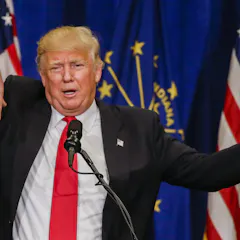
The faultlines in democratic politics are clear. On one side is a system of democracy that is bad at making people feel represented. On the other are anti-politician performers like Donald Trump.
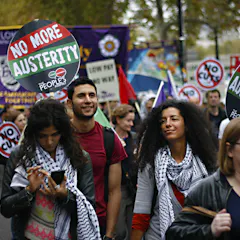
The future of democracy depends on developing a left-wing populism that can revive public interest by mobilising political passions in the fight for an alternative to neoliberal de-democratisation.
Opponents of democracy often raise the spectre of social disorder. Over the long term, it is only democracy and the rule of law that will provide for the long-lasting peaceful rule of the nation.

The tradition of republicanism offered us civil religion, a foundation of belief that could counter any politics or policy that demands sacrifice in this world to be compensated in some “beyond”.
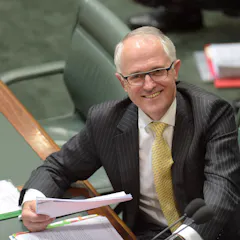
A vote on whether same-sex couples can get married is discriminatory because it applies a standard to them that does not apply to heterosexual couples.
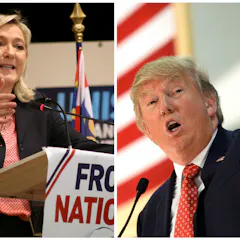
Populist politicians are on the march, first in Latin America, then in Europe and the US. They are on both the left and right, and their policies vary, but their approach carries the same risks.
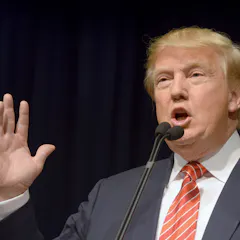
The dwindling ranks of those who line up to defend America’s system are able to do so only if they view it through a prism of its lofty 18th-century ideals, rather than 21st-century realities.
Top contributors
-

Assistant researcher, University of Sydney
-
Lecturer and Teacher, Department of Politics and International Relations, Cardiff University
-
Senior Lecturer in Democracy Studies, University of Canberra
-
Adjunct Professor, Australia-China Relations Institute, University of Technology Sydney
-
Professor of Politics, University of Bristol
-
Professor of Politics, University of Sydney
-
Associate Professor of Public Policy, Australian National University
-
Lecturer, Public Policy and Political Communications, The University of Melbourne
-
Senior Lecturer, Department of Languages and Linguistics, La Trobe University
-
Lecturer in Public Sector Management, University of Canberra
-
Senior Lecturer in Politics and International Relations, University of the Sunshine Coast
-
Professor of Media, Communications and Social Theory, London School of Economics and Political Science
-
Professor of Comparative Political Science and Democracy Research at the Humboldt University Berlin; Associate of the Sydney Democracy Network, University of Sydney; Director of Research Unit Democracy: Structures, Performance, Challenges, WZB Berlin Social Science Center.
-
Lecturer in Politics, University of Sheffield
-
Emeritus Packey J. Dee Professor in Philosophy and Political Science, University of Notre Dame