

We’re not sure if the cure, the populist outsider, will work and make life better. but we are willing to experiment as the old certainties of representative politics wither.
Articles on Political theory
Displaying 21 - 40 of 109 articles

Why are we increasingly seeing voters support candidates whose policies are, superficially at least, against their own interests?
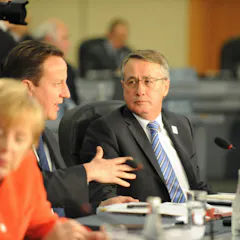
While both parties may have set out to modernise and renew their ideologies, the ALP’s and Labour’s attempts to marry the old and new instead precipitated two separate identity crises.

Ambivalence among voters is reason to think about how democracy is working for us as a community. To keep democracy alive we need to be sceptical about the exercise of power and keep it in check.

Each individual act of posting, linking, commenting and liking may look insignificant up close, but they add up. There is enormous power here for mass persuasion, one viral share at a time.
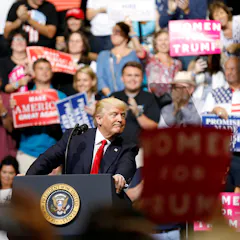
Populist leaders not only attack the institutions of global capital, they also disregard the checks and balances of institutional democracy.

The only exceptional leaders we need today are the ones who help us to govern and take care of ourselves.
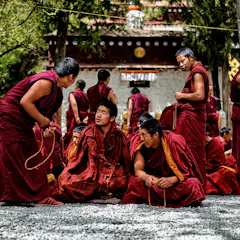
Populist politics would appear to have left deliberative democracy by the wayside, but innovations that engage citizens in reasoned decision-making have much to offer.
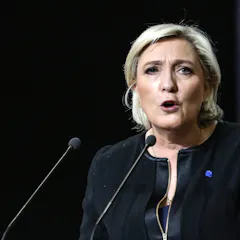
Both attack the status-quo, but for entirely different reasons.

Those on the far right already worry about finite resources and protecting traditional culture, and they see the natural landscape as a big part of national identity.
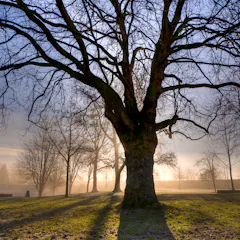
If people are starting to look much worse in democratic terms, trees are starting to look much better. We are learning that plants engage in meaningful and, more to the point, truthful communication.
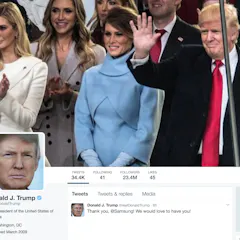
Donald Trump is reinventing the royal fiat by novel means: the rule-by-tweet, or ‘twiat’. This move is not an extension of popular democracy, but its enemy, and it needs to be resisted.
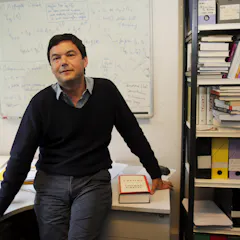
The crisis confronting neoliberal capitalism suggests that its internal contradictions are now undermining its very foundations. What can we expect from a post-neoliberal world?
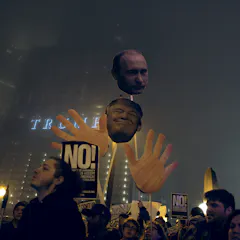
The origin of tyrannical power is irrelevant: whether by election, inheritance or force, if rulership is oppressive, it is tyrannical. And the way to beat it is deceptively simple: refuse to comply.

The ancient Greek historian Herodotus once observed that Persian rulers indulged the habit of getting drunk when making important decisions. When sober and sensible next morning, their custom was to reconsider…
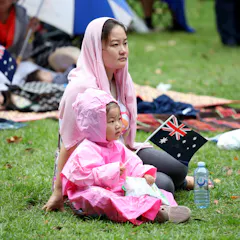
Australia was designed at Federation to ensure nationals of British descent would be able to create a society populated by individuals as much like themselves as possible.

In a globalised world, the credibility of the birthright lottery as grounds for excluding people from protection may be diminishing.
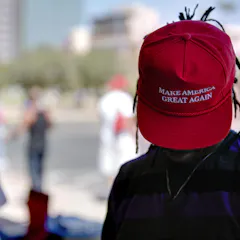
Utopia and dystopia are combined in current political thinking, from Donald Trump to the universal basic income.
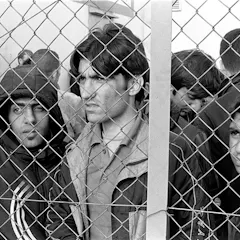
Democracy today contains within itself impulses towards both inclusion and exclusion. Spinoza’s thinking on aristocracy should alert us to how democratic rule by the people can be hollowed out.
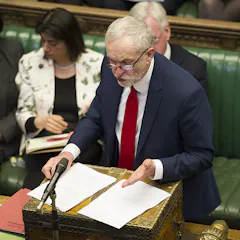
Labour reformers toyed with the image of democratic participation without realising what it would actually lead to – a democratic debate. But the next step is not to backpedal against democracy.
Top contributors
-

Assistant researcher, University of Sydney
-
Lecturer and Teacher, Department of Politics and International Relations, Cardiff University
-
Senior Lecturer in Democracy Studies, University of Canberra
-
Adjunct Professor, Australia-China Relations Institute, University of Technology Sydney
-
Professor of Politics, University of Bristol
-
Professor of Politics, University of Sydney
-
Associate Professor of Public Policy, Australian National University
-
Lecturer, Public Policy and Political Communications, The University of Melbourne
-
Senior Lecturer, Department of Languages and Linguistics, La Trobe University
-
Lecturer in Public Sector Management, University of Canberra
-
Senior Lecturer in Politics and International Relations, University of the Sunshine Coast
-
Professor of Media, Communications and Social Theory, London School of Economics and Political Science
-
Professor of Comparative Political Science and Democracy Research at the Humboldt University Berlin; Associate of the Sydney Democracy Network, University of Sydney; Director of Research Unit Democracy: Structures, Performance, Challenges, WZB Berlin Social Science Center.
-
Lecturer in Politics, University of Sheffield
-
Emeritus Packey J. Dee Professor in Philosophy and Political Science, University of Notre Dame