
It was once deemed crazy to get rid of protective tariffs. Privatising state banks was inconceivable. Both are now commonplace, but how does this happen?
Articles on Political theory
Displaying 1 - 20 of 109 articles
From golf course antics to constitutional power grabs, Donald Trump’s rule-bending reveals how narcissistic politics risks breaking democracy itself.
Nationalism is the bedrock of fascism, but not all nationalists are even right-wing, let alone extremist.
For a long time, political scientists have assumed politicians will do anything to avoid blame. But that’s no longer how they operate.
Some global issues have prompted partnerships between seemingly strange bedfellows at opposite ends of the political spectrum. The ‘horseshoe theory’ tries to make sense of this, but what’s it about?
This isn’t the first time that US authorities have criminalized civil disobedience or framed grassroots organizing as a conspiracy.
It’s a phrase often bandied around – but what does it mean? And how relevant is the notion of ‘the end of history’ today?
It’s the fairest way to settle this debate – though in the absence of a clear majority supporting either “remain” or a “no deal” it would probably mean accepting Theresa May’s deal.
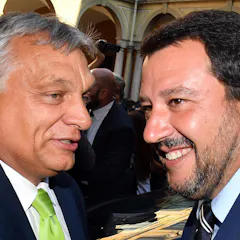
It’s a slippery concept but academics have reached agreement on some of its fundamental elements.
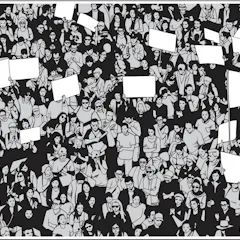
Recent elections in Turkey, Hungary and Russia raise a fundamental question about democracy. Can it give autocracy a mandate?
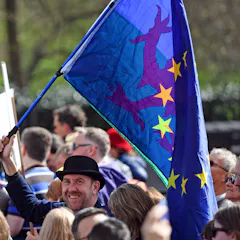
Given that so many people have a strong opinion about identity politics, it is surprising how few of us have a clear idea on what it actually is.
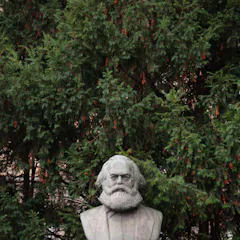
Marx believed that exploitation of workers and of nature went hand-in-hand.

The financial oligarchies differ from other kidnappers by being silent about their power over institutions and policies – they don’t want to alert anyone to what they have done.
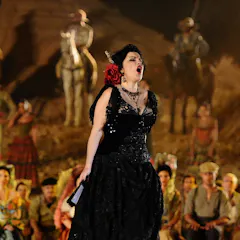
Opera goers are high multiplier voters. Win them over and you might get a few more supporters along the way.
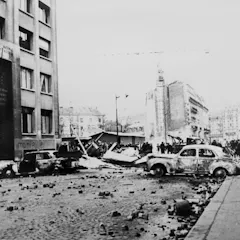
The protesters who took to the streets of Paris didn’t know what they wanted: they just knew what they were against. But they did make us think that maybe there is another, better world.
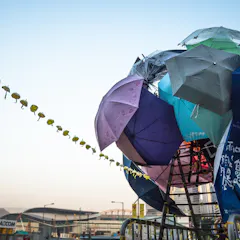
Uncertainty is built into democracy, but we are seeing more talk of crisis and more attempts at redefinition. So where does this leave citizens who want to have a meaningful say in how they live?
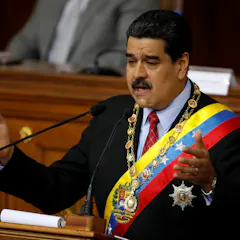
Democracy takes many forms, some of them democracy in name only. Confusion and misappropriation complicate the public struggle for the democracy to come, but this challenge is always unending.
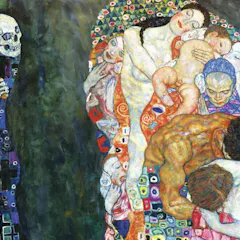
Is it really time to eulogise democracy, or are we rather on the cusp of a new phase in its long and varied life?
Australians have reason to be apprehensive that some civil voices are not being heard in our liberal democracy.
Current events show that the old problem of populism is making a comeback, and that populism is indeed an autoimmune disease of our age of monitory democracy.
Top contributors
-

Assistant researcher, University of Sydney
-
Lecturer and Teacher, Department of Politics and International Relations, Cardiff University
-
Senior Lecturer in Democracy Studies, University of Canberra
-
Adjunct Professor, Australia-China Relations Institute, University of Technology Sydney
-
Professor of Politics, University of Bristol
-
Professor of Politics, University of Sydney
-
Associate Professor of Public Policy, Australian National University
-
Lecturer, Public Policy and Political Communications, The University of Melbourne
-
Senior Lecturer, Department of Languages and Linguistics, La Trobe University
-
Lecturer in Public Sector Management, University of Canberra
-
Senior Lecturer in Politics and International Relations, University of the Sunshine Coast
-
Professor of Media, Communications and Social Theory, London School of Economics and Political Science
-
Professor of Comparative Political Science and Democracy Research at the Humboldt University Berlin; Associate of the Sydney Democracy Network, University of Sydney; Director of Research Unit Democracy: Structures, Performance, Challenges, WZB Berlin Social Science Center.
-
Lecturer in Politics, University of Sheffield
-
Emeritus Packey J. Dee Professor in Philosophy and Political Science, University of Notre Dame