

The conviction of police officer Benjamin Monk for the manslaughter of Dalian Atkinson is a very rare case.
Articles on Police brutality
Displaying 61 - 80 of 135 articles
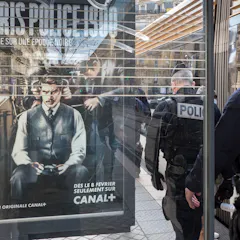
The classic cop show is now a problematic genre, but if it can change, then perhaps real world policing can too.
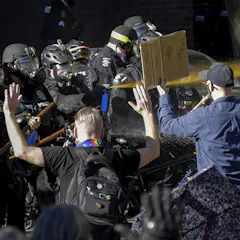
New research confirms that unfair police treatment is psychologically damaging and that the consequences are decidedly worse for certain racial and ethnic groups.
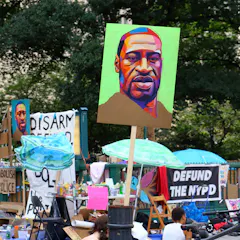
Colonial police organisations used similar arguments to uphold their power as were heard in the trial of George Floyd’s murderer.
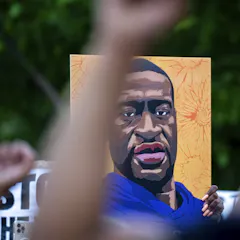
Video evidence can be powerful at a trial – but it does not always lead to a fair rendering of justice.
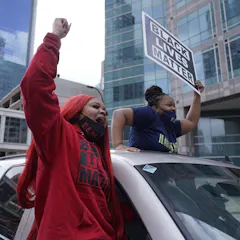
In the wake of the conviction of the police officer who killed George Floyd, recent court decisions against what’s known as “qualified immunity” are promising.
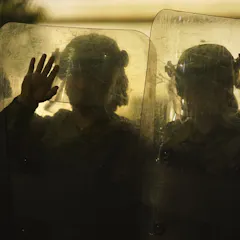
We need to clarify the role of the police, to promote a more justice-oriented style of police leadership and to put in place long-term mechanisms of accountability to support and sustain change.
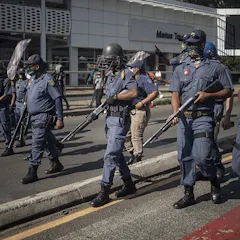
South Africans deserve a fuller picture of the extent of police brutality, and the level of accountability, especially when people die at the hands of police.

Can college professors rap their way into academic publishing? One professor makes an album to prove they can.
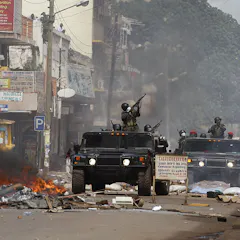
Uganda must overhaul its national legal framework on the use of force and firearms during law enforcement.

The story of Nigeria’s #EndSARS movement shows just how durable law enforcement institutions are – and why the road to reform goes straight uphill.

On Canada’s National Day of Remembrance and Action on Violence Against Women, it’s time to challenge the revictimization of victims of domestic violence by aggressive police action.
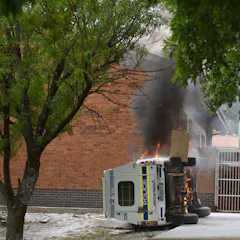
There are individual activists and political groupings who believe violent action is legitimate and use the circumstances to actively drive such behaviour.
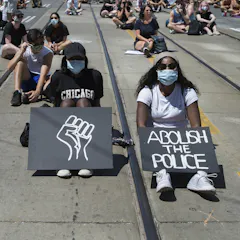
Reforming the police is possible, but it depends on applying pressure on politicians.
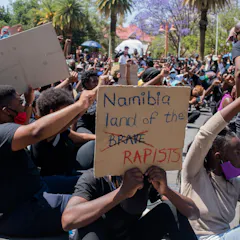
The protests carried on for days and continue to simmer in a country whose social fabric has been torn by toxic masculinity and a violent colonial past.
CC BY-NC-ND8.69 MB (download)
It's time to talk about police in Nigeria and the issues around special forces.

Demonstrations by Macedonian villagers in the 1980s, which helped spark the end of Communist rule in the former Yugoslavia, hold vital lessons for Americans peacefully protesting for police reform.
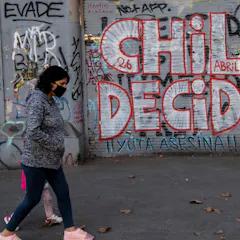
On Oct. 25 Chile will decide whether to replace its dictatorship-era constitution with a new one written wholly by the Chilean people. The vote shows how protests can change the course of a nation.
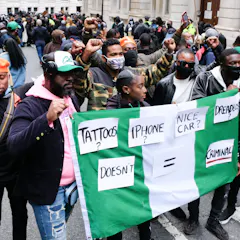
For young Nigerian protesters on social media and on the streets, #ENDSARS is as much an expression of a will to modernity as it is a yearning to be treated with dignity.

The dissolution of the Special Anti-Robbery Squad is the first step, but Nigeria needs a complete reform of its police.
Top contributors
-

Professor, Obafemi Awolowo University
-
Professor, Sociology, University of Alberta
-
Assistant Professor in Media Studies, University of Colorado Boulder
-
Lecturer in criminology, Edinburgh Napier University
-
Professor of Teaching, Wayne State University
-
Principal Policy Analyst, Governance Department, The Kenya Institute for Public Policy Research and Analysis (KIPPRA)
-
Post Doctorate Researcher under the DANIDA funded project on security, sustainable growth and peace in Uganda., University of Copenhagen
-
Professor of Criminal Justice, University of Winnipeg
-
Associate Professor, Organizational Behaviour, Athabasca University
-
Assistant Professor, Augusta University
-
Assistant Professor of Justice Studies and Sociology, Norwich University
-
Assistant Professor of Criminal Justice and Criminology, Georgia State University
-
Professor of Journalism, Michigan State University
-
Assistant Professor of Criminology and Criminal Justice, University of South Carolina
-
Associate Professor at the School of Social Transformation, Arizona State University