
Idaho, Montana and Florida had the highest population growth among US states between 2020 and 2022.
Articles on Polarization
Displaying 81 - 100 of 136 articles
A psychologist explains how opponents of climate policies use a common thinking error to manipulate the public – and why people are so susceptible.

People tend not to think that their own emotions could simply be wrong. But research shows that people excessively dislike others who disagree with them.
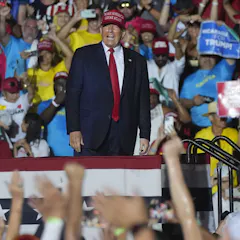
The newest class of right-wing populists aims to not only dismantle the guardrails of democracy, but also the most fundamental principles of the rule of law. We must prepare.

Two concepts can help explain why society seems increasingly unable to agree on basic facts.

Public health measures in response to the COVID-19 pandemic meant that many people experienced social isolation. But the pandemic didn’t invent loneliness, and its impacts on our health are growing.

Populism has been unleashed. We’re beyond the stop-gap measures of small-step reform or pragmatic centrist liberalism. What’s next? We’re about to find out.
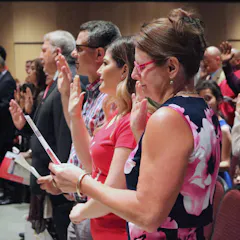
Immigration targets can be useful and expedient for policymaking. In the public arena, they need to be more fully understood if immigration debates are to be based on reality.
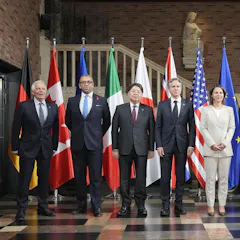
Deliberately crafting economic relationships with countries that share similar political and social values with Canada has emerged as a tool to address current geopolitical issues.

We talk to a political scientist and a philosopher about how to bring countries back from dangerous levels of polarisation. Listen to The Conversation Weekly.

Many people define ‘bias’ as ‘anything that doesn’t agree with me.’ But are the news media really biased?
According to the Canadian Anti-Hate Network, far-right groups have been trying to stack school boards with candidates harbouring anti-equity ideologies.
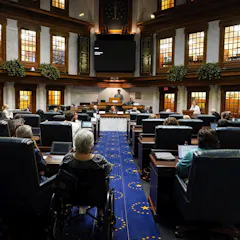
Why do government policies sometimes fail to reflect the public will? The answer begins with the design of the US government system, forged in the 18th century.
An experiment conducted online with residents of Italy and the US detected similar patterns based on ideological identity.

Studies of online echo chambers don’t paint the full picture of Americans’ political segregation. New research shows that the problem is more Fox News Channel and MSNBC than Facebook and Twitter.

There’s a new party in town – but it may not last long.

Even before the pandemic, divisive politics was affecting mental health, and political topics were being raised in therapy. Now, patients want therapists that share their views.

Russia probably has the means to attack US electrical grids and otherwise create havoc but probably won’t go that far. Instead, watch for disinformation aimed at undermining the US and NATO.
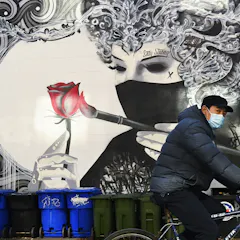
People can counter the helplessness felt during the pandemic and build power by creating a sense of purpose and community amid the confusion of COVID-19.
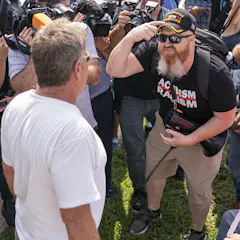
Deep-seated disagreement is healthy for a democracy. But when people lose the ability to navigate those differences, they risk seeking anti-democratic unity of thought.
Top contributors
-

Associate Professor of Political Science, Boise State University
-
W. Alton Jones Professor of Philosophy, Vanderbilt University
-
Host, The Conversation Weekly Podcast, The Conversation
-
King's University College, Associate Professor of Religious Studies, Vice-President and Academic Dean (Interim), Western University
-
Associate Professor of Political Science, Clarkson University
-
Professor, Political Science, University of Alberta
-
Professor of Psychology, University of Tennessee
-
Professor of History and Provost Emeritus, Binghamton University, State University of New York
-
Professor Emeritus of Political Science, Indiana University
-
Professor of Political Science, USC Dornsife College of Letters, Arts and Sciences
-
Professor Emeritus, Department of Politics, York University, Canada
-
Associate Professor, Social & Behavioural Health Sciences, Dalla Lana School of Public Health, University of Toronto
-
Associate Professor of Sociology, University of Dayton
-
Professor of Political Science and Founding Director, International Studies Program, Burman University
-
Associate Science Editor & Co-Host of The Conversation Weekly Podcast, The Conversation