
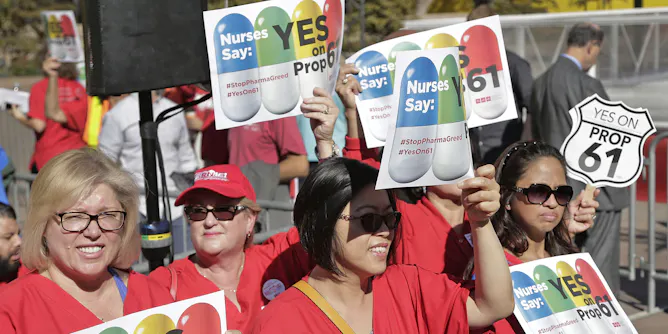
Citizens voting directly on policy seems like a good idea. But that led to the Brexit mess in the UK. In the US, two scholars say direct democracy deepens distrust of politics and government.
Articles on Polarization
Displaying 121 - 136 of 136 articles
A person’s political identity is wrapped up in almost everything they do. Exposure to opinions from the other side actually makes it worse.
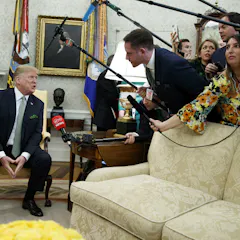
The president’s blame-the-press rhetoric is, to the news media, calculated to score political points. But are there real problems US journalists need to address in their work? Yes, says one scholar.
When a country becomes more diverse,
new demographic tensions may emerge between people who feel that they own their country’s identity – and people who feel they’ve been left out.
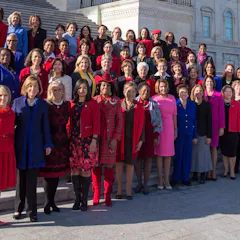
Research shows that women work more collaboratively than men in groups and create more inclusive solutions to thorny problems. More women in Washington could bridge America’s yawning partisan divide.

After the first moon landing, the feelings that propelled a unified national mission quickly dissipated. Could Armstrong have played a bigger role in galvanizing the public for future projects?
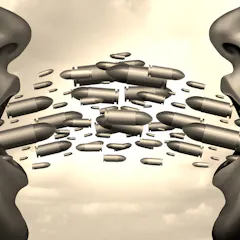
In Kenneth Burke’s ‘The War of Words,’ the late rhetorical theorist picks apart the little ways news articles can subtly influence readers – and harden divisions.
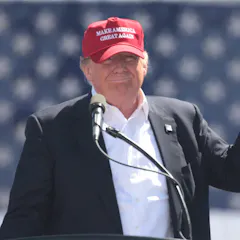
The fourth is the Oxford-style debate series, this article argues that “the impact reflected by Trump is here to stay”.

Whether at a family gathering or in a research lab, getting access to images immediately was a game-changer. And Land’s innovations went far beyond the instant photo.
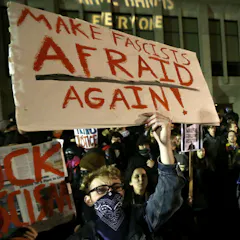
Differences of opinion are the lifeblood of universities and essential to advancing knowledge. But some universities are giving in to intimidation by cancelling events with controversial speakers.

Venezuela’s opposition has called a 48-hour strike to stop the Maduro government from rewriting the nation’s constitution. But grassroots democracy may not be able to save the Bolivarian Republic.
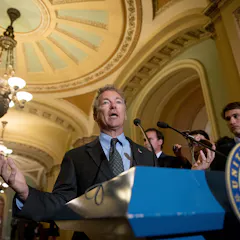
It turns out a unified government isn’t enough to get bills passed.
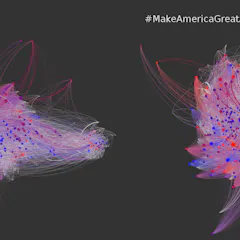
If people can be conned into jeopardizing our children’s lives, as they do when they opt out of immunizations, could they also be conned out of democracy?
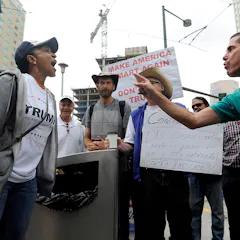
Income inequality and political polarization have both surged in recent decades and are the worst they’ve ever been. Is one causing the other?
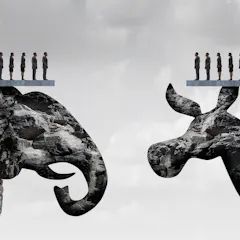
Elected officials and the media are in cahoots. Both have succumbed to a two-party system that treats voters not as independent thinkers, but as blind partisans.

Social media is a great way to spread science information, fast. But the online echo chamber isn’t always good at separating what’s valid from what’s not, and being prolific doesn’t make you right.
Top contributors
-

Associate Professor of Political Science, Boise State University
-
W. Alton Jones Professor of Philosophy, Vanderbilt University
-
Host, The Conversation Weekly Podcast, The Conversation
-
King's University College, Associate Professor of Religious Studies, Vice-President and Academic Dean (Interim), Western University
-
Associate Professor of Political Science, Clarkson University
-
Professor, Political Science, University of Alberta
-
Professor of Psychology, University of Tennessee
-
Professor of History and Provost Emeritus, Binghamton University, State University of New York
-
Professor Emeritus of Political Science, Indiana University
-
Professor of Political Science, USC Dornsife College of Letters, Arts and Sciences
-
Professor Emeritus, Department of Politics, York University, Canada
-
Associate Professor, Social & Behavioural Health Sciences, Dalla Lana School of Public Health, University of Toronto
-
Associate Professor of Sociology, University of Dayton
-
Professor of Political Science and Founding Director, International Studies Program, Burman University
-
Associate Science Editor & Co-Host of The Conversation Weekly Podcast, The Conversation