

Message discipline is an increasing feature of Canadian politics. Canadians across the country should pay attention to what just happened in Alberta, where teachers were ordered back to work.
Articles on Polarization
Displaying 21 - 40 of 136 articles

Politicians get blamed for government shutdowns. But does the fault lie also with citizens, who are more invested in punishing partisan rivals than in demanding competent government?

The public’s frustration with ‘politics as usual’ has led more political newcomers to win office. But amateurs are more likely to view bipartisanship as a concession, not a tool for advancing policy.

Whichever side of an issue you’re on, it’s likely that at the root of what gets you fired up are deep, fundamental human fears about mortality, moral responsibility and meaning.

As support for secessionist movements increases, it’s vital that political leaders reduce the divisions that threaten to tear the US apart.
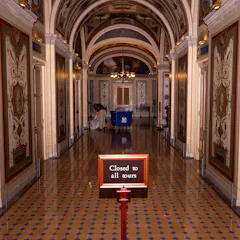
A study of the 2013 shutdown that lasted 16 days revealed long-term negative effects on federal workers and led to weakened government performance.
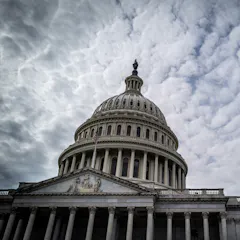
There’s a new element at play that’s heightening the stakes of budget negotiations in Congress. And it could lead to a shutdown.

Anger at the other side, as represented by the political party opposing yours, is a powerful motivator to engage in protests.

A growing international network of fitness-focused clubs for men is the newest iteration of the white supremacy movement.
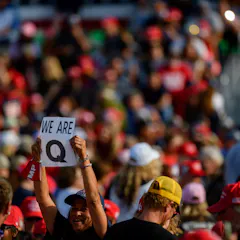
The foundational belief of many of the QAnon followers is that Donald Trump is the heroic figure fighting the elite pedophile ring.
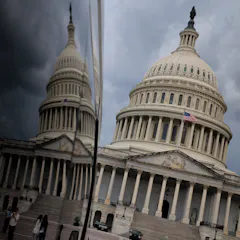
Lawmakers who are aligned politically with the president are increasingly voting in line with the chief executive. Doing otherwise could cost them on Election Day.

Nearly half of Americans say they feel less free to speak their minds.

Users on TikTok gravitate to networks of like-minded people, but right-leaning users tend to be in more tightly sealed echo chambers.

New research examines how people become entrenched in polarizing positions and how we can prevent debates from devolving into heated arguments.
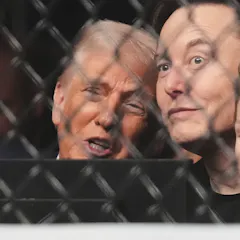
While we don’t know what went wrong between Trump and Musk, their feud reveals a potentially impactful disruption in American politics.

Gender equity efforts risk deepening divides if they’re not handled carefully. But with empathy and inclusive dialogue, leaders can turn tension into trust.
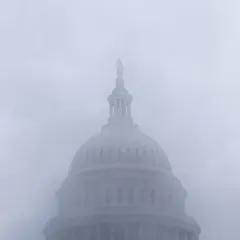
Congress − the first branch of government listed in the Constitution − has been relegated to second-class status.

Because of the pope’s role to maintain the fullness of tradition and the unity of the Church, a pope cannot be conservative or liberal in a political sense.

US President Donald Trump is not an accident of history. His re-election is in line with a profound structural change in American society that began at the end of the Cold War.
‘Looping’ and ‘reframing’ are two techniques that can help build understanding in stressful disagreements.
Top contributors
-

Associate Professor of Political Science, Boise State University
-
W. Alton Jones Professor of Philosophy, Vanderbilt University
-
Host, The Conversation Weekly Podcast, The Conversation
-
King's University College, Associate Professor of Religious Studies, Vice-President and Academic Dean (Interim), Western University
-
Associate Professor of Political Science, Clarkson University
-
Professor, Political Science, University of Alberta
-
Professor of Psychology, University of Tennessee
-
Professor of History and Provost Emeritus, Binghamton University, State University of New York
-
Professor Emeritus of Political Science, Indiana University
-
Professor of Political Science, USC Dornsife College of Letters, Arts and Sciences
-
Professor Emeritus, Department of Politics, York University, Canada
-
Associate Professor, Social & Behavioural Health Sciences, Dalla Lana School of Public Health, University of Toronto
-
Associate Professor of Sociology, University of Dayton
-
Professor of Political Science and Founding Director, International Studies Program, Burman University
-
Associate Science Editor & Co-Host of The Conversation Weekly Podcast, The Conversation