

Is an organism a sum of its parts, or should they be considered as a whole? New research on ferns shows how the way scientists understand evolution affects how they study life.
Articles on Plant evolution
Displaying 1 - 20 of 21 articles
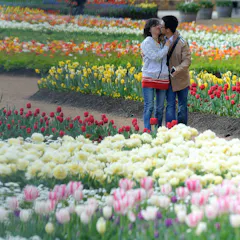
It makes great sense many plants flower when the insects and birds so vital to their reproductive success are also getting busier (and getting busy).

Plants shape Earth’s atmosphere by moving carbon and water vapour. New research sheds light on how they learned to do it – and how it may change in future climates.
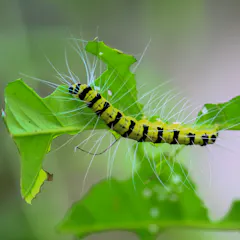
Despite its 500-million-year history, the plant-fungi alliance holds mysteries that, once unravelled, could revolutionise agriculture and ecosystem management.
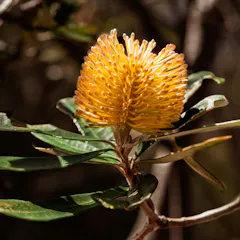
Today, these plants are iconic to the Australian bush. But banksias and their many relatives originated in far-away shores 130 million years ago.
Plants have not lost their capacity for innovation over the years, finds new study.
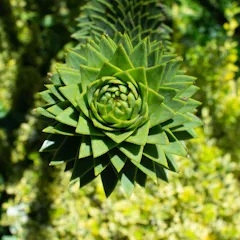
The arrangement of leaves on most plants follows a mathematical pattern – new research sheds light on how it evolved.

Plants have evolved several ways to deal with heavy metals that might otherwise poison or kill them.
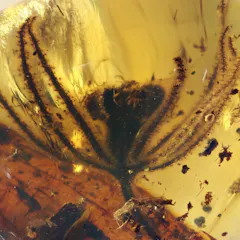
Millions of years before dinosaur footsteps first set tremors through the Earth, this flowering plant family was already thriving – and you can still find them in gardens today.

Drinking a cup of coffee means ingesting a complex mixture of chemicals. Research has given us mixed messaging about whether coffee is beneficial or harmful.

How flowering plants evolved has been a mystery, but a new fossil discovery hints at the unknown complexity of ancient plant diversity.
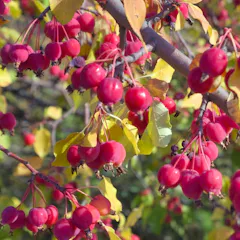
Studying how contemporary apples have changed drastically from their origins and preserving wild varieties can help maintain their diversity.
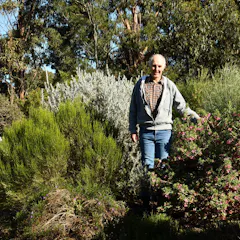
Without these older Australians, my research wouldn’t be where it is today. So let’s meet a few of them.
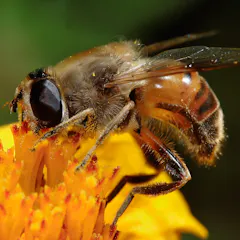
Plants use their flower colours for ‘brand recognition’ among insects - but also work together to attract more pollinators.
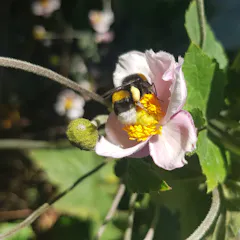
Bees can perceive flower colours and hues which are invisible to us — such as those produced by reflected ultraviolet radiation.
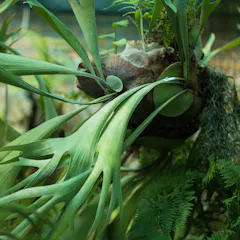
A colony-building fern that grows in treetops on Lord Howe Island has adopted a lifestyle similar to social insects, turning our understanding of the evolution of biological complexity on its head.
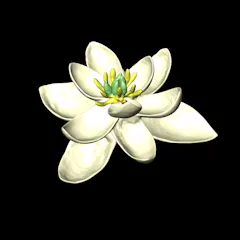
Scientists have reconstructed the common ancestor of everything from rose bushes to oak trees, ivy or wheat.

Sometimes less can be more. Carnivorous pitcher plants from the tropical island of Borneo (Brunei) demonstrate this quite impressively. These plants use funnel-shaped pitfall traps, or pitchers, with slippery…
Degeneration of plant Y chromosomes can help us understand why our own have shrunk, according to recent research. Researchers…
Plants may be able to “learn” from the environment and adjust their behaviour, much like animals, suggests new research from…
Top contributors
-

Plant Evolutionary Biologist, University of Edinburgh
-
Distinguished Professor Emeritus in Plant Ecology, Curtin University
-
Associate Professor, Department of Physiology, Monash University
-
Researcher and analyst, Monash University
-
PhD Candidate, Palaeobotany, University College Cork
-
Professor, Te Herenga Waka — Victoria University of Wellington
-
Associate professor, University of the Western Cape
-
Professor, Chemistry and Biochemistry, Laurentian University
-
Research Fellow, Waite Research Institute, Adelaide University
-
Lecturer in Mycorrhizal Ecology, Hawkesbury Institute for the Environment, Western Sydney University
-
Curtin University
-
Professor and ARC Future Fellow, Hawkesbury Institute for the Environment, Western Sydney University
-
Research Fellow, Department of Biological and Environmental Science, University of Jyväskylä
-
Research Associate, School of Biological Sciences, University of Bristol
-
Postdoctoral Research Fellow, Hawkesbury Institute for the Environment, Western Sydney University