

New South Wales now has a minister for public spaces, a nod to their importance to the life of a city. But not all is well with public spaces and some issues demand the minister’s attention.
Articles on Planning policy
Displaying 21 - 40 of 50 articles
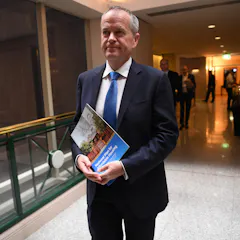
The problems with housing systems in Australia and similar countries run deep. Solutions depend on a fundamental rethink of our approach to housing and its central place in our lives and the economy.

Much of the growth in our cities is in the outer suburbs, now home to around 5 million people. And that creates problems like traffic that detract from the advantages residents see in living there.
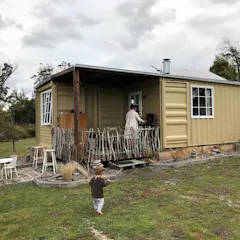
Tiny houses aren’t for everyone, but most people who live in them are positive about the experience. Yet planning laws still make this way of life harder and less secure than it could be.
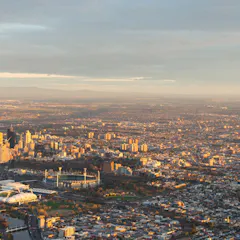
Planning innovations around the world offer inspiration, but ultimately the innovations needed to make Australia’s sprawling cities more sustainable must be shaped by local conditions.
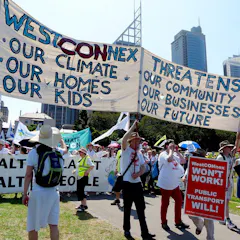
The health concerns that dominate public submissions to the parliamentary inquiry into WestConnex are a reminder that papering over such issues comes back to haunt governments.

There are thousands of empty parking spots in cities. So what can we do to make better use of this space?

Local planning rules have prevailed in a long-running dispute over a proposed Gold Coast quarry that threatened the amenity of nearby residents and koalas.
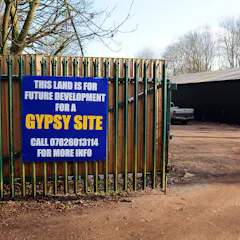
There is a long, dishonourable history of detrimental policy going back to the 15th century.

The population growth is in the west, but most of the jobs are still in the city centre. Three major development proposals could help reshape Melbourne in ways that help overcome this costly mismatch.
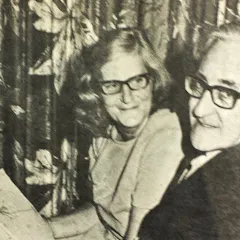
Ruth and Maurie Crow were early advocates of the compact city. They also warned 50 years ago that a clear justice intent was needed to shape cities for their citizens rather than vested interests.
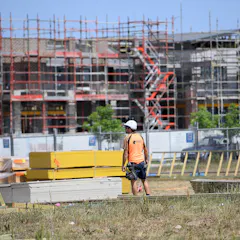
Australian governments are faced with a choice: make the difficult decisions to fix planning systems so more houses can be built, or tap the brakes on Australia’s migrant intake.
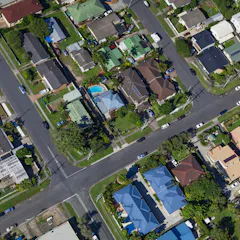
Residents of established middle suburbs are slowly coming round to the idea, but governments and the property sector lack the capacity to deliver compact cities that are acceptable to the community.

New research has found a marked increase in people, particularly among women over 50, who are building or want to build a tiny house. However, inflexible planning rules often stand in their way.

Traditional urban planning is being stretched by the pace at which renewable energy systems are being installed. New codes and guidelines are needed to manage emerging conflicts over land use.

While many talk about 30-minute cities, some aim for residents to be able to get to most services within 20 minutes. But cities like Melbourne have an awful lot of work to do to achieve their goal.

Australians are losing the backyards that once served as retreats from the stresses of city living. Our health is likely to suffer as cities become less green and much hotter.
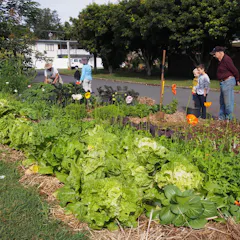
Urban residents are increasingly keen to farm verges, parks, rooftops and backyards, but planning rules sometimes stand in the way.
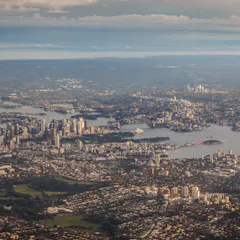
Financial benefits are behind the development industry’s push for a continuous rapid population growth. But our poorly planned cities are ill-prepared and already struggling.
Housing experts writing for The Conversation largely agree on the government policies that are causing negative distortions in the market and the wider economy. And supply is not the key concern.
Top contributors
-

Senior Lecturer in Urban Planning & Design, Monash University
-
Deputy Head of School, School of Architecture and Built Environment, University of Newcastle
-
Adjunct Senior Lecturer, School of Architecture and Built Environment, University of Newcastle
-
Lecturer in GIS and Planning, Griffith University
-
Professor of Human Geography and Planning, University of Tasmania
-
Associate Professor, School of Architecture and Built Environment, University of Newcastle
-
Senior Lecturer in Urban and Environmental Planning, Griffith University
-
Vice-Chancellor's Research Fellow, Centre for Urban Research, RMIT University
-
Honorary Associate Professor in Planning, University of Queensland, University of Sydney
-
Housing Policy Researcher, Expert Advisor, Housing Assessment Resource Tools and Adjunct Professor, L’Université d’Ottawa/University of Ottawa
-
Postdoctoral Research Associate, Faculty of Architecture, Building and Planning, University of Sydney
-
Senior Lecturer, Griffith Law School, Griffith University
-
Associate professor, UNSW International Centre for Future Health Systems, UNSW
-
Associate Professor in Urban and Regional Planning, University of Sydney
-
Professor of International Planning, Centre for Urban Research, RMIT University