
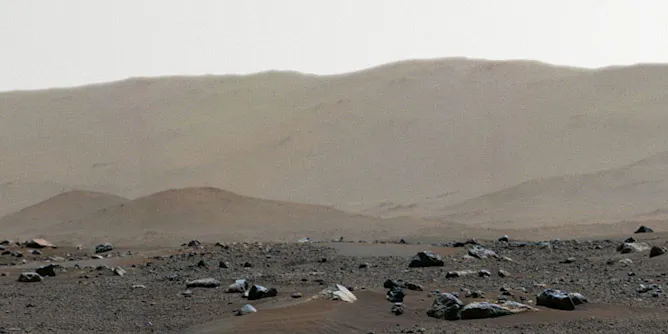
The Viking missions paved the way for future Mars missions and helped researchers understand the red planet’s climate and geology.
Articles on Planet
Displaying 1 - 20 of 22 articles

It turns out that Mars has a similar interior structure to Earth.

Using films like “The Matrix,” a sociology course examines how factors beyond our control shape the world we live in − in fact and in an imagined future.
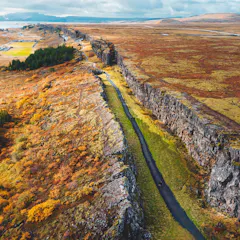
The first time Earth’s geologic record – information found inside rocks – has been used to create an animation of this kind.
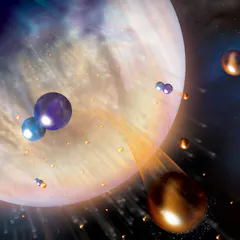
Studying Venus’ water loss can help scientists better understand how planets go from potentially habitable to incapable of supporting life.

Saturn’s moon Enceladus has geysers shooting tiny grains of ice into space. These grains could hold traces of life − but researchers need the right tools to tell.
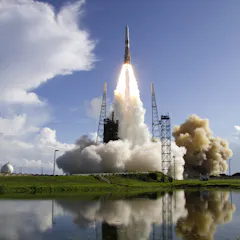
Expect lots of space missions to launch this coming year, with exciting new science to follow.
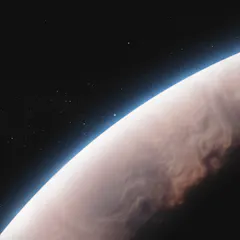
The atmosphere is a reflection of extreme conditions on the super-heated planet.
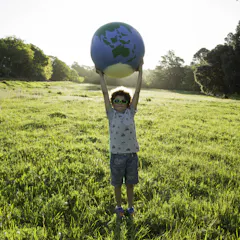
Gravity, mass and centrifugal force all contribute to the final shape of a planet.
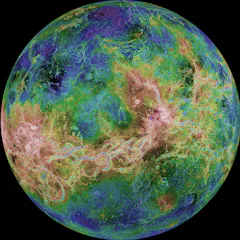
Two new NASA missions – VERITAS and DAVINCI+ – are headed to Venus. The missions will use radar and a probe to learn about Earth’s hard-to-study and potentially prophetic neighbor.
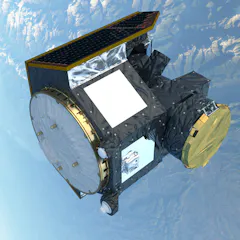
The primary objective of CHEOPS is to better understand the planets that we’ve already found. And its mission is now in full swing.
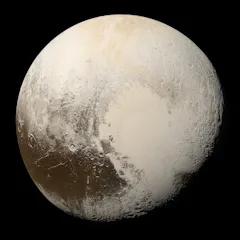
A young reader asks: Is Pluto a planet?
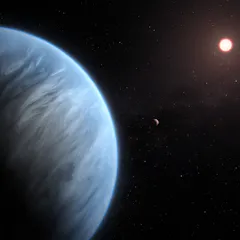
NASA scientists have discovered a new planet orbiting around a nearby star that is in a habitable zone. But does this planet have liquid oceans that can support life?

Many people are still upset that Pluto was demoted from being a planet. But definitions of various celestial objects are fairly fluid. So whether it is an asteroid or moon or planet is up for debate.
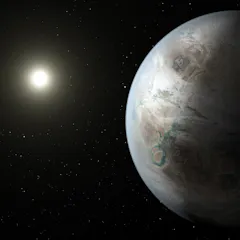
Kepler-452b is sometimes called ‘Earth 2.0’, but there’s a lot we still don’t know about it.
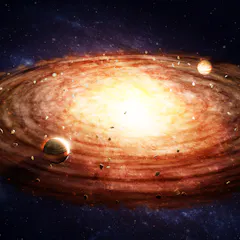
It is always exciting to discover new planets beyond our Solar System. Now a planetary astrophysicist is using a star’s chemistry to predict which ones are likely to host giant planets.
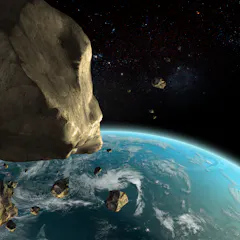
The source of water on Earth, the Moon and planets in our solar system is hotly debated. Some in the planetary science community argued that it came from asteroids and comets. Now they have proof.
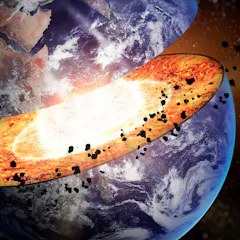
The Earth’s core is cooling down, and one day it will be completely solid – when that happens, Earth might look a lot like Mars.
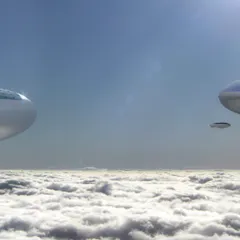
The upper atmosphere of Venus is the most Earth-like extra-terrestrial location in the solar system. It could even host life.

Indigenous communities lived in the Amazon for thousands of years without chopping down their forests.
Top contributors
-

Senior Lecturer in Physics, Nottingham Trent University
-
Lecturer in Sound Design, Edinburgh Napier University
-
Postdoctoral research associate, University of Oxford
-
Research Scientist of Planetary Studies, NASA
-
Pre-Doctoral Researcher, Edinburgh Napier University
-
Royal Society University Research Fellow & Associate Professor of Geophysics, University of Oxford
-
Assistant Professor in the School of Earth and Space Exploration, Arizona State University
-
Professor of Computing, Edinburgh Napier University
-
Assistant Professor of Physics and Astronomy, University of Nevada, Las Vegas
-
Aqueous chemist, British Geological Survey
-
Assistant Professor of Earth, Atmospheric, and Planetary Sciences, Purdue University
-
Research Scientist in Astrophysical & Planetary Sciences, University of Colorado Boulder
-
Associate professor, University of Bristol
-
Assistant Professor of Planetary Sciences, University of California, Riverside
-
Associate Professor of Earth, Environmental, and Planetary Sciences, Washington University in St. Louis