
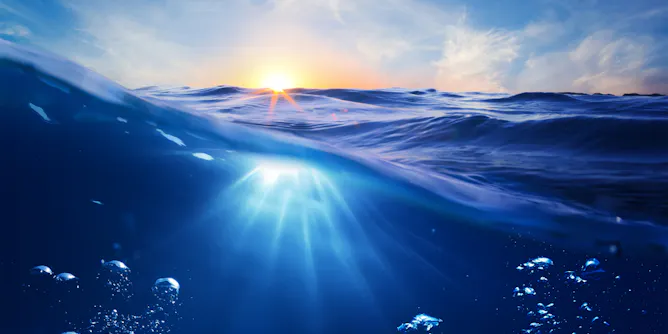
They ‘engulf living prey, suck out their innards, poison them, harpoon them, make them explode, and steal and reuse body parts’. And we ignore them at our peril.
Articles on Phytoplankton
Displaying 41 - 54 of 54 articles
Why spend three months completing a lap of Antarctica (and probably getting seasick along the way)? It’s the only way to get vital clues about the remote Southern Ocean and its influence on the planet.
Tiny organisms change ocean acidity to benefit themselves.

They give us part of the air we breathe but microscopic phytoplankton can also be toxic. They are also on the move thanks to climate change so a new Australian database hopes to monitor any changes.

The dust storm that turned Sydney red in 2009 triggered plankton blooms in the Tasman Sea, demonstrating how we might fertilise the ocean to take up more carbon dioxide.
These tiny organisms play a big role in regulating the Earth’s climate.
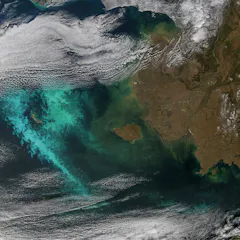
You may not have heard of them or given them much thought, but phytoplankton — the microscopic plants that grow throughout the world’s oceans — are the foundation of oceanic food webs. Although tiny, they…
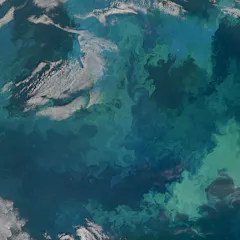
The Saharan dust that clogged air and dirtied cars recently may seem like a nuisance, but in fact contains some essential nutrients – if, that is, you’re phytoplankton. The dust and sand blown from Africa…
The scent that guides sea birds towards their prey could also be helping to cool our climate. Researchers have found that…
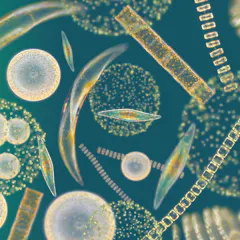
Phytoplankton are the microscopic plant-like cells that float in the sea’s sunlit surface. They underpin the marine food chain and controversy over their stocks means it’s necessary to better understand…
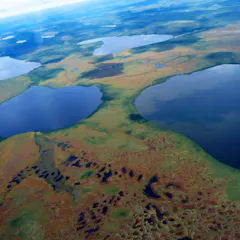
Lakes of the Hudson Bay Lowlands, in northeast Canada, are showing evidence of abrupt change in one of the last Arctic regions of the world to have experienced global warming, according to Canadian research…
Colour satellite images released by NASA have underestimated the life-supporting population of phytoplankton living in the…
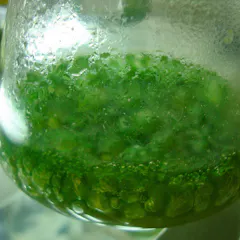
Global warming is having a significant impact on marine life, as many marine organisms are adapted to live only within the average temperature range of their habitats. This applies to larger fish and sea…
A British Columbian fishing community has drawn almost universal condemnation after dumping 100 tonnes of iron rich dust into the ocean to stimulate a plankton bloom, in an effort to restore salmon numbers…
Top contributors
-

Associate Professor of Marine Conservation, University of Plymouth
-
Professor, Institute for Marine and Antarctic Studies, University of Tasmania
-
Postdoctoral research associate, University of Tasmania
-
ARC DECRA Fellow/Senior Lecturer, IMAS, University of Tasmania
-
Professor, University of Tasmania
-
Research Scientist, CSIRO
-
Researcher, Remote Sensing and Satellite Research Group, Curtin University
-
Professor, National Oceanography Centre
-
Researcher, School of Biological Sciences, Adelaide University
-
Research Fellow, Bristol Zoological Society and University of Exeter; Extraordinary Professor: Department of Biodiversity and Conservation Biology, University of the Western Cape, University of Exeter
-
Chair Professor, Swansea University
-
Research Fellow, School of Earth & Environment, University of Leeds
-
Antarctic Law Researcher, Institute for Marine and Antarctic Studies and the Antarctic Climate and Ecosystems CRC, University of Tasmania
-
PhD candidate, Adelaide University
-
Research Fellow in School of Earth and Ocean Sciences, Cardiff University