
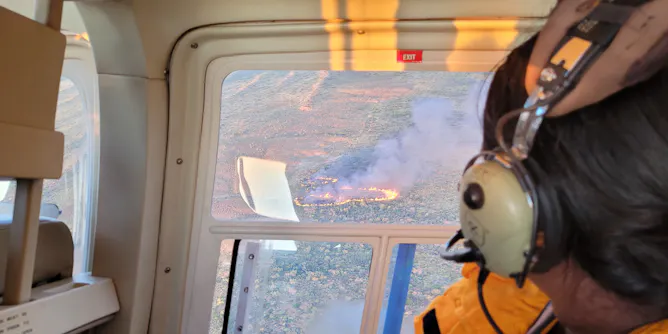
Deserts in Australia burn – and burn big – if fuel is left to build up. But this year, Indigenous rangers across the deserts have burned huge tracts early to make Country healthier.
Articles on Photos from the field
Displaying 1 - 20 of 25 articles
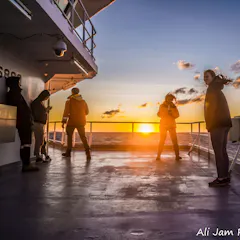
From a shipwreck to ancient dunes, these researchers created 3D visualisations of seafloor features around Australia – from as shallow as 22 metres to depths of over 4.8 kilometres.
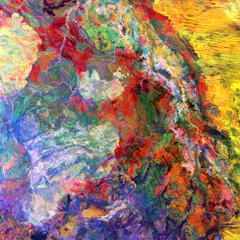
The United States Geological Survey has a vast collection of satellite images capturing breathtaking geological features of our planet. As a geologist, I’ve picked eight of the most fascinating.
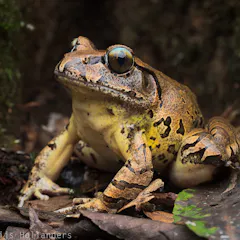
Populations of Fleay’s barred frog in Australia’s ancient rainforests were decimated by the chytrid fungus. Now, the frogs have developed a natural resistance.
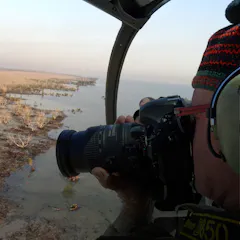
This event was the world’s worst incidence of mangrove tree deaths in recorded history. These photos show the devastating scale of this disaster.
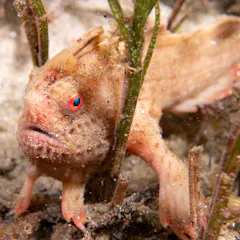
These tiny fish with oversized hands crawl along the seafloor. They only live in two locations in the world, and they’re disappearing rapidly.
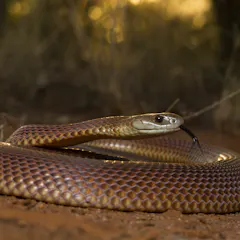
Most people try their best to avoid snakes. This snake photographer couple spends their free time searching for them.
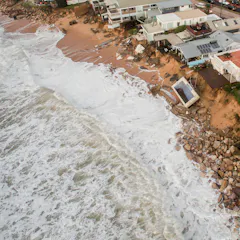
As sea levels rise, this natural form of beach replenishment might be an important factor in offsetting some of the damaging effects of climate change on beaches.

That there’s legacy waste in Antarctica may come as a surprise to some, as we often think of Antarctica as a pristine wilderness. These photos show why cleaning up is long overdue
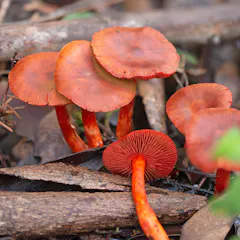
Fungi come in a beautiful diversity of shapes, sizes and colours. See stunning photos of those growing in southwest Australia.
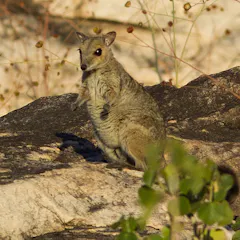
Northern Australia’s tropical savanna is one of the most fire-prone regions on the planet. We need to change the way we manage fires so we can help native wildlife come back from the brink.
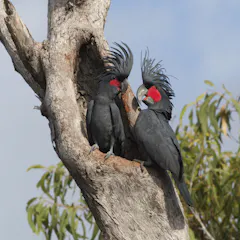
Australia’s largest parrot has just been listed as an endangered species. Here’s why they’re in trouble – but it’s not too late to save them.

Goby fish and coral rely on each other to survive. But new research found gobies are declining under climate change, dealing a double blow to Australia’s reefs.
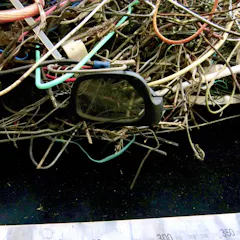
A world-first study inspected 900 bird nest specimens from 1823 to 2018. The types of debris the birds use reflect changes in Australian society over time.
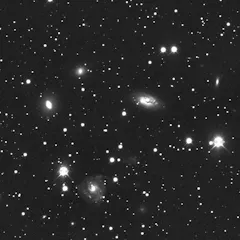
More than 60 images capturing huge expanses of sky are sent to us from Chile. Within them we can see thousands of bright spots. What do we find when we look closer?

For phascogales, tree hollows are getting harder to find. I venture into forests and study how well artificial hollows made with chainsaws can replace them.
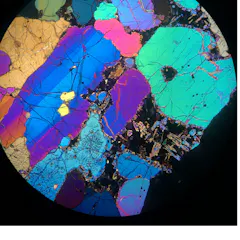
I look at fragments of the Earth’s mantle under a microscope to learn how fast molten rock moves from deep in the Earth to the surface. This can help us prepare for future volcanic eruptions.
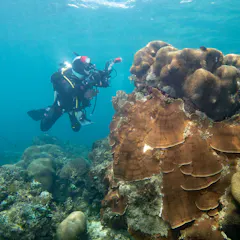
I helped survey coral reefs in Norfolk Island for the first time in eight years, and snapped marine life we didn’t expect to see there.
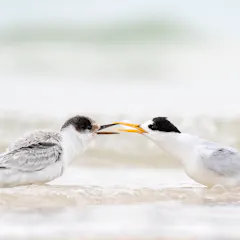
Researcher and photographer Claire Greenwell explains why people are the biggest threat to nesting shorebirds, and the simple ways you can help keep them safe next time you’re at the beach.
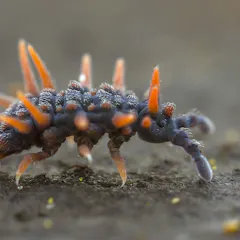
Australia’s invertebrates have an ancient lineage and a fascinating evolution. Get up close with macrophotography to discover tiny, unique animals you’ve probably never seen before.
Top contributors
-

Associate Researcher, The University of Queensland
-
Postdoctoral Research Associate, University of Sydney
-
Research Fellow in Marine Science and Manager Whales & Climate Program, Griffith University
-
Postdoctoral researcher, University of Newcastle
-
Senior research fellow, Charles Darwin University
-
Senior Lecturer in Animal Ecology, University of the Sunshine Coast
-
Associate Professor in Coastal and Marine Science, University of Newcastle
-
Adjunct Associate in Ornithology and Marine Ecology, Murdoch University
-
Senior Research Associate, School of Agriculture, Food and Ecosystem Sciences, The University of Melbourne
-
Adjunct Research Associate, Charles Darwin University
-
Professor of Coastal Geomorphology, University of Plymouth
-
Senior Curator of Geosciences, Museums Victoria Research Institute; Monash University
-
Research scientist, Australian Institute of Marine Science
-
Adjunct Associate Professor, School of Biological Sciences, The University of Western Australia
-
Professor of Evolutionary and Conservation Biology, Australian National University