

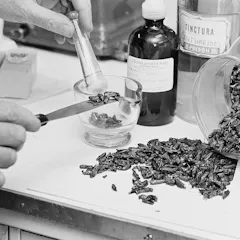
The usefulness of a drug is typically measured by its active ingredient. But traditional Chinese medicine shows that there’s more to healing than using the right chemical.
Articles on Pharmacology
Displaying 41 - 60 of 71 articles

Artificial cells on tiny microfluidic chips can provide early insight into how new cancer drugs behave in cells, and why certain kinds of cancer are more resistant to chemotherapy treatment.

The FDA receives almost half its funding from companies it regulates, such as drug and medical device makers. Is this something you should be concerned about?

Every time you pop an aspirin, thank the German chemist Hoffmann and not Hippocrates.

For most medicines, it doesn’t matter when you take them. But others work best at particular times.

Participants of clinical trials can easily communicate online, which poses a big problem for medical researchers.

Artificially intelligent drug design programs could discover new therapies for conditions that are difficult or prohibitively expensive to cure.
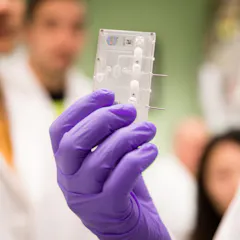
Researchers who’ve created a kidney-on-a-chip explain why these kinds of devices are an improvement over traditional ways to test new drugs.

You should be aware of the amount of genetic information you might disclose in a research study – and what the benefits and risks will be.

In short, pain medicine is able to block the processes that cause the feeling of pain. To understand why, you need to know a bit about how pain works.

CC BY-ND16.4 MB (download)
Pain is something everyone experiences. This episode of The Anthill podcast explores how and why it works in our brains, what kinds of drugs are being developed to reduce pain, and whether or not robots of the future should be built so that they experience pain.

A trial of methylprednisolone in kidney patients was halted recently because of safety concerns. But this doesn’t affect people taking the drug for asthma, arthritis or other inflammatory conditions.
Amazon currently sells pretty much everything, including the kitchen sink, but medications are very different from books and fidget spinners.

Some people can feel drowsy or can’t concentrate days after an operation. While it’s easy to blame the anaesthetics, the real picture is usually more complicated.

Wider availability of the cystic fibrosis drug Kalydeco since May 1, 2017 means younger patients can now access it.

A number of monkey species eat rough leaves, soils and charcoal to treat or prevent diseases.

Have you ever wondered how the small white ibuprofen pill turns off your headache? Or how a regular antidepressant keeps your brain chemistry in balance?

Why does the same medication, at the same dose, work well for some people, but not for others? The answer is in our genes.

The way you take a drug affects how much of it gets to your brain, and how rapidly drug levels rise and fall.

New ideas about what depression is and how to treat it are being held back by a lack of commercial interest.
Top contributors
-

Professor of Pharmaceutical Chemistry, Macquarie University
-
University of Sydney
-
Professor Emeritus of Chemical and Biological Engineering, Biomedical Engineering, and Public Health, Colorado State University
-
Professor of Medicine and Chair of Clinical Pharmacology, University of Newcastle
-
Conjoint Associate Professor in Clinical Pharmacology and Toxicology, St Vincent’s Healthcare Clinical Campus, UNSW
-
Assistant Professor of History, University at Buffalo
-
Distinguished Professor of Pharmacy Practice, University of Connecticut
-
Director and Taylor Family Chair, Centre for the Business & Economics of Health, The University of Queensland
-
Emeritus Professor, Adelaide University
-
Associate Professor of Pharmacology, University of Sydney
-
Lecturer - Women's Health; Pharmacology, School of Biomedical Sciences, The University of Western Australia
-
Professor of Pharmaceutical Sciences, University of Colorado Anschutz
-
Associate Lecturer, Sydney Pharmacy School, University of Sydney
-
Professor and Clinical Psychologist, Michael Crouch Chair in Child and Youth Mental Health, University of Sydney
-
Honorary Senior Research Fellow, University of Oxford