

We rely on depth to perceive objects, but not all of us see depth in the same way.
Articles on Perception
Displaying 41 - 60 of 72 articles

How is pain measured? A person’s pain is what they say it is.

Banning a handful of breeds has not helped to improve public safety.

Cases of measles are on the rise as a cohort of unvaccinated children grows up.

We all think men are at it way more than they are. But estimates of how much nooky young women are getting are basically ludicrous.

You might think you’ve made your day more efficient – but it can actually affect what you accomplish during your unstructured time.

Where you come down on the latest internet hullabaloo depends on how your brain fills in gaps in the sounds you hear.

Designers take note: your products may be less useful for people as they get older.

The cheerleader effect describes the phenomenon that you appear more attractive in a group than solo - and it works for men as well as women.

Activity in the left hand side of the brain, specifically in areas of emotion, could explain why most people lean to the right before lips smack.
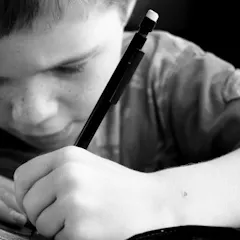
Spontaneous mirror writing by both left- and right-handed children has long remained a mystery. Recent studies of brain processing and writing have led to an unexpected explanation.

There are many people who are astonished to discover that their complete lack of ability to picture visual imagery is different from the norm.

Ada, 7, wants to know why things close to the train windows zoom by really fast, while things further away seem to go by much slower.

Author Kate Cole-Adams delves into fascinating questions about consciousness and self.

Little kids cover their own eyes and feel hidden, even if they’re still fully visible. New research suggests this doesn’t mean children can’t understand others’ perspectives, as had been assumed.
Is someone looking at you or are you just imagining things? A neuroscientist explains.

As the years advance, time flies faster. Here’s why.

Staring at one thing for a long time can cause you to see the next thing in the opposite fashion. This neural adaptation could be the underlying physiological basis of body-size misperception.

How does your brain deal with the ambiguous and variable visual information your eyes collect? Neuroscientists think it bets on what’s the most likely version of reality.

Nearly everyone can’t tickle themselves and it’s all to do with how our brains see and perceive movement.
Top contributors
-

Associate Professor of Psychology, University of Delaware
-
PhD Candidate, Building Engineering, Carleton University
-
Ph.D. Student in Psychological Sciences, Vanderbilt University
-
Research Associate, University of Strathclyde
-
Assistant Professor of Psychology, University of Richmond
-
Professor, Visual Time Perception, Queensland University of Technology
-
Professor of Public Policy and Director of the Policy Institute, King's College London
-
David K. Wilson Professor of Psychology, Vanderbilt University
-
Professor, Brock University
-
Assistant Professor, Psychology, Heriot-Watt University
-
Professor of Mathematical Biology and Public Engagement, University of Bath
-
Associate Professor, Federation University Australia
-
Professeur émérite de psychologie, Université de Lorraine
-
Associate Professor of Psychology, USC Dornsife College of Letters, Arts and Sciences
-
Professor of Cognitive Neuroscience, UNSW