
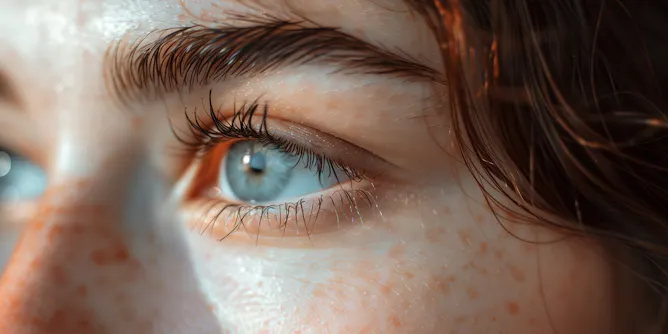
The now extinct worm-like animal first lost paired eyes, then re-evolved them.
Articles on Sight
Displaying 1 - 20 of 21 articles

Even the traditional five senses don’t operate in silo.
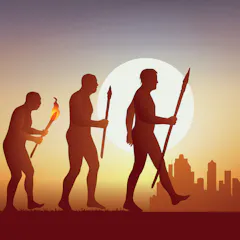
Light helps explains the evolution of our skin colour, why some of us have curly hair, and the size of our eyes. And light still shapes us today.
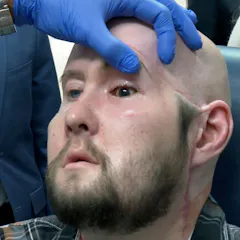
An anatomist explains why it’s so hard to perform whole-eye transplants.
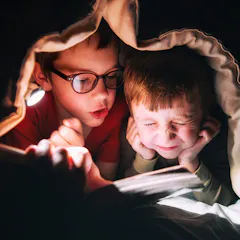
Evidence suggests that neither books nor electronic devices are directly to blame for the increase in myopia worldwide. Rather, they enhance this phenomenon by keeping children out of the sunlight.

Stimuli such as light and shadow and our perception of the passage of time matter to architects interested in the branch of philosophy known as phenomenology.

It’s intriguing how some people experience ASMR while others don’t - our latest research suggests that many ASMR responders are highly sensitive “orchids”.

A curious kid asks: what do blind people experience in their dreams?

Perception is multisensory.

All of the senses have been affected by the coronavirus pandemic, not because the senses have changed, but because the world has, writes a sensory historian.

With dreaded, invisible germs lurking on surfaces and in people, our surroundings are seen as a minefield – and we end up dulling one of our most valuable senses.

Your brain balances messages coming from lots of different places to help you see, imagine, remember and dream.

We rely on depth to perceive objects, but not all of us see depth in the same way.

Your field of view is how much you can see without turning your head. When things are closer to us, they take up more of our field of view, which makes them look bigger.
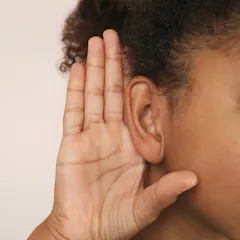
Blind people don’t have superhuman ears but their brains can rewire themselves to give them an edge over those who can see.
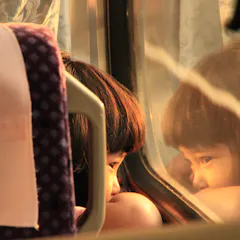
Ada, 7, wants to know why things close to the train windows zoom by really fast, while things further away seem to go by much slower.
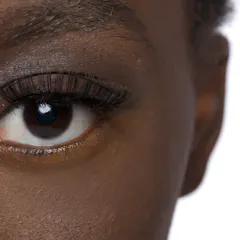
Glaucoma is a slow and silent progressive disease and the second leading cause of blindness, that requires early diagnosis.
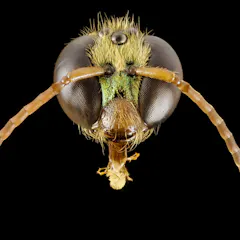
Nocturnal insects have eyes that act like cameras to enhance their light-gathering abilities.
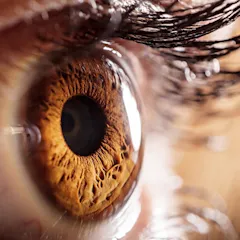
The middle part of our vision sees in a much higher resolution than at the peripheries. But that’s just the beginning …
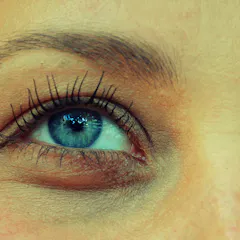
As you read this article your eyes will move so the words fall on the central part of your vision. This region is called the fovea and it has excellent resolution when compared to your peripheral vision…
Top contributors
-

Associate Head of Education, University of Portsmouth
-
Senior Lecturer, Vision Sciences, Glasgow Caledonian University
-
Professor, School of Psychology, University of Sydney
-
Adjunct Professor (Research) in Physics, Monash University
-
Lecturer in Psychology, Bangor University
-
Professor, University of Essex
-
Professor of Glaucoma , College of Ophthalmology of Eastern Central and Southern Africa
-
Professor of Zoology, Lund University
-
Professor of Optometry, Glasgow Caledonian University
-
Professor, Macquarie University
-
Assistant Professor, Durham University
-
Professor, Department of Psychology and Neuroscience, Dalhousie University
-
PhD Candidate, Building Engineering, Carleton University
-
Associate Professor of German, University of California, Davis
-
Research Associate, University of Strathclyde