

The official advice is to stay at least 1.5m apart from someone else when exercising. One study has challenged that and says we need to move further apart. But does the study stack up?
Articles on Peer review
Displaying 41 - 60 of 109 articles
Researchers, scientific journals and health agencies are doing everything they can to speed up coronavirus research. The combination of pace and panic during this pandemic is causing mistakes.
Across science, only around half of published results can be successfully replicated. But while this is a serious problem, the proposed public audit looks like a political bid to cast doubt on science.

In South Africa, open access publishing should be mandatory and publicly funded data generated by universities, should be freely available.
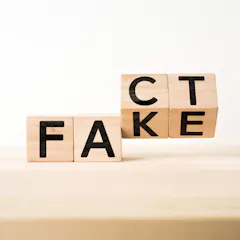
Science is not the absolute truth. Scientific findings are the beginning, not the end, of the quest for truth.

There’s peer review – and then there’s peer review. With more knowledge you can dive in a little deeper and make a call about how reliable a science paper really is.
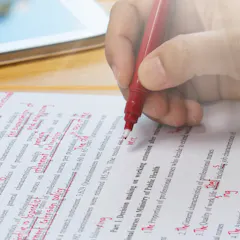
Key areas of focus for tweaking peer review include making journal editors more directive in the process, rewarding reviewers, and improving accountability of editors, reviewers and authors.
The only place to find the Golden Age of Science is in the future, but we need some help in getting there.

If journal editors fail to retract or properly flag data revealed as inaccurate, they leave open the possibility that it’ll be cited for years to come.
Women are underrepresented in academic science. New research finds the problem is even worse in terms of who authors high-profile journal articles – bad news for women’s career advancement.
In our institutions of higher education and our research labs, scholars first produce, then buy back, their own content. With the costs rising and access restricted, something’s got to give.
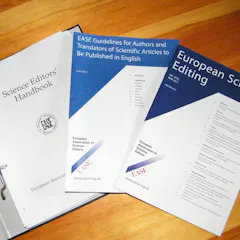
How is a scientific article accepted for publication in an academic journal? What is the role of peer reviewers? Where does the system go astray?
Scientific truth is based on a body of research which has been tried and tested by many researchers over time. Peer review filters the good science from the bad.
More must be done to develop mechanisms based on intrinsic motivations of committed, quality academics. It’s important to limit the harms currently being caused by rent seeking.

A study that suggested Chronic Fatigue Syndrome was more psychological than physical has been debunked. How did the data get doctored?

There are major systemic problems associated with peer review that are negatively affecting scientific credibility.

Everything you need to know about predatory publishers.
The scientific impact of a research paper increases with every additional commenter who provides feedback – particularly if the comment came from a well-connected academic.

The traditional mode of publishing scientific research faces much criticism – primarily for being too slow and sometimes shoddily done. Maybe fewer publications of higher quality is the way forward.
When research and commerce become entangled, consumers are the losers.
Top contributors
-

Senior Lecturer, Australian National Centre for the Public Awareness of Science, Australian National University
-
Professor, School of Psychology, University of Sydney
-
Editor in Chief, Medical Journal of Australia, Queensland University of Technology
-
Programme leader, MRC Cognition and Brain Sciences Unit, University of Cambridge
-
Senior Research Fellow, Max Planck Institute for Innovation and Competition
-
Professor of Pharmaceutical Sciences, University of Iowa
-
Professor of Belonging Science, School of Educational Psychology and Inclusion, Faculty of Education, Monash University
-
Professor of Organisational Behaviour, Bayes Business School, City St George's, University of London
-
Senior Research Fellow, Uehiro Centre for Practical Ethics, University of Oxford
-
Senior Lecturer, Management, University of Tasmania
-
Lecturer in History of Medicine/Life Science, The University of Melbourne
-
Professor of Organisational Sociology and Leadership, Cambridge Judge Business School
-
Distinguished Professor of Marine Science, King Abdullah University of Science and Technology
-
Williams Memorial Professor of Law, Northwestern University
-
Professor of Sociology, University of Nottingham