
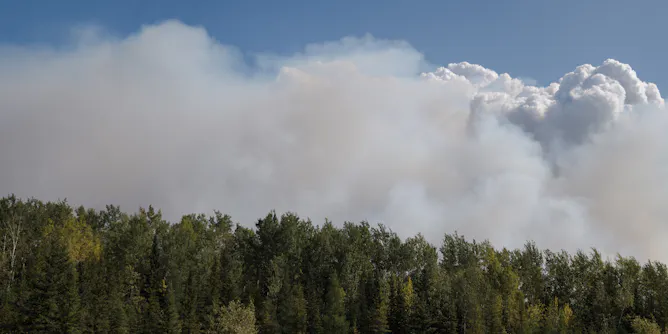
As global temperatures rise, wildfires are advancing further north. Many of them burn through peat, which contains massive amounts of carbon.
Articles on Peat fires
Displaying 1 - 20 of 21 articles
Uniquely, an Australian subtropical peatland ecosystem exists that is not only resilient to the frequent bushfires, but actually needs fire to survive.
Current greenhouse gas inventories in Canada only consider “managed” lands. This must change before we can truly understand the scale of Canada’s carbon emissions.

Wildfires are intensifying, yet they’re one of the most poorly understood phenomena on Earth. New research shows that they can disturb both regional and global climate.
Research found more than 3.11 million hectares of land burned in 2019 across Indonesia’s 34 provinces, nearly double the official estimate of 1.64 million hectares.
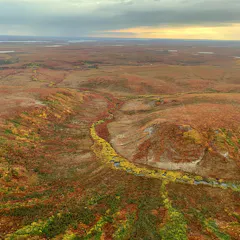
Peatlands play an outsized role in filtering water and mitigating floods, drought and wildfire — and they store twice as much carbon as all the world’s forests.
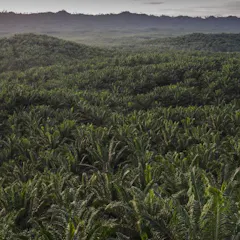
In South Sumatra, the 2015-2018 moratorium reduced the rate of peatland conversion by about 24% compared to the 2000s period.

A plan for humanity’s surviving and thriving through our planetary crisis.
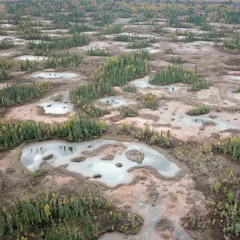
Peatlands store more soil carbon than any other terrestrial ecosystem, including tropical forests. But they have been heavily exploited and damaged. Now, scientists are working to restore them.
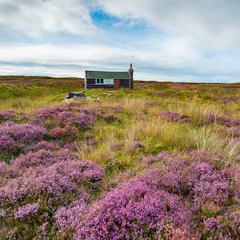
The UK’s marshes, bogs and fens provided the bare necessities of daily life for many centuries.
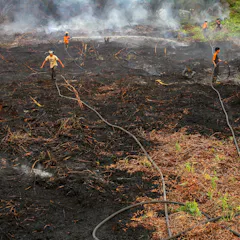
Indonesia’s Peatland Restoration Agency is likely to have its tenure extended by four years. What has been achieved and what should the agency focus on for the next term?
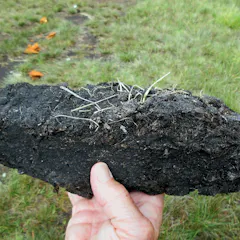
Peat beds around the world hold huge quantities of carbon and keep it from warming the planet. But rising temperatures and over-use could turn them from a brake on climate change into an accelerant.
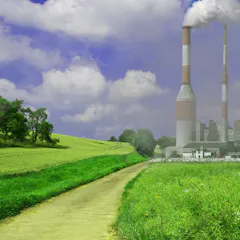
Despite clear air as a result of the pandemic reducing human activities, our emissions still soar.

Villagers of Sumatra and Kalimantan relunctant to participate in peatland restoration, contributing to the recent forest fires in Indonesia.
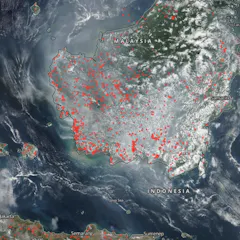
We have developed an online tool to help authorities identify which areas they should focus on for reducing forest fires and haze in order to maximize overall health benefits.
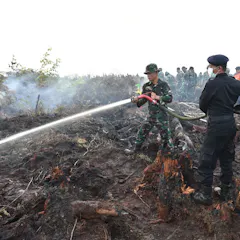
A forest professor tells his experience on the hardships of putting out peat fires in Indonesia
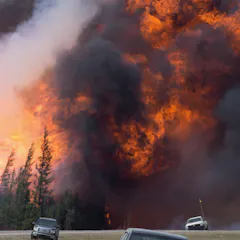
As unlikely as it may sound, a new approach for fighting the destruction of wildfires in Canada’s boreal region may lie in wetlands packed with soaking layers of peat and topped with living moss.
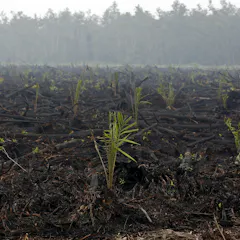
Indonesia’s problematic climate plan will make it difficult for the country to achieve its target to reduce emissions.
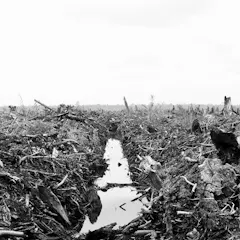
One of the world’s major terrestrial carbon pools is rapidly deteriorating as large parts of Indonesia’s peatlands are deforested and converted to oil palm and paper plantations. No longer a carbon sink…
The United Nations Environment Programme (UNEP) is co-ordinating a new venture to tackle short-lived global warming agents such as black carbon. Should we be paying more attention to black carbon? Yes…
Top contributors
-

AXA Chair in Wildfires and Climate Director, Laboratory of Atmospheric Environment & Climate Change, Technical University of Crete
-
Assistant Professor, Environmental Health, School of Public Health, Boston University
-
Scientist, member of the IUCN Oil Palm Task Force, International Union for the Conservation of Nature
-
Undertaking doctoral research on climate change, focusing on deforestation in Indonesia, Australian National University
-
Professor, National University of Singapore
-
Senior Research Fellow at National University of Singapore, National University of Singapore
-
Emeritus Professor, Advanced Wellbeing Research Centre, Sheffield Hallam University
-
Associate Physical Scientist, RAND Corporation; PRGS Faculty Member, RAND School of Public Policy
-
PhD Candidate in Earth and Planetary Sciences, Harvard University
-
Professor of Forest Protection, IPB University
-
Assistant Professor of Geography, Texas A&M University
-
Research Fellow, Australian National University
-
Professor of Ecology, University of the Sunshine Coast
-
Professor, School of Earth, Environment & Society, McMaster University
-
Founder of Centre for Climate Repair at Cambridge and Chair of Climate Crisis Advisory Group (CCAG), University of Cambridge