
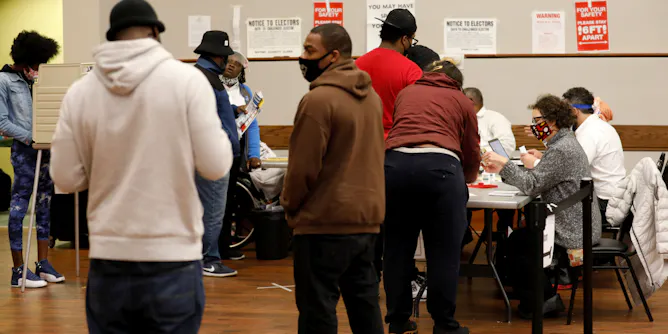
As states devise new electoral district maps, some have adopted independent commissions to ensure fairness in that process. Do they deliver?
Articles on Partisanship
Displaying 61 - 80 of 99 articles
The accusation of bias is like kryptonite for responsible news organizations: the stronger their piety to the ideal of objectivity, the more vulnerable they are to complaints made in bad faith.
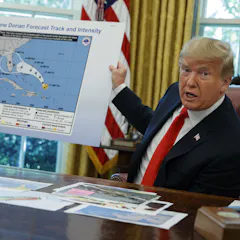
Politics always influences what questions scientists ask. Their intertwined relationship becomes a problem when politics dictates what answers science is allowed to find.

States led by Republican governors generally had higher COVID-19 case and death rates in 2020.

Cross-partisanship co-operation among political leaders doesn’t neatly translate into a similar consensus among the Canadian public, including those with disabilities or chronic health conditions.
The US system was designed with more checks and balances than many other successful democracies – the filibuster’s main function is to give undue power to a vocal minority.
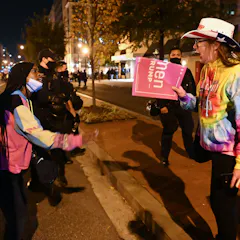
Biden’s winning campaign message was one of unity. But even the people who study polarization can’t agree on whether it’s possible to unify the United States.

Though hypocrites seemingly relinquish their moral authority, the trial against Socrates shows us that our favoritism for public figures is stronger than our judgments of their hypocrisy.
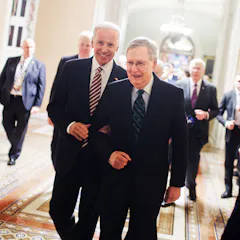
A survey of 800 foreign policy experts identified four international issues where Republicans and Democrats may actually cooperate to get something done – and one area of severe disagreement.
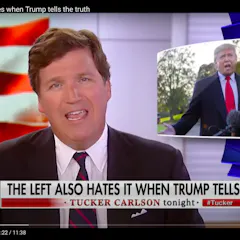
The conservative cable news channel particularly favors the term when explaining opposition to Donald Trump. This framing of the news can lead Fox viewers to see the world as us versus them.
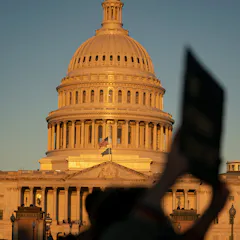
The Supreme Court doesn’t have to be so polarized. Many European countries make judicial appointments in a term-limited, intentionally depoliticized way to promote consensus and compromise.
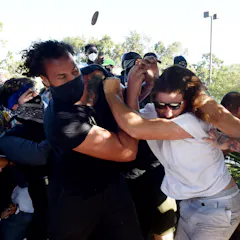
Americans are mad – fist-fighting, protesting mad. And that’s just how politicians want voters in election season. But the popular anger stoked by candidates doesn’t just dissipate after the campaign.
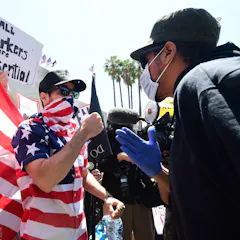
Despite partisan affiliation, American voters tend to share views on common facts about the world. But recent research suggests that when it comes to COVID-19, voters live in alternative realities.
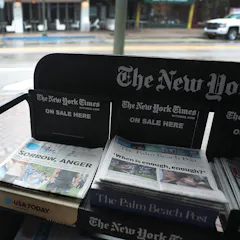
It is a tenet of American journalism that reporters working for the news sections of newspapers remain entirely independent of the opinion sections. But that wall may be invisible to readers.
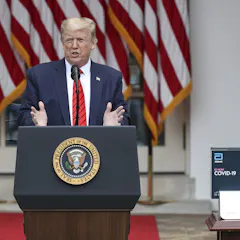
A new survey shows 67% of Democrats report wearing face masks, compared to 55% of Republicans.

When US governors declared a state of emergency is likely pivotal in mitigating how hard COVID-19 hits their states. And it turns out that one party’s governors made those decisions more quickly.
Americans tend to think that self-identified liberals and conservatives hold more extreme views than they actually do.
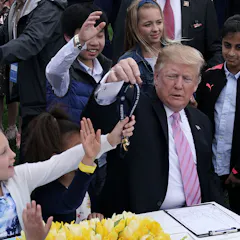
Children think about politics. And based on surveys from 1950 to today, it seems children hold far less favorable views of the president’s personal characteristics now than they did 70 years ago.
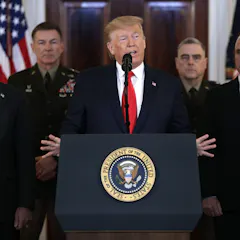
In recent years, voters have shifted their views on issues based upon the positions of politicians – even when that shift clashes with their ideology.
The true number of people who do not favor either of the two major political parties in the US has actually remained stable in recent years.
Top contributors
-

Associate Professor of Political Science, Boise State University
-
W. Alton Jones Professor of Philosophy, Vanderbilt University
-
Assistant Professor of Public Policy and Politics, University of Virginia
-
Assistant Professor of Political Science, Indiana University
-
Professor and Co-Director of the Center for an Independent and Sustainable Democracy, Arizona State University
-
Associate Professor of Political Science, University of Maryland, Baltimore County
-
Associate Professor of Political Science, Park University
-
Lecturer, Political Science and International Studies, University of Birmingham
-
Assistant Professor of Journalism and Media Innovation, Northeastern University
-
Doctoral Student, Political Science, Vanderbilt University
-
Professor of Communication and Journalism, University of Maine
-
Assistant Professor, Department of Communication, University of Minnesota Duluth
-
Cornelius Vanderbilt Professor of Political Science and Director of LAPOP, Vanderbilt University
-
Distinguished McKnight University Professor and Professor of Political Science, University of Minnesota
-
Professor, Dean of the School of Arts & Sciences, Tufts University