
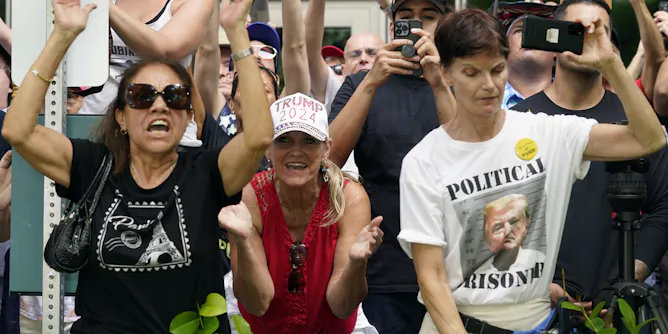
When everything is seen as political – indictments, Supreme Court decisions, scientific findings – a democracy may be on its way to fascism.
Articles on Partisanship
Displaying 41 - 60 of 99 articles

It doesn’t make for inspiring politics, but political scientists have determined that for candidates, it’s more valuable to have an unpopular opponent than to be personally popular yourself.

The Coalition’s position on the Voice is entirely consistent with their partisanship in this area of Aboriginal policy since the 1980s.
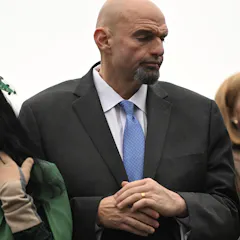
Health struggles are part of the human condition, but politicians often resist revealing full medical records. The media often help lawmakers hide their conditions. That shortchanges the voters.
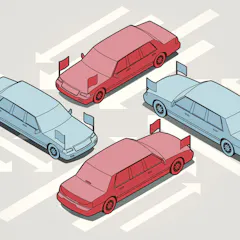
With Democrats running the Senate and the GOP in control of the House, there’s concern that Congress won’t get anything done. Turns out, unified government isn’t very productive in the first place.
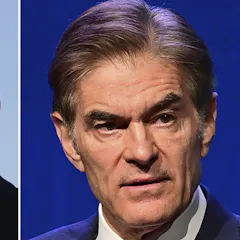
In the hard-fought contest between John Fetterman and Mehmet Oz for the US Senate, Fetterman slammed Oz with charges he was a carpetbagger. That may have helped Fetterman win the race.
Voters mostly did not cast their ballots for chief election administration officials who deny the 2020 election. But the hyperpartisan trend could further erode trust in elections.
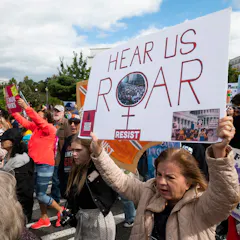
Americans voters are angry about everything from abortion to inflation. While anger is good for voter turnout, it’s ultimately bad for solving problems in a democracy.
Political debate has always been filled with heated words and deeply held emotions. But the level of civility in political discourse has reached a new low.
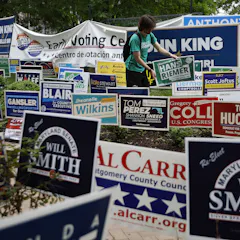
A partisan election system, attacks on election administration and widespread disinformation place the U.S. democracy in a precarious position.
The United States came in 41st worldwide on the UN’s 2022 sustainable development index, down nine spots from last year. A political historian explains the country’s dismal scores.

Many Americans think they know much more about politics than they really do. That overconfidence can thwart democratic politics.

Academic freedom is increasingly caught up in partisan debates around freedom of speech. But the idea behind it is not only vital but shared across many other professions.
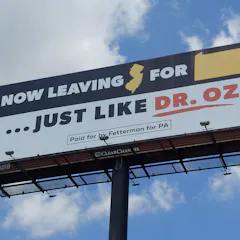
In Pennsylvania, one Senate candidate is pounding the other for his lack of local roots. A political scientist studied accusations of carpetbagging – and found there is a home field advantage.
Have these officials used their authority to interfere with America’s democratic process?
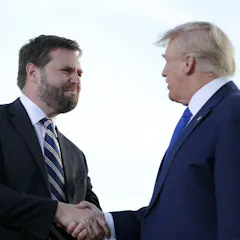
Bottom line: Political endorsements are overrated.
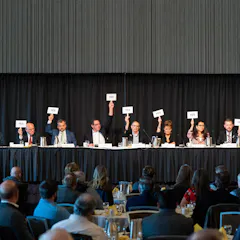
The number of candidates running in party primaries has ballooned since 2010. That may result in extreme, inexperienced or controversial nominees who do not represent a majority of voters.

Your willingness to get a vaccination is tied to your political party. And that may have deadly consequences.

Even before the pandemic, divisive politics was affecting mental health, and political topics were being raised in therapy. Now, patients want therapists that share their views.
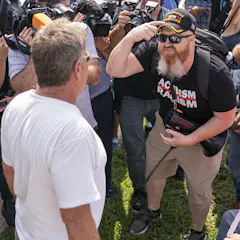
Deep-seated disagreement is healthy for a democracy. But when people lose the ability to navigate those differences, they risk seeking anti-democratic unity of thought.
Top contributors
-

Associate Professor of Political Science, Boise State University
-
W. Alton Jones Professor of Philosophy, Vanderbilt University
-
Assistant Professor of Public Policy and Politics, University of Virginia
-
Assistant Professor of Political Science, Indiana University
-
Professor and Co-Director of the Center for an Independent and Sustainable Democracy, Arizona State University
-
Associate Professor of Political Science, University of Maryland, Baltimore County
-
Associate Professor of Political Science, Park University
-
Lecturer, Political Science and International Studies, University of Birmingham
-
Assistant Professor of Journalism and Media Innovation, Northeastern University
-
Doctoral Student, Political Science, Vanderbilt University
-
Professor of Communication and Journalism, University of Maine
-
Assistant Professor, Department of Communication, University of Minnesota Duluth
-
Cornelius Vanderbilt Professor of Political Science and Director of LAPOP, Vanderbilt University
-
Distinguished McKnight University Professor and Professor of Political Science, University of Minnesota
-
Professor, Dean of the School of Arts & Sciences, Tufts University