
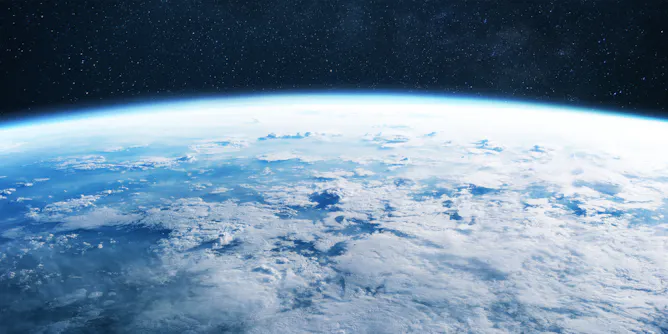
Alarmingly, Earth’s climate will change for many centuries to come. But we must still push to reach net-zero emissions as quickly as possible.
Articles on Paris Agreement
Displaying 61 - 80 of 416 articles
On land, Australia has already passed 1.5°C of warming, bringing lower streamflows, more fire weather and marine heatwaves.
COP29 should end subsidies to fossil fuel companies, compel large-scale emitters to compensate affected regions and ensure that carbon taxes reflect the true cost of cleaning up pollution.

A proposed 36.1% electricity price hike in South Africa is unaffordable and out of line with the country’s development goals of making reliable electricity more available.
Surpassing 1.5°C of warming can be undone at a later date – using tech, land and resources that don’t exist.

Creating sustainable jobs that are regionally accessible, locally meaningful and economically desirable is the next big hurdle for Canadian policymakers aiming for a net-zero energy economy.
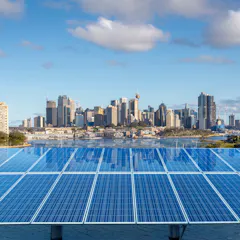
Australia and the Pacific are now tipped to be hosts of the 2026 global climate talks. That brings opportunity – and scrutiny.
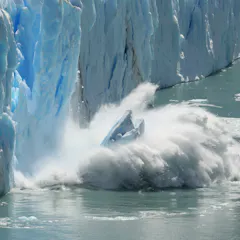
The net zero approach of the Paris agreement has become detached from reality as it increasingly relies on science fiction levels of speculative technology.

Business growth and cutting emissions don’t always go hand in hand. Airlines and other companies may need to rethink their business models to achieve a low-carbon transition.
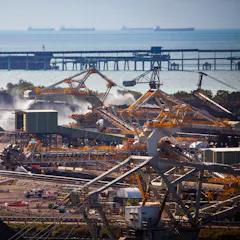
A new report reveals Australia’s fossil fuel exports threaten the Paris Agreement to limit global warming to 1.5°C
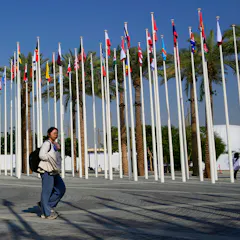
Modelling finds the economic impacts of current emissions reduction commitments are limited for countries not heavily dependent on fossil fuel exports.

Ghana looks in the direction of nuclear power for help in achieving its industrial ambitions while contributing to the fight against climate change.

Global temperatures have averaged at least 1.5 degrees Celsius warmer than preindustrial times for over a year. Two scientists explain what that means and what humanity can do.
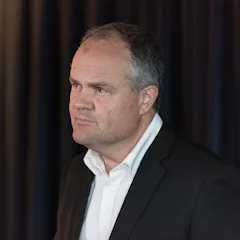
Shadow Minister for Climate Change and Energy Ted O'Brien, who has spearheaded the Coalition's Nuclear Energy plans joins us today to talk about the plan and Australia's energy market.
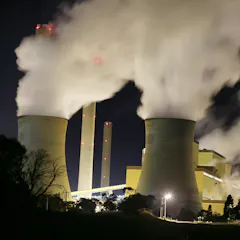
The Coalition’s pledge to build seven nuclear reactors poses serious questions about whether this nation can meet its international climate obligations.

A member of Australia’s Climate Change Authority, Lesley Hughes, explains what this body does – in light of high profile NSW politician Matt Kean’s appointment to the top job this week.
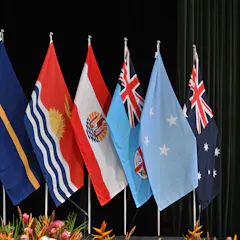
Weakening climate ambition as China strengthens its climate targets would undercut Australia’s strategy in our Pacific region.
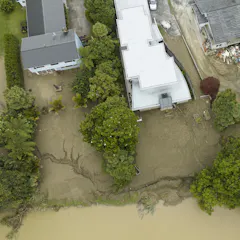
The government’s priorities are shifting towards adaptation to protect communities, jobs and industries. But the longer we wait to cut emissions, the more the costs of climate change will compound.

Dutton on Tuesday reaffirmed the opposition was committed to the net zero by 2050 target but said they would only announce its medium term emission reduction targets after the next election.
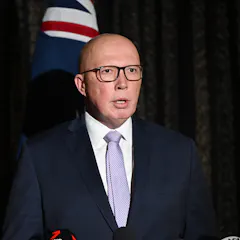
Significant diplomatic and economic repercussions would result from Australia watering down our 2030 targets.
Top contributors
-

Adjunct Professor of Energy, Murdoch University
-
Former Visiting Fellow, SPRU, University of Sussex Business School, University of Sussex, University of Staffordshire
-
Research Associate, Institute for Climate Risk and Response, UNSW
-
Professorial Fellow, University of Canberra
-
Chief Research Scientist, CSIRO Environment; Executive Director, Global Carbon Project, CSIRO
-
ARC Future Fellow and Associate Professor in Climate Science, ARC Centre of Excellence for 21st Century Weather, The University of Melbourne
-
Associate Professor in the Frederick S Pardee School of Global Studies, Boston University
-
Professor, Crawford School of Public Policy and Director, Centre for Climate and Energy Policy, Australian National University
-
Senior Researcher, Center for International Climate and Environment Research - Oslo
-
climate campaigner
-
Royal Society Research Professor of Climate Change Science, University of East Anglia
-
Professor in Applied Mathematics, Te Kunenga ki Pūrehuroa – Massey University
-
Professor, Department of Earth System Science, and Chair of the Global Carbon Project, Stanford University
-
Professor of Political Science, School of Regulation and Global Governance, Australian National University
-
Postdoctoral Research Associate in Existential Risk, University of Cambridge