

Earth has only a few chances to avert catastrophic climate change. At the COP25 in Madrid, we blew one of them.
Articles on Paris Agreement
Displaying 241 - 260 of 416 articles
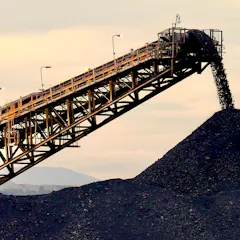
In the same decade we are supposed to be cutting emissions under the Paris goals, our coal production is projected to increase by 34%.
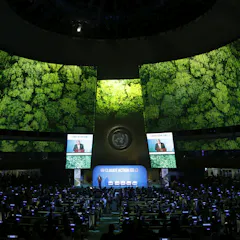
President Trump has confirmed that the US will leave the Paris Agreement on climate change on the earliest allowable date: Nov. 4, 2020. Will this hobble efforts to slow global warming?
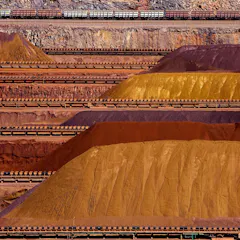
Eminent economist Ross Garnaut says if climate action fails, he fears the consequences ‘would be beyond contemporary Australia’. But zero-emissions iron and aluminium could be the way forward.
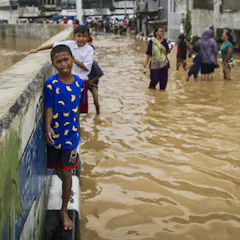
New research confirms that what the world pumps into the atmosphere today has grave long-term consequences. Governments - especially Australia’s - must urgently ramp up efforts to reduce emissions.
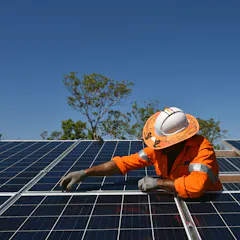
Australia’s renewables revolution proves that there’s cause for hope in our emissions reduction goals. But we cannot rest on our laurels.

Cities represent an increasingly powerful force in global politics – but they’re still constrained by the agendas of slow-acting states.
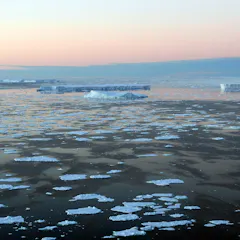
Nations are struggling to agree on how international carbon trading should work under the Paris accord. A weak result would undermine global efforts to fight climate change.
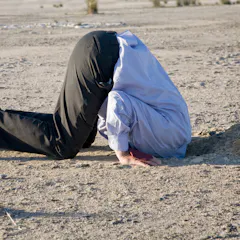
People are more likely to deny climate change if they’re inclined toward hierarchy, have lower levels of education or are more religious. But the strongest predictor of denial is a person’s politics.
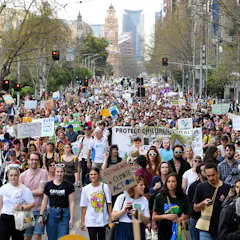
Some of Australia’s biggest property companies are making ambitious emissions-reduction pledges – but how well are they really doing?
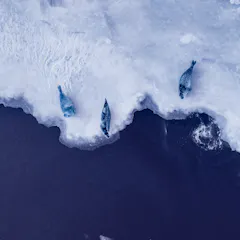
New research shows that warming by more than 2°C could be a tipping point for Antarctica’s ice sheets, resulting in widespread meltdown and changes to the world’s shorelines for centuries to come.

Individual actions to reduce emissions are important in two ways. First, they have an immediate impact, and secondly, adopting low-carbon life choices sends a clear message to political leaders.
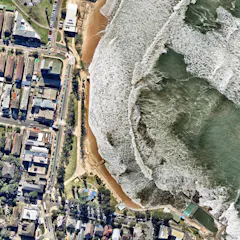
The IPCC report says extreme sea level events that used to hit once a century will occur once a year in many places by 2050. This situation is inevitable, even if emissions are dramatically curbed.
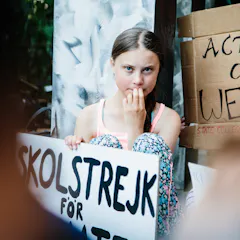
Scott Morrison told reporters he discussed climate change with his daughters, aged 10 and 12, but didn’t share, unfortunately, the girls’ views on the subject.
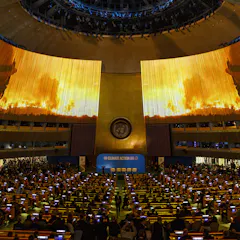
Guterres wanted world leaders to tackle subsidies for fossil fuels, implement taxes on carbon, and end new coal power beyond 2020. None of this happened.

The summit was supposed to get global climate action back on track. But despite a few bright spots, the urgent action needed to avoid a climate catastrophe looks a long way off.
The history of the UNFCCC shapes what is and isn’t possible today.
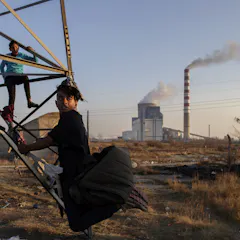
Ahead of the UN climate summit, we take stock of the world’s best and worst performers on climate action - including some surprise success stories.
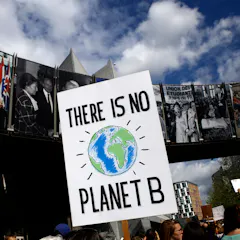
Scientists from all over the world agree that the impacts of climate change will get worse, unless action is taken now.
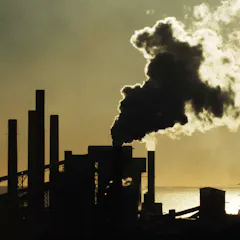
The UN has asked world leaders to bring concrete climate action plans to this week’s summit - and Australia is likely to cop heavy criticism.
Top contributors
-

Adjunct Professor of Energy, Murdoch University
-
Former Visiting Fellow, SPRU, University of Sussex Business School, University of Sussex, University of Staffordshire
-
Research Associate, Institute for Climate Risk and Response, UNSW
-
Professorial Fellow, University of Canberra
-
Chief Research Scientist, CSIRO Environment; Executive Director, Global Carbon Project, CSIRO
-
ARC Future Fellow and Associate Professor in Climate Science, ARC Centre of Excellence for 21st Century Weather, The University of Melbourne
-
Associate Professor in the Frederick S Pardee School of Global Studies, Boston University
-
Professor, Crawford School of Public Policy and Director, Centre for Climate and Energy Policy, Australian National University
-
Senior Researcher, Center for International Climate and Environment Research - Oslo
-
climate campaigner
-
Royal Society Research Professor of Climate Change Science, University of East Anglia
-
Professor in Applied Mathematics, Te Kunenga ki Pūrehuroa – Massey University
-
Professor, Department of Earth System Science, and Chair of the Global Carbon Project, Stanford University
-
Professor of Political Science, School of Regulation and Global Governance, Australian National University
-
Postdoctoral Research Associate in Existential Risk, University of Cambridge