
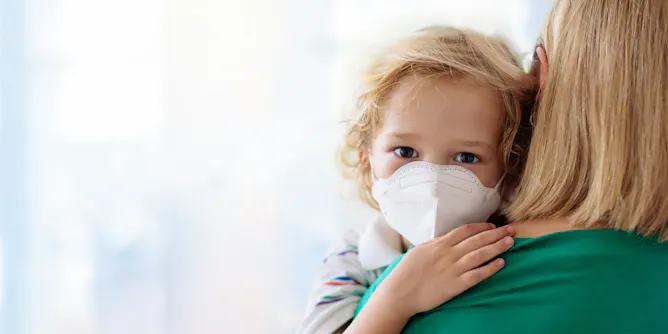
Seeking help for their own distress, creating a warm and cohesive family environment and focusing on some of the silver linings may help parents safeguard their children’s mental health.
Articles on Parents
Displaying 141 - 160 of 339 articles
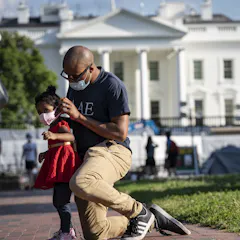
A professor reflects on his four decades of working with families dealing with grief and how the program he helped set up could be applied today.

For children, getting outdoors helps to aid their exploration of the world – it’s how they learn best.

Canadian fathers increased their share of work at home — in housework and in child care — in the early days of the pandemic as work and routines put pressures on the family.

A study found that students’ experiences of parents’ psychological control predicted higher fear of failure and worse adjustment to their university studies.

Parents may try to shield children from information about COVID-19, but their important questions need answering.
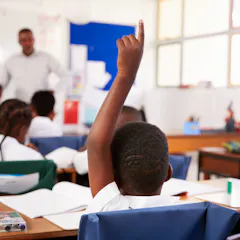
South Africa’s national lockdown will amplify the needs of children with special education needs and disability.

About half of incarcerated women in the United States are mothers to children under age 18. Natural spaces within a prison can help maintain their mother-child bonds.

One anthropologist found 1,072 similar words for ‘mom’ and ‘dad’ in the world’s languages. It turns out a mix of biology, culture and encouragement from parents explains this phenomenon.

New research shows that babies around the world love baby talk — and when adults baby talk to them it is good for their language development.

Whether we miss them, feel guilty about not having appreciated them more or struggle to forgive them, remembering our parents can hurt. Here’s how to move on.

Research shows smartphone use disrupts an essential facet of human connection – eye contact.
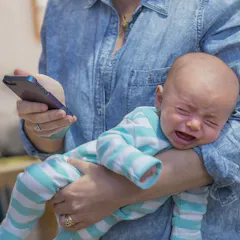
Mobile health apps, teleconferencing with experts and thoughtfully designed educational platforms can all help families during the chaotic and confusing early years.
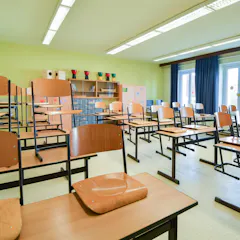
If schools and childcare centres shut without the necessary support, Australia may permanently lose valuable teachers and early childhood educators.

The decline in US birth weight is somewhat of a puzzle for public health researchers.

Second-generation migrants in Britain report more discrimination.

It starts with recognising your child needs support. Then, you have to prove they are eligible for it. Finally, you have to find the appropriate support. There’s help available along the way.
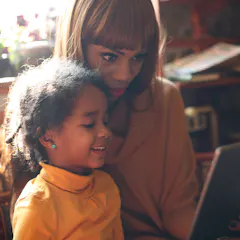
Stay-at-home parents have a hard time reentering the workforce after spending time away.

It doesn’t work, so why do so many parents do it?

It’s important for babies to be in control of the pace and amount they eat.
Top contributors
-

Professor, Canada Research Chair in Determinants of Child Development, Owerko Centre at the Alberta Children’s Hospital Research Institute, University of Calgary
-
Senior Lecturer in Education, Queensland University of Technology
-
Professor of Child Public Health, Swansea University
-
Adjunct Professor, School of Nursing and Midwifery, Western Sydney University
-
Assistant Professor of Sociology, University of South Carolina
-
Associate Professor Leeds University Business School, University of Leeds
-
Lecturer, School of Education, Edith Cowan University
-
Professor of Educational Inclusion, Newcastle University
-
Emeritus professor of children's literature, University of Canberra
-
Lecturer in Educational Leadership and Management, University of Bath
-
School Education Program Director, Grattan Institute
-
Professor in Child Health Literacy, Edge Hill University
-
Senior Lecturer, School of Early Childhood and Inclusive Education, Queensland University of Technology
-
Senior Lecturer in Early Childhood Studies, Charles Sturt University
-
Honorary Senior Fellow, The University of Melbourne