
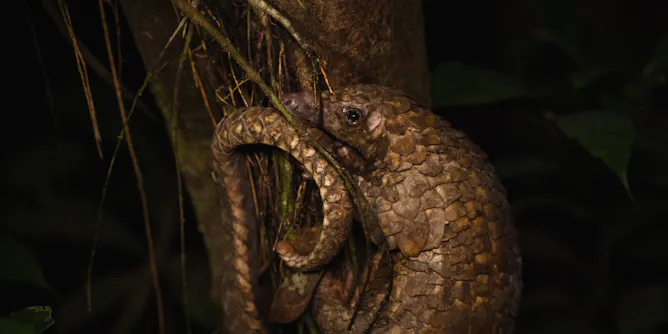
African pangolin exploitation might be motivated more by local demand for meat than international demand for scales.
Articles on Pangolin
Displaying all articles
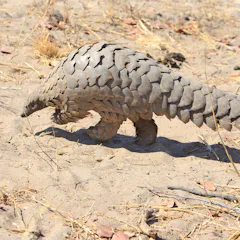
No fossilised pangolin tracks had been recorded anywhere in the world until a track was found in South Africa, dated to between 90,000 and 140,000 years ago.

The giant pangolin had not been documented in Senegal since 1999, and no photographic evidence had been captured since 1967.

Pangolins are among the most trafficked and poached mammals in the world.
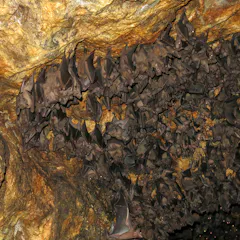
Scientists exploring the possibility of an animal origin for Covid-19 are still investigating the missing link between bats and human beings.

Bat hosts, lab leaks – tracing SARS-CoV-2 to its origins involves more than just tracking down patient zero.
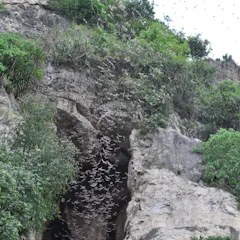
A bat virus discovered a decade ago in Cambodia indicates that pangolin trafficking remains a credible explanation for the origin of the Covid-19 pandemic.
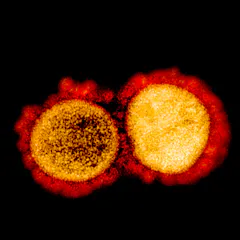
The SARS-CoV-2 virus at the origin of the Covid-19 pandemic is one ten-thousandth of a millimeter in diameter. How can such a microscopic organism have such an immense impact on global health?
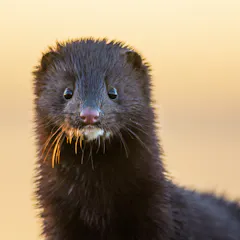
In the disturbing scenario of human-to-mink-to-human COVID-19 transmission, the virus may mutate in mink prior to re-infecting people. That possibility makes vaccine design even more crucial.
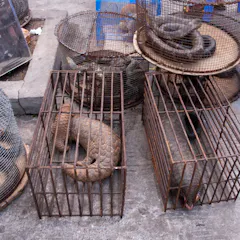
To better anticipate and manage the emergence of new pandemics, a paradigm shift is needed to take into account the complex interactions between human health, animal health, the environment and the economy.
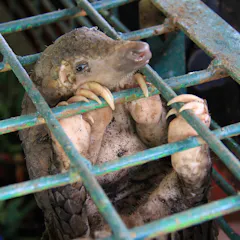
Promote new habits, find out why people engage with the wildlife trade and don’t make it seem more widespread than it really is.
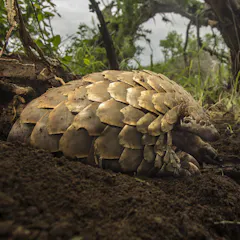
Pangolins are illegally traded, linked to the coronavirus pandemic and driven to extinction in some areas. That’s why it’s vital to reintroduce this threatened species back into the wild.
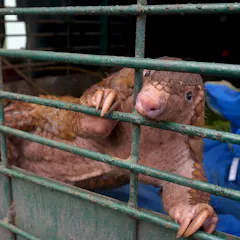
Covid-19, like other major epidemics, is not unrelated to the biodiversity and climate crisis we are experiencing.
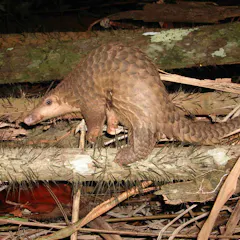
When a new virus emerges and triggers a pandemic, it is important to trace its origins. Knowing more about how the virus jumped species in the first place can help curb future zoonotic diseases.
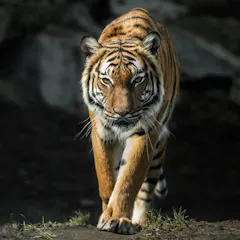
A four-year-old female Malayan tiger has tested positive for COVID-19, with six other tigers and lions showing symptoms. It’s the first known case of a ‘wild’ animal catching the disease.
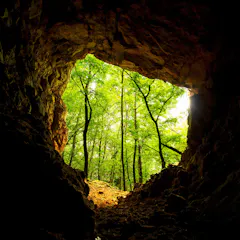
The SARS-CoV-2 virus responsible for the COVID-19 pandemic is undergoing extensive genetic analysis around the world to understand its origin and evolution.
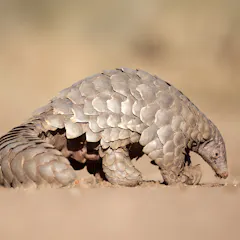
Pangolins are one of the most trafficked wild mammals in the world.
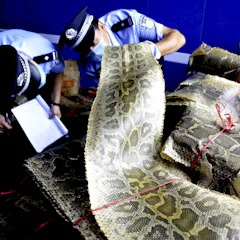
This multi-billion pound industry increasingly involves organised crime groups, who see wildlife as a low risk route to profit.
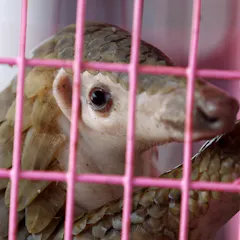
Few people are familiar with the pangolin. It is a shy creature, about as big as a medium-sized dog, and its diet consists of ants and termites. Most distinctively, it has armoured plates and will curl…
Top contributors
-

Maître de Conférences (HDR) à Sorbonne Université, ISYEB - Institut de Systématique, Evolution, Biodiversité (CNRS, MNHN, SU, EPHE, UA), Muséum national d’histoire naturelle (MNHN)
-
Research Fellow in Conservation and Sustainability, University of Kent
-
Postdoctoral Fellow of Computational Medicine and Bioinformatics, University of Michigan
-
Laboratory of Vegetation and Environmental Change, Institute of Botany, Chinese Academy of Sciences
-
Research Fellow in Conservation Marketing, University of Oxford
-
Directeur régional Asie du Sud-Est, vétérinaire et épidémiologiste, Cirad
-
Senior Lecturer in Criminology, Liverpool Hope University
-
Associate Professor, Pathobiology, Ontario Veterinary College, University of Guelph
-
Research Fellow at the Centre for Planetary Health and Resilient Conservation Group, Griffith University
-
Directeur de recherche CNRS, Université Paris-Saclay
-
Postdoctoral Scholar in Fisheries and Wildlife, University of Stirling
-
Professor Department of Zoology, University of Ibadan
-
Director, Durrell Institute of Conservation and Ecology, University of Kent
-
Associate professor, Pathobiology, University of Guelph
-
Professor of Wildlife Conservation and Director of the Wildlife Conservation Research Unit, University of Oxford