
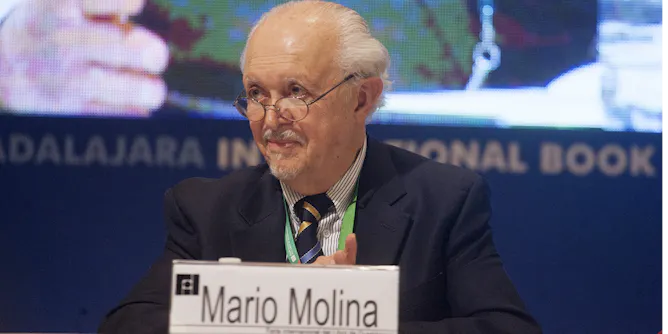
Molina, who died on Oct. 8, ‘thought climate change was the biggest problem in the world long before most people did.’ His research on man-made depletion of the ozone layer won the 1995 Nobel Prize.
Articles on Ozone layer
Displaying 21 - 40 of 52 articles

New research on the Late Devonian extinction suggests the ozone layer could be naturally depleted as the temperature rises.
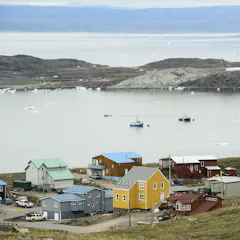
New research finds that chlorofluorocarbons (CFCs) and other ozone-depleting substances have boosted the effects of climate change in the Arctic.

Mosses are the only plants that can withstand life in East Antarctica’s frozen landscape. But a new study shows that life is getting even harder, as ozone loss and climate change make conditions even drier.
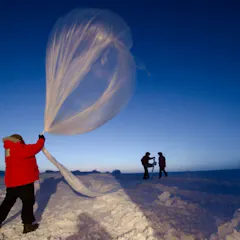
Almost 30 years ago the world responded to the realisation that our ozone layer was in trouble. The resulting Montreal Protocol was a rare example of global cooperation, but there’s no room for complacency.
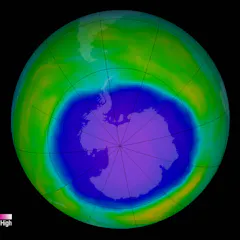
Earth’s ozone layer shields us from harmful ultraviolet radiation. Nations have been working to reduce ozone-depleting chemicals since the 1980s, but recent studies show that there is still work to do.

California produces 90 percent of the US strawberry crop, but growers face curbs on toxic chemicals that have helped their industry expand. Can a system centered on mass production become more sustainable?
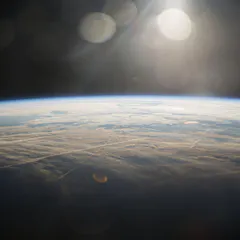
Australia has ratified an agreement to phase out hydrofluorocarbons, a manmade compound once hailed as the saviour of the ozone layer. What went wrong?
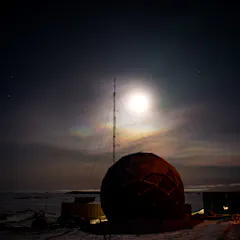
The treaty to limit the destruction of the ozone layer is hailed as the most successful environmental agreement of all time. Three decades on, the ozone layer is slowly but surely returning to health.
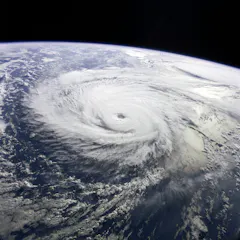
Far from being “politicised science”, as a Trump advisor has claimed, NASA’s satellite monitoring has been a crucial help in understanding the planet we live on.
Hydrofluorocarbons were created to replace ozone-damaging chemicals – but they turned out to be major contributors to climate change.
What the Montreal Protocol has done for the ozone hole threat other international accords could do for climate change – if we all agree.
Imagine an environmental crisis caused by a colourless, odourless gas, in minute concentrations, building up in the atmosphere. There is no expert consensus, but in the face of considerable uncertainty…
Many people think of sunburn and skin cancer when they hear about the ozone hole. But more ultraviolet (UV) radiation isn’t the only problem. The ozone hole has also led to dramatic changes in Southern…
Over 2012 and 2013, parts of New Zealand experienced their worst drought in nearly 70 years. Drought is the costliest climate extreme in New Zealand; the 2012-2013 event depressed the country’s GDP by…

It sometimes feels as if environmental news is never good news, but that certainly isn’t true when it comes to the ozone layer. The UN has announced that the ozone layer is showing “signs of recovery…
Little-studied synthetic gases could have large effects on the ozone layer and climate if their use goes unchecked, according…
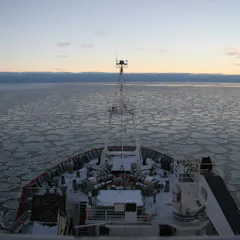
Strong winds linked to climate change and the hole in the ozone layer are driving a steady increase in Antarctic sea ice, even as Arctic levels continue to shrink dramatically, a new report shows. While…
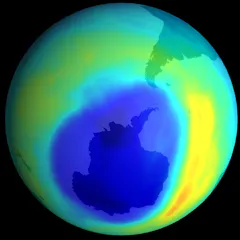
Scientists at the University of East Anglia have discovered new man-made gases that are contributing to the depletion of the Earth’s ozone layer. Three new Chlorofluorocarbons (CFCs), which act to destroy…

It’s been nearly 30 years since the discovery of the ozone hole over Antarctica, and the realisation that chlorine, in the form of chlorofluorocarbons or CFCs, was the chemical culprit behind the depletion…
Top contributors
-

Honorary Professorial Fellow, School of Chemistry, The University of Melbourne
-
Research Group Leader, CSIRO
-
Honorary Fellow, CSIRO
-
Associate Professor in Planetary Astronomy, University of Canterbury
-
Principal Research Scientist, Australian Antarctic Division and Adjunct Senior Lecturer, University of Tasmania
-
Associate Professor in Atmospheric Chemistry, University of Wollongong
-
Research Associate in Atmospheric Science, University of Bristol
-
Professor of Atmospheric Chemistry, University of Canterbury
-
Australian Laureate Fellow, Distinguished Professor, Deputy Director of ARC Securing Antarctica's Environmental Future (SAEF), University of Wollongong
-
Professor of Atmospheric Science, Colorado State University
-
Professor, Earth and Planetary Sciences, Johns Hopkins University
-
Associate Lecturer in Biology, University of Wollongong
-
Lecturer in Observational Atmospheric Science, University of Leeds
-
Senior Principal Research Fellow (Honorary), James Cook University
-
Research Projects Officer, Oceans and Atmosphere, Climate Science Centre, CSIRO