

This spring’s ozone hole is likely to be among the top ten most severe of all time, bringing weather changes to New Zealand and Australia.
Articles on ozone depletion
Displaying all articles
Hydroxyl scrubs the potent greenhouse gas methane from the atmosphere. But its production is linked with emissions of other pollutants.

The concept of care can serve as a powerful focal point for understanding the climate challenge and for policies toward a sustainable and equitable future.
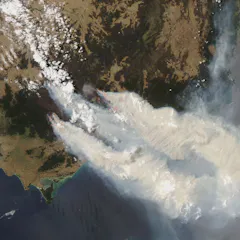
More frequent wildfires, emissions from rocket launches and more satellite debris burning up in the atmosphere all contribute to ozone depletion and could slow the recovery of the ozone layer.
The New Zealand Space Agency’s dual role as regulator and sector developer introduces a conflict of interest and skews the aerospace industry towards economic growth, at the cost of sustainability.
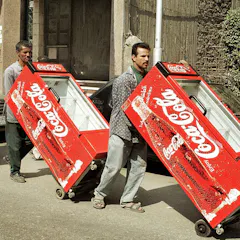
Coca-Cola has made ambitions climate and sustainability pledges, but marketing its products worldwide will always be a top priority.

There are significant gaps in what teachers in Ghana know about ozone depletion and climate change, even though these subjects are in the science curriculum.
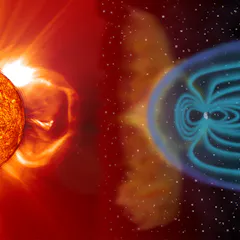
When solar particles reach the Earth, they not only produce spectacular auroras but also contribute to the chemical reactions leading to ozone depletion, which in turn influences climate patterns.

New research on the Late Devonian extinction suggests the ozone layer could be naturally depleted as the temperature rises.
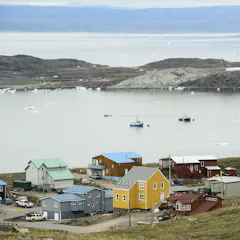
New research finds that chlorofluorocarbons (CFCs) and other ozone-depleting substances have boosted the effects of climate change in the Arctic.

For several years, emissions of CFCs have been rising, in apparent defiance of a global ban in place since 2010. A new global detective effort has traced the source to two eastern Chinese provinces.
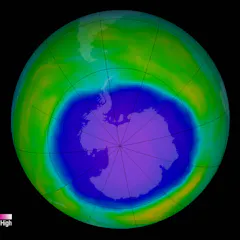
Earth’s ozone layer shields us from harmful ultraviolet radiation. Nations have been working to reduce ozone-depleting chemicals since the 1980s, but recent studies show that there is still work to do.
The climate crisis demands not only green technologies, but a completely different approach to economic development.

What the Montreal Protocol has done for the ozone hole threat other international accords could do for climate change – if we all agree.
Imagine an environmental crisis caused by a colourless, odourless gas, in minute concentrations, building up in the atmosphere. There is no expert consensus, but in the face of considerable uncertainty…
Many people think of sunburn and skin cancer when they hear about the ozone hole. But more ultraviolet (UV) radiation isn’t the only problem. The ozone hole has also led to dramatic changes in Southern…

It’s been nearly 30 years since the discovery of the ozone hole over Antarctica, and the realisation that chlorine, in the form of chlorofluorocarbons or CFCs, was the chemical culprit behind the depletion…

On Monday, a report appeared in the Australian claiming a link between chlorofluorocarbons (CFC) in the atmosphere and global warming. The report claimed “banned aerosols” and not carbon dioxide were “responsible…
The hole in the ozone layer above Antarctica is affecting the temperature in the Southern Hemisphere and the rate of tree…
Top contributors
-

Research Group Leader, CSIRO
-
Honorary Fellow, CSIRO
-
Associate Professor in Atmospheric Physics, University of Otago
-
Principal Technician Atmosphere, Earth Sciences New Zealand
-
Adjunct professor, UNSW
-
Lecturer in Observational Atmospheric Science, University of Leeds
-
Australian Laureate Fellow, Distinguished Professor, Deputy Director of ARC Securing Antarctica's Environmental Future (SAEF), University of Wollongong
-
Founding Director, Institute for Sustainability, University of Surrey
-
Interdisciplinary Lecturer in Climate Modelling, University of Cambridge
-
Professor of Chemistry and Atmospheric Science, Colorado State University
-
Climate Science Centre, CSIRO Oceans and Atmosphere, CSIRO
-
Research Projects Officer, Oceans and Atmosphere, Climate Science Centre, CSIRO
-
Assistant professor, teaching stream, University of Toronto
-
Professor of Earth Science, University of Southampton
-
Honorary Fellow, CSIRO