

A new study looked at the health records of more than 9 million people in England to assess whether body weight influenced the uptake and effectiveness of COVID vaccines.
Articles on Overweight
Displaying 41 - 60 of 143 articles
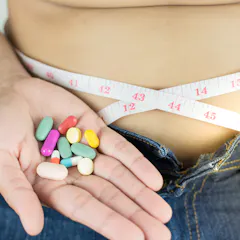
With FatBlaster Max recently banned from sale, it’s a good time to look at what diet pills actually contain, and whether they work.

Is there such a thing as ‘fat but fit’? Excess weight is one risk factor for ill health, but it doesn’t perfectly predict it.

Obese persons are regularly associated with laziness and inactivity in Ghanaian society.

Your body might need a nudge to return to its pre-lockdown weight. And it’s probably better to act now than wait.

Rates of obesity and eating disorders like anorexia and bulimia both surged among young people over the past two years. Scholars explain why, and how parents can support kids dealing with body shame.

Obesity and excess weight increase the risk of COVID progressing to severe disease, including in children. Vaccination is key to reducing this risk.

Negative attitudes about people with larger body sizes or higher weight are consistent across Australia, Canada, France, Germany, the UK and the US.

Rwanda’s food policies focus on production to make sure people have livelihoods and enough nutritious food. Not much attention is given to overnutrition.

Tension between the government’s economic and public health priorities is preventing stronger fiscal measures to address nutrition-related noncommunicable diseases.

Implementing a sugar-sweetened beverage tax in all African countries will require sufficient political will and support from civil society.

Malnutrition during the first 1000 days of life can cast a long shadow over a person’s life.
Semaglutide works by controlling appetite.
Americans with excess weight and obesity have been hit hard by COVID-19. Now there is reason to believe they may not get the same protection from the vaccines.

In this new study, people who were overweight had fewer brain cells and lower levels of blood flow compared to people of a normal weight.

The type of fat tissue we store in certain parts of our body is partly behind this link.

For patients recovering from heart surgery, being overweight or moderately obese appears to be an advantage over being underweight or even having a normal BMI.

Our new research shows deep body fat wrapped around the heart can release dangerous molecules, potentially leading to atrial fibrillation.

All too often the medical community ‘fat-shames’ patients trying to lose weight, when in fact obesity and overweight are complicated medical issues.

New Canadian clinical practice guidelines for obesity aim to help reduce the prevalence and impact of weight bias and stigma in clinical care, and also encourage the public to advocate for change.
Top contributors
-

Laureate Professor in Nutrition and Dietetics, University of Newcastle
-
Clinical Trials Director, Department of Endocrinology, RPA Hospital, University of Sydney
-
Professor of Health Sciences, Adelaide University
-
NHMRC Senior Research Fellow in the School of Human Sciences, The University of Western Australia
-
Associate Professor, Melbourne School of Population and Global Health, The University of Melbourne
-
Professor of Health Promotion, Dalhousie University
-
Research Fellow in Exercise Metabolism and Nutrition, Mary MacKillop Institute for Health Research, Australian Catholic University
-
Program Director of Nutrition and Food Sciences, Accredited Practising Dietitian, Adelaide University
-
Associate Professor in Psychology, Swansea University
-
Lecturer in Psychology, University of Essex
-
Professor and Programme Director, SA MRC Centre for Health Economics and Decision Science - PRICELESS SA (Priority Cost Effective Lessons in Systems Strengthening South Africa), University of the Witwatersrand
-
Research fellow, Monash University
-
Associate Professor, Deakin University
-
Postdoctoral fellow, Johns Hopkins University
-
Associate Professor, Health Behaviours, University of Oxford