
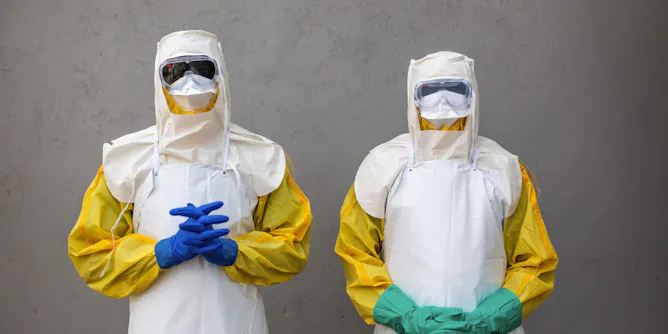
When tackling an Ebola outbreak speed is a critical element - every hour counts.
Articles on Outbreak
Displaying 41 - 60 of 146 articles
While the majority of monkeypox cases thus far have been recorded among men who have sex with men, everyone is still at risk of contracting the disease.
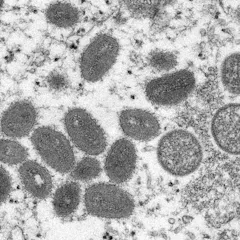
The monkeypox virus, which is commonly found in West and Central Africa, is now causing many infections in the U.S., Europe and Latin America.

Climate change has a clear link to rising foodborne illnesses. Blackouts during heat waves and wildfires are a growing part of the problem.

Monkeypox has spread to more than 50 countries and will continue to be monitored. Here’s what we know about monkeypox so far and what researchers want to find out.
The seriousness of an epidemic is a function of several factors, including the degree of contagiousness and potential for rapid spread.
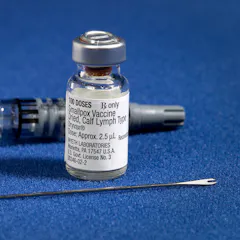
Possible outcomes of the current monkeypox epidemic under four different scenarios.
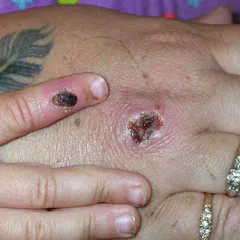
Monkeypox has been spreading in humans since as early as 1970. While most monkeypox infections are mild, some can be fatal.

Why did migrant agricultural workers suffer so greatly when the government had supposedly taken such care to ensure their safety?
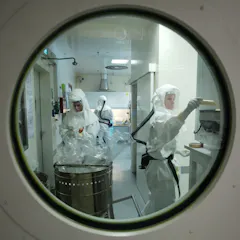
A centralized reporting system for laboratory incidents involving dangerous pathogens in biological research does not exist in the US or internationally.

How well are the Tokyo Olympics prepared for a COVID crisis when there is still an outbreak in the country, the vaccination rates are low and athletes are asked to socially distance?

A more coordinated effort by scientists, stakeholders and community members will be required to stop the next deadly virus that’s already circulating in our midst.

Technology that can identify stray bits of genetic material in the environment can help scientists monitor human and animal health.

Hollywood movies have long leaned into colonial representations of the tropics: imagined as romantic palm-fringed coasts full of abundance, but also scary places full of pestilence and primitiveness.

It’s all well and good to be able to connect cases through genomic sequencing. But it’s important to be able to connect them epidemiologically as well.
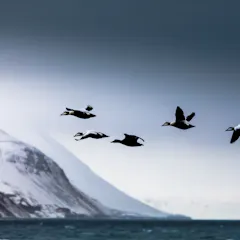
We can learn about the spread of diseases through populations by studying naturally occurring instances of herd immunity. Avian cholera in the Canadian Arctic provides a useful case study.

During the current COVID outbreak in Melbourne, the state government has been listing exposure sites as tier 1, tier 2, or tier 3. So what’s the difference between each level, and why does it matter?
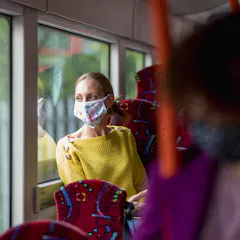
As ready as you are to be done with COVID-19, it’s not going anywhere soon. A historian of disease describes how once a pathogen emerges, it’s usually here to stay.
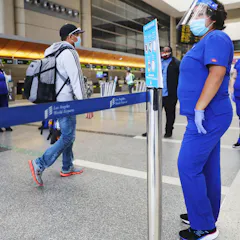
The US response to the coronavirus was slow and problematic, but it also was rooted in a 19th-century way of viewing public health.
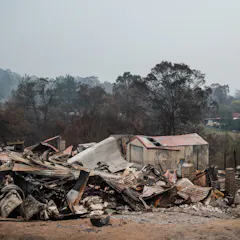
Damage to septic tanks is one of the major health hazards people face when they return to their bushfire-affected homes. It was simply dumb luck a disease outbreak didn’t happen last summer.
Top contributors
-

Fellow, Nigerian Academy of Science
-
Professor of Global Biosecurity, NHMRC L3 Research Fellow, Head, Biosecurity Program, Kirby Institute, UNSW
-
Associate Professor of Epidemiology, Texas A&M University
-
Regents' Professor & Chair, Medical Laboratory Science, Texas State University
-
Research Scientist, African Population and Health Research Center
-
Senior Lecturer, Infectious Diseases Epidemiology and Control, UNSW
-
Associate Professor, Epidemiology, Deakin University
-
Professor of Neurology, Medicine (Infectious Diseases), and Epidemiology, University of Colorado Anschutz
-
Lecturer in Virology, Queen's University Belfast
-
Associate Professor of Biology, Penn State
-
Associate Professor of History, Rutgers University - Newark
-
Affiliate Professor of Veterinary Medicine, Auburn University
-
Senior Lecturer in Microbiology and Fermentation Technology, Federation University Australia
-
Associate Professor, School of Pharmacy and Pharmaceutical Sciences, The University of Queensland
-
Lecturer, Manchester Metropolitan University