
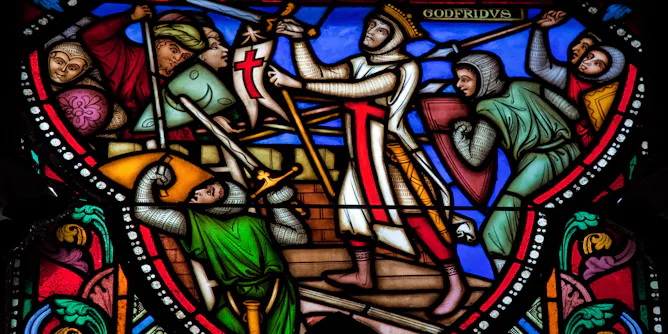
Long-standing Christian narratives about Islam continue to inform political language, argues a sociologist of Islam.
Articles on Orientalism
Displaying 1 - 20 of 25 articles

Post 9/11, brown and sometimes Black Muslim characters were portrayed as ‘good’ only when aligned with US state power. Muslim filmmakers are trying to change that.
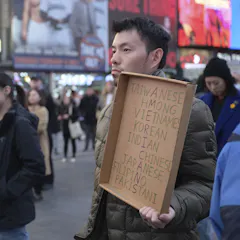
The concept of ‘Asian Americans,’ created in the 1960s by student activists as a way to move past denigrating labels, is today a contested category.

Global tensions have put pressure on universities to adopt politicised definitions of antisemitism and Islamophobia. Dehumanisation is a more inclusive alternative.

Thai characters are few and far between and the country is depicted as beautiful and hedonistic Asian Las Vegas.
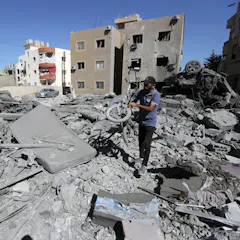
Wars have always required false dichotomies: Christian and Muslim, civilization and barbarism, West and East to justify violence against the other.
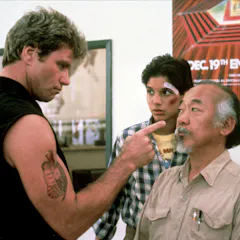
Did the beloved 1980s teen classic The Karate Kid perpetuate Orientalist stereotypes?
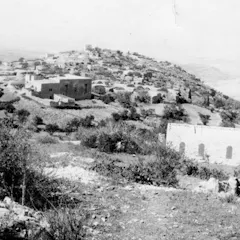
The dismissal of Palestinians as “barbaric” or somehow less human is rooted in a long history of colonizing narratives, including how the land and people were first viewed as “uncivilized.”
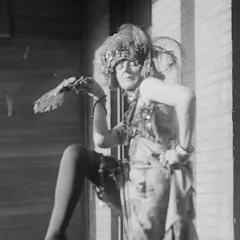
Digital archives can have an important part in creating more inclusive art histories, but paying attention to ethical research practices when sharing and circulating resources is critical.
Oppenheimer’s knowledge of Sanskrit literature was more than cursory. He used quotes and parables from Sanskrit texts as a guide to right actions in his life.
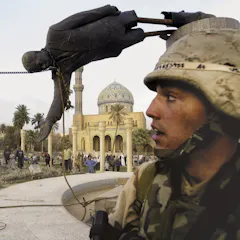
Countless memoirs have been published by US and British veterans in the 20 years since the Iraq War began in March 2003. Iraqi journalist Ghaith Abdul-Ahad offers a fresh perspective.
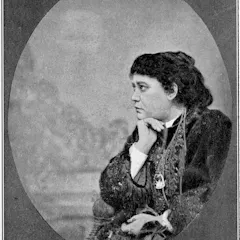
Theosophy and its founders had an outsize impact on Americans’ ideas about spirituality and Asian religions.
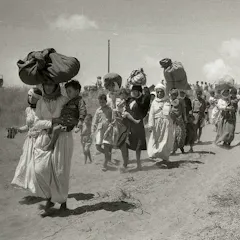
The UN’s resolution to recognize Nakba Day on May 15, to mark the expulsion of Palestinians from their homes in 1948, helps to acknowledge past traumas but does the resolution have other implications?
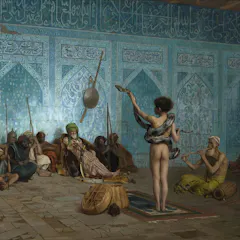
Edward Said’s seminal 1978 book, Orientalism, explores how often racist or romanticised stereotypes create a worldview that justifies Western colonialism and imperialism.

Siang Lu’s debut novel suggests whitewashing Asians for the screen is profitable. ‘People pay to see foreignness repackaged as stereotypes – and thus rendered virtually invisible.’
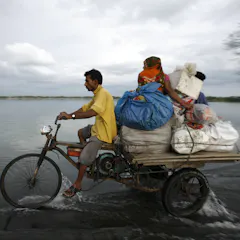
When climate change is used to explain migration, social inequality is naturalised.
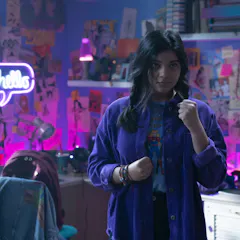
Ms. Marvel represents a break from the ‘Muslim equals Middle Eastern’ portrayals popular in western media.

Tackling Islamophobia as a form of racism even when Muslims aren’t visible is key.
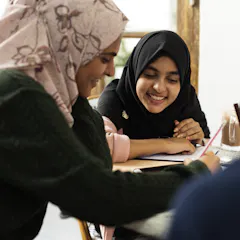
Racist and Islamophobic beliefs cannot find root in the minds and hearts of those who genuinely and frequently get to know each other’s communities.

When cultural stereotypes and nation branding collide, discussions of orientalism and cultural appropriation get complicated.
Top contributors
-

PhD, University of Sydney
-
Senior Lecturer, Global and Language Studies, RMIT University
-
Assistant Professor of Bioethics, National University of Singapore
-
Professor, History of Education, Queen's University, Ontario
-
PhD Candidate, Education, York University, Canada
-
Associate Professor of Instruction, The University of Texas at Austin
-
Lecturer in Islamic Politics, University of Toronto
-
Professor, Sociology, Mount Royal University
-
Professor & Director, Modern Literature and Culture Research Centre and Gallery, Toronto Metropolitan University
-
Professor and Associate Chair Department of Sociology and Anthropology, Carleton University
-
Assistant Professor, Department of Criminology, Toronto Metropolitan University
-
Associate Professor in Human Geography, Durham University
-
Professor of Cultural Studies, Cardiff University
-
Instructor, School of Indigenous and Canadian Studies, Carleton University
-
Assistant Professor, Faculty of Education, Concordia University of Edmonton