
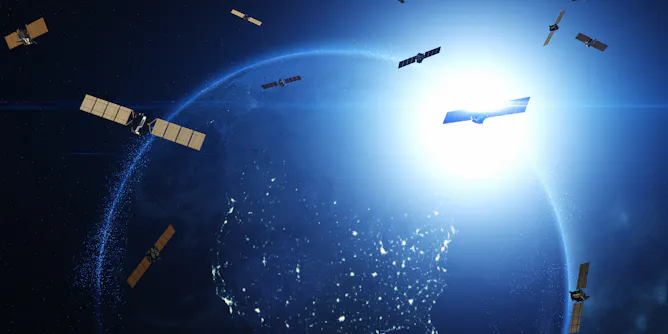
Google’s Project Suncatcher would need sophisticated collision avoidance capabilities to navigate a junk-filled landscape.
Articles on Orbits
Displaying all articles
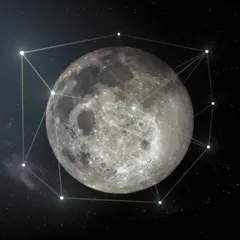
The US doesn’t currently have much ability to monitor what’s going on in the space around the Moon. An effort by the Air Force Research Laboratory could help.
While a recent executive order directed the Department of Commerce to elevate this office, budgetary actions threaten it.
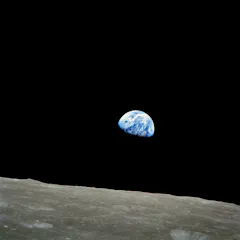
The Moon influences ocean tides – and ocean tides, in some ways, influence the Moon back.
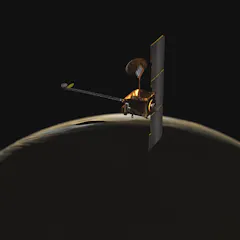
An aerospace engineer explains why NASA, Space Force and other agencies are using or testing aerobraking for more fuel-efficient spacecraft.
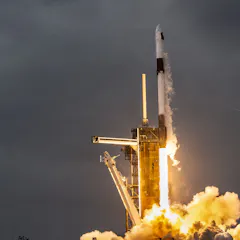
A rocket needs to overcome the force of gravity to leave Earth behind.

Humans have synced their calendars to the sun and moon for centuries, but every so often, these systems need a little correction.
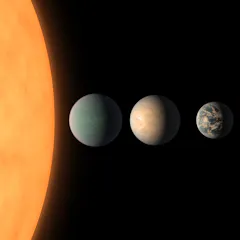
Orbital resonance is kind of like musical harmony, but systems that display it are far more rare than songs with harmonic melodies.
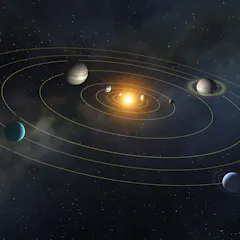
You might hate winter, but at least you know what to expect every year. Other planets have wobbly axes that lead to wild, unpredictable seasons.
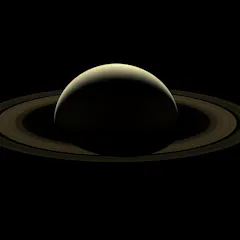
Viral headlines would have you think Saturn’s rings will vanish in just 18 months. Here’s what that really means and why you don’t need to worry.

There’s a flurry of excitement every time a comet comes into view from Earth. But what are these celestial objects, and where do they come from?
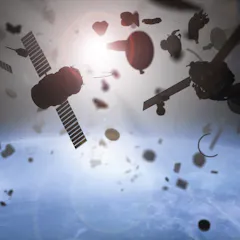
Treaties meant to ensure sustainability in space don’t currently regulate private companies, and not every country has signed on to an agreement for sustainable space exploration.
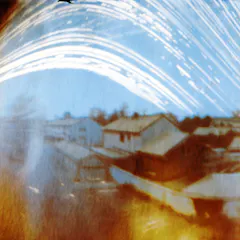
The longest and shortest days of the year are marked by the Sun’s position in the sky – but the seasons lag behind.

The Double Asteroid Redirection Test successfully showed that it is possible to crash a spacecraft into a small asteroid. Whether the approach could save Earth from a future threat remains to be seen.
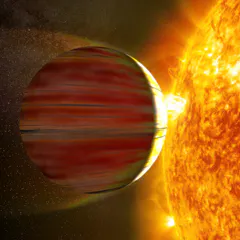
The unusual planetary system has a host star orbited by two giants. One has an incredible odd route around its star. And the other (unlike our own gas giants) is hellishly hot.
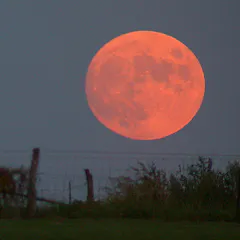
The Moon illusion is what makes the Moon look giant when you see it rising over a distant horizon. An astronomer explains what causes this awe-inspiring trick of the mind.
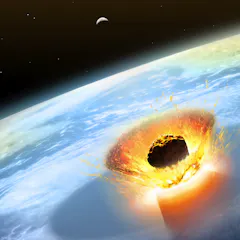
NASA has only mapped 40% of the potentially dangerous asteroids that could crash into Earth. New projects will boost that number, and upcoming missions will test tech that could prevent collisions.
In the search for the hypothetical Planet Nine, scientists may have uncovered another explanation for the patterns in the orbits of Kuiper Belt objects.
Top contributors
-

Professor (Astrophysics), University of Southern Queensland
-
University Distinguished Professor of Astronomy, University of Arizona
-
Assistant Professor of Space and International Relations, Johns Hopkins University
-
Professor of Astronomy, UMass Lowell
-
Computer engineer, MSc Bioinformatics, University of Southern Queensland
-
PhD Student in Physics and Astronomy, Purdue University
-
Director of the Abrams Planetarium, Michigan State University
-
Associate Professor, Astronomy, University of Regina
-
Professor of Astronautics, University of Southern California
-
Associate Research Scientist, University of Michigan
-
Professor (Physics), University of Southern Queensland
-
Assistant Professor of Physics, Georgia Institute of Technology
-
Principal Research Engineer, School of Aerospace Engineering, Georgia Institute of Technology
-
Associate Professor of Space Systems, West Virginia University
-
Postdoctoral Researcher in Physics and Astronomy, Michigan State University