

The interests of pharmaceutical companies and public health are not the same. Industry dollars can distort research agendas, while framing health challenges and solutions in ways that benefit corporations.
Articles on Opioid crisis
Displaying 61 - 80 of 97 articles

Evidence shows that opioid manufacturers fund patient advocacy groups in Canada, distorting policies to protect public health.

For many who know someone who has lost a loved one, it can be hard to know what to say or how to respond. For those who have lost a loved one, the silence can be deafening. Some things to keep in mind.

Research shows that THC and CBD in cannabis have potential to interrupt the vicious cycle of opioid addiction, dependence, withdrawal and relapse.

Canadian hospitals are ill-equipped to deal with the inpatient opioid crisis. Lack of specialist addictions care puts patients and staff at risk.

The toll of the opioid epidemic is often derived from toxicology reports. These rely on drug tests. A medical historian explains these tests and how they fall short of capturing why people are dying.

Many people may misunderstand the basics about opioids. That prevents researchers from understanding the full scope of the epidemic.

Canada’s systems of health funding, medical training and physician compensation need an overhaul – to support vital centres of medical research and complex care.
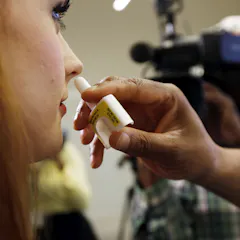
One study argues that naloxone increases opioid use because it protects against death from overdose. But a closer analysis shows Narcan is the number one public health tool to fight the overdose epidemic.
Two neuroscientists explain the cruel chemistry of opioid addiction and why this crisis could last a lifetime.

Universities teach students and produce research – but do they have responsibility to engage with the communities that surround them? Two university presidents explain why their answer is an emphatic yes.

Most countries need to find a happy balance between the American attitude that all pain needs to be cured – and the ethos in other countries that pain is to be endured.

As knowledge of pain and the highly addictive nature of opioids has grown, so has the knowledge grown about pain and its origins. A pain specialist explains the intricacies, and how treatment is changing as a result.
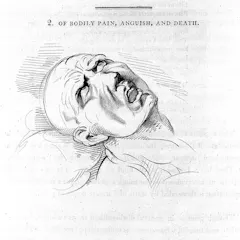
In today’s opioid crisis, why are some people with addictions treated with empathy and others with disdain? The answer to that question has roots in the 19th century.
Deaths from opioid overdose and suicide are at an all-time high. One in 10 adult Americans uses marijuana. And only 1 in 3 Americans self-describes as ‘happy.’ A public health expert asks, what’s going on?

‘Confessions of an English Opium-Eater’ is considered the first modern drug memoir. Many believe it is responsible for our romantic ideas of opium-based drug use today.

Each person experiences pain differently, depending on his or her genetic makeup. That makes it difficult to figure out what treatments patients need.
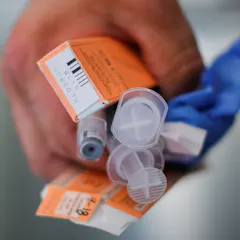
Scientists are just starting to understand how your parents’ genes and experiences might shape your own susceptibility to dangerous drugs. Could that help to stop addictions before they start?

Just seven countries worldwide regularly execute people for drug crimes, most of them authoritarian regimes. Nothing suggests that this brutal policy actually curbs drug use.
Trust Me I’m An Expert: The science of pain
The Conversation58.7 MB (download)
Our podcast Trust Me, I'm An Expert, goes beyond the headlines and asks researchers to explain the evidence on issues making news. Today, we're talking pain and what science says about managing it.
Top contributors
-

Medical Director of Opioid Policy Research, Brandeis University
-
Associate professor, Department of Family and Community Medicine, University of Toronto; York University, Canada; University of Sydney
-
Associate Professor of History, University at Buffalo
-
PhD Candidate, School of Population and Public Health, University of British Columbia
-
PhD Candidate, School of Nursing, University of British Columbia
-
Postdoctoral Fellow, Harvard University
-
Director of Translational Institute of Medicine (TIME), Queen's University, Ontario
-
Professor of Law, Indiana University
-
Professor and Deputy Director, Monash Addiction Research Centre, Monash University
-
Visiting Assistant Professor of Sociology, College of the Holy Cross
-
Professor, Department of Sociology and Anthropology, University of Guelph
-
Co-Director, Opioid Prescribing Engagement Network and Assistant Professor, University of Michigan
-
Director of the Master of Bioethics degree program at the Berman Institute of Bioethics, Johns Hopkins University
-
Vice-Dean, Faculty of Pain Medicine, ANZCA, Flinders University
-
Reader, Psychology and Language Sciences Division, UCL