

There were more than 100,000 opioid-related deaths in North America in 2022. How the crisis grew to such proportions, and three potential paths to ending it.
Articles on OxyContin
Displaying 1 - 20 of 21 articles
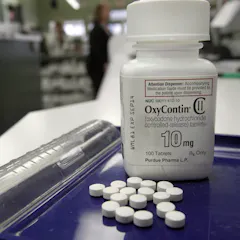
The Purdue Pharma settlement is paltry compared to costs of the opioid crisis. Without major changes to pharma industry regulation, there is little reason to think a similar crisis won’t occur again.
Restricting drug access can make the overdose crisis worse, not better. A bioethicist explains what that means for an ethical drug policy.

False narratives about drug addiction and policies that are not supported by research are deepening the overdose epidemic in the US.
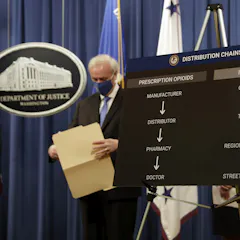
The government has tried to harness profit-driven drugmaking to serve public health before. The results were underwhelming.
Aggressive marketing of prescription opioids by pharmaceutical companies provided doctors with scant information about potential harmful effects.
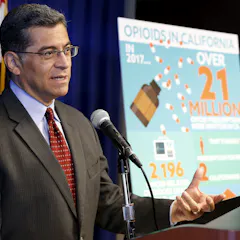
The government has tried to harness a profit-driven drug industry to serve public health before.

A policy response focused on reducing prescription opioids will not resolve North America’s opioid crisis. And it is hurting many adults who live with otherwise unbearable chronic pain.

Considered in historical context, Purdue’s plan to peddle opioid addiction medicines to vulnerable people is not so surprising. Gilded-Age pharmaceutical companies used similar strategies.

Evidence shows that opioid manufacturers fund patient advocacy groups in Canada, distorting policies to protect public health.

This week’s annual Family Medicine Forum is an opportunity for your family doctor – to cave or resist in the face of Big Pharma sponsorship and marketing.

Cannabis legalization in Canada is a public health strategy. Let’s harness this opportunity to understand how cannabis could fit into a multi-faceted opioid prevention and response strategy.

Many people may misunderstand the basics about opioids. That prevents researchers from understanding the full scope of the epidemic.

Big Pharma in Canada is far behind the curve when it comes to disclosing what payments to health-care professionals are for.

Prescription drugs are policed by industry and Health Canada has never prosecuted a drug company for illegally marketing a drug.
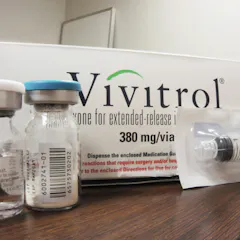
The U.S. has had multiple drug epidemics, and, until recently, has not had evidence-tested ways to help people. That has changed. New medicines can help. But other medical issues should also be addressed.

High fructose corn syrup in food and drinks has long been linked to rising rates of child and teen obesity. New evidence suggests it increases the risks of opioid addiction and overdose too.

As Canada moves towards legalization of cannabis in 2018, there is growing evidence of the drug’s potential to treat opioid addiction itself, as well as the chronic pain that often drives it.

Most physicians are unaware of effective approaches to treat opioid addiction. Addiction medicine fellowships offer a new and effective way to save lives.

Drug deaths are rising faster than ever. How did we get here and what to do about it?
Top contributors
-

Associate professor, Department of Family and Community Medicine, University of Toronto; York University, Canada; University of Sydney
-
Research Scientist, BC Centre on Substance Use and Assistant Professor in the Division of AIDS, Department of Medicine, University of British Columbia
-
Associate Professor of History, University at Buffalo
-
PhD student in Population and Public Health, University of British Columbia
-
Professor of Psychology, University of Guelph
-
Professor of Psychiatry, University of Florida
-
Associate Professor of Population Health, New York University
-
Associate Professor, School of Physical Therapy, Western University
-
Postdoctoral Fellow, Harvard University
-
Professor in Pharmaceutical Policy, School of Pharmacy and Charles Perkins Centre, University of Sydney
-
Assistant Professor, Dept of Medicine, University of British Columbia and Research Scientist with the BC Centre on Substance Use, University of British Columbia
-
Visiting Assistant Professor of Sociology, College of the Holy Cross
-
Post Doctoral Fellow, British Columbia Centre on Substance Use, University of British Columbia
-
Postdoctoral research fellow, Applied Ethics, University of British Columbia
-
Director of the Master of Bioethics degree program at the Berman Institute of Bioethics, Johns Hopkins University