

Fraudsters have managed to exploit security gaps in the federal government’s early release of super scheme. Here’s what to look out for.
Articles on Online fraud
Displaying 21 - 40 of 44 articles

There is no specific crime of catfishing in Australia. So we have to make better use of existing laws to address this devastating behaviour.

Ethology, social psychology and criminology can help us understand why humans lie and why scammer scam.

Lifestyle gurus define themselves in opposition to experts — but can we really trust what they tell us?

Cryptocurrency fraudsters have swindled their victims out of hundreds of millions – even billions – of dollars. What do they do to earn people’s trust and then take their money?

Whether you’re caught by a catfish or an online romance scammer, both use similar techniques to play with your emotions.

Why do people continue to send money when caught in any online romance scam? Researchers are now finding the techniques these fraudsters use are similar to those in domestic violence cases.

North Korea’s cyber army is closely controlled by the ruling regime – a key difference from other countries’ cyberattack and espionage groups.

Around the world, people are both increasingly dependent on, and distrustful of, digital technology. New research suggests ways this conflict could unfold.

The banks are dealing with rising rates of online credit card fraud, but they can’t fix it on their own.

Cyber financial crime is on the rise globally. Here’s how you can stay safe.

Nigeria’s cybercrime has been rated the third worst in the world primarily for ‘419’ fraud occurrences but the term encompasses a wide range of crimes, some more common in western nations.

Victims of online fraud say they’re passed from one authority to another when they try to report it, and they’re still made to feel they are to blame for being caught out by a scam.

A loophole in a change to contactless card to prevent fraud had this security sleuth on the case.

Too often the impact of online fraud on people is trivialised, minimised or not even acknowledged by law enforcement agencies, families and friends. But we can do more to help them.

Crafty new detection methods could help make ‘like farming’ a thing of the past.

Cyber security is now a priority for the government, with $230 million committed to its new Cyber Security Strategy. But is it enough?

It’s bad enough when someone loses money to an online scam. But some victims can also recruit others into the scam causing even further heartache and loss of money.

Reports of a drop in the number of people caught in online fraud is to be welcomed. But scammers are already changing their plans to bypass existing safeguards.
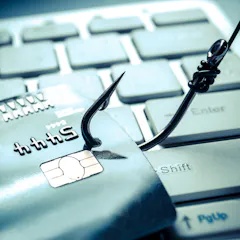
Phishing attempts tend to rise during the festive season when people are more likely to respond to online marketing and to spend more money. How can you protect yourself?
Top contributors
-

Associate Dean (Learning & Teaching) Faculty of Creative Industries, Education and Social Justice, Queensland University of Technology
-
Visiting Fellow, Mannheim Centre for Criminology, London School of Economics and Political Science
-
Criminologist (Cybercrime), University of Surrey
-
Professor of Security and Fraud, University of Portsmouth
-
Associate professor, Département des sciences comptables, Université du Québec à Montréal (UQAM)
-
Dean of Global Business, The Fletcher School, Tufts University
-
PhD researcher of cybercrime, University of Southampton
-
-
Professor, School of Justice, Queensland University of Technology
-
Professor of Health Informatics, University of Sheffield
-
Visiting Lecturer, University of Greenwich
-
Royal Society University Research Fellow, UCL
-
Emeritus Distinguished Professor of Defense Analysis, Naval Postgraduate School
-
Professor, Stellenbosch University
-
Director of UWA Centre for Software Practice, The University of Western Australia